• Home
  • Offerings
    • My Book
    • Magick Mail (It's Free!)
    • The Lunar Apothecary
    • The Tarot Apothecary
    • The Plant Ally Library
    • Solace: Herbs for Sensitive People
    • Begin With the Breath
    • The Green Bottle Method
    • Gatherings
    • Patreon
  • Blog
    • most recent
    • plant allies
    • astroherbology
    • moon studies
    • recipes + tutorials
    • magickal arts
    • tarot + divination
    • sliding scale
    • archive
    • search
  • About
  • FAQ
  • Search
  • More
    • Support the Work
    • Calls to Action + Resources
    • Recommended Reading
  • Home
  • Offerings
    • My Book
    • Magick Mail (It's Free!)
    • The Lunar Apothecary
    • The Tarot Apothecary
    • The Plant Ally Library
    • Solace: Herbs for Sensitive People
    • Begin With the Breath
    • The Green Bottle Method
    • Gatherings
    • Patreon
  • Blog
    • most recent
    • plant allies
    • astroherbology
    • moon studies
    • recipes + tutorials
    • magickal arts
    • tarot + divination
    • sliding scale
    • archive
    • search
  • About
  • FAQ
  • Search
  • More
    • Support the Work
    • Calls to Action + Resources
    • Recommended Reading

Worts & Cunning Apothecary | Intersectional Herbalism + Magickal Arts

Living Our Stories: Tarot and Tea for Gemini Season
May 20, 2022  /  Alexis J. Cunningfolk

gemini season tarot and tea banner

Welcome to Gemini Season! Join me as I explore tarot practices and herbal allies for the twelve seasons of the zodiac (and you can learn more about this series over here).

With the change to the season of Gemini, we meet the first Air sign of the zodiac, having already traveled through the fiery energy of Aries and the grounding strength of Taurus. In the southern hemisphere, Gemini marks the last period before we enter autumn, and in the northern hemisphere, Gemini carries us through the end of late spring into summer. In astrology, Gemini is known as a mutable sign which tells us that we are dealing with energy that is changing and adaptable (Virgo, Sagittarius, and Pisces are also mutable signs). In many ways, we are living in intensely Gemini times with social media, perpetual news cycles, and more information (and disinformation) being accessed with greater ease by large parts of the population more than ever.

Gemini is a sign of duality, its symbols the sacred twins, but its symbol could easily be a double-edge sword as the same words and stories which liberate can also cut down and oppress. With Gemini we have the opportunity to explore the stories we're telling, what we're being told, what we are perceiving (and the lenses by which we're looking) and how we're being perceived in turn. So super simple stuff, right? Fortunately, Gemini holds plenty of paths of wisdom that we can take.

Living Stories
Gemini Season Tarot Spread

One of the greatest gifts of Gemini is its ability to adapt. While Gemini is traditionally associated with the respiratory system, arms, and hands, I also associate the sign with the neuroplasticity of our brains. We tell ourselves and are told so many stories about who we are, our capabilities, what it is possible to achieve, how we've already failed, the burdens of our ancestors, the hopelessness of our descendants, and so on throughout our lives. Combine that with traumatic experiences and these stories can carve deep neural pathways in our brains that can begin to feel unmovable and unrepairable. (1) For many, one of the important steps of healing from trauma is moving from telling one version of a story about ourselves that feels unquestionably true (i.e. "I'm broken and worthless") to something which is more authentic and supportive of our wellbeing (i.e. "My worth is unquestionable, my wholeness secure"). Here is where the storytelling gifts of Gemini and its ability to adapt and change can support us. 

Gemini asks us, "What is the story you want to tell?"

The following spread is about helping us connect with our living story, whether we're processing personal traumas, dealing with the reverberations of collective trauma, connecting with our inner child or just doing the work of exploring our own stories, whatever emotions they evoke, with the goal of feeling more empowered by what story we're telling about ourselves.

While tarot spreads are wonderful tools of self-exploration, you deserve to receive professional therapeutic support when exploring difficult and challenging experiences and I hope you access help through the growing number of mental health services available. You deserve to be held, whole and holy, as you process through what it is you have lived through.

Card 1. That Which Is Being Spoken

What are you saying about yourself? If you want you can pull a card for what you're saying to yourself (inner dialogue, etc) and another for what you're saying about yourself to others. If a challenging card comes up here it can be a reflection that the story you're telling isn't in alignment with your inner truth and desires, indicating that you might need more support moving forward when it comes to affirming and empowered self-belief and expression.

Card 2. That Which Is Being Heard

This card highlights the stories about you that are the most persistent in your life. These might be cultural stories, opinions that you've adopted from social media, stories from parents, teachers, peers, and so on. 

Cards 3 & 4. The Living Story 

Instead of casting these cards as you usually would, you are going to look through the deck and purposefully choose two cards that symbolize the story that you want to be telling. Of course, if you're feeling fatigued with decisions, you can still cast these cards by shuffling and a random draw, but if you have the energy I encourage you to choose them with intention. If you're looking for some guidance, these cards might address the obstacles of the previous two cards. After you choose these cards proceed to read them as you would any other card in a spread as cards describing a living story that wants to be told. 

Card 5. A Message For Gemini Season

A general message, signs to pay attention to, and perhaps next steps to take as we move into Gemini season.

Bonus Card: That Which Guards the Lungs

If you feel connected with the philosophy of astroherbology you can pull an additional card to help you understand the current energies of your lungs, experiences and energetic ones, and what tension or wisdom you might be keeping there. I encourage you to take a somatic approach with this card - when you pull the card, first observe before rushing to analysis, following the feelings and sensations that it evokes from your body to understand its meaning. 

image source

A Tea for Gemini Season

How do we nourish the energy of Gemini? The energy of Gemini challenges the quickness of Aries, and while their speed can be welcome when we're trying to solve a problem, express ourselves or communicate a new idea, most times Gemini energy benefits from remedies that softens and relaxes. Gemini is also the guardian of the lungs, the arms, the hands, and the nervous system (click here for a few list of traditional correspondences of Gemini) and I've included herbs which also support these body systems. 

Peppermint (Mentha piperita) is a wonderful plant ally that meets us where we're at when it comes to energy - it soothes and relaxes when we're too overstimulated but energizes and enlivens when we're feeling sluggish. Skullcap (Scutellaria lateriflora) is my favorite herb to help nourish our nervous system while quieting the noisy, distracting, and chattering part of our brain. My favorite nervous system tonic is Milky Oat (Avena sativa) and a plant ally I often recommend to Gemini folk who tend to overwork their nervous systems. Combined, these three herbs help us to welcome in the season of Gemini with calm so that we can reap the benefits of clarity that this season can bring. 

To make your tea, combine the following herbs:

  • 2 parts Peppermint (Mentha piperita)

  • ½ part Skullcap (Scutellaria lateriflora)

  • 1 part Milky Oat (Avena sativa)

These proportions are only suggested guidelines, so feel free to play around with them to your liking. As you make your tea, slow down, breathe deep, and infuse the blend with your intentions for the season (or whenever you’re drinking this tea to connect with the energy of Gemini). If you’re looking for more breathwork practices to help you connect with the energy of the season, come this way.

image source

Seasonal Reflections

What does the land feel like, look like, smell like this season?

What is coming to the surface from within me?

What is receding within me?

What am I feeling grateful for?

What am I grieving for or feeling challenged by?

What am I feeling inspired and where is it calling me to this season?

What am I calling to me?

What am I called to give?

♊️

I’ve been writing about the intersections between plants, stars, and planets for years, so if you’re feeling inspired to keep reading about all things astroherbalism, check out the Gemini Astroherbology Profile as a great next step. For those wanting some visual inspiration, I have a whole collection of Gemini Season images for you. If you’re looking for more information on using tarot as a tool of healing, come this way. And I’ve also written about my favorite plant-themed tarot decks (tarot is a very Gemini sort of divination system).

You can also learn about how to set-up your own Gemini season apothecary full of spring remedies.

Wherever the season of Gemini finds you may all lines of communication and clarity be open to you, all paths full of the right sort of people, places, and creatures!

This post was made possible through patron support.
❤︎ Thanks, friends. ❤︎


Notes

(1) If you're seeking resources for healing from this sort of trauma, EMDR is a well-researched form of therapy that helps folks recover and move on from the distress of trauma. This is the one form of therapy that I have recommended to clients again and again over the years, so if you're feeling like you're ready to get some support for your experiences of trauma, I hope you seek out the right practitioner for you. You deserve to be supported and your suffering eased.

 
magick mail banner

We respect your privacy.

Thank you for signing up for Magick Mail! Once you have confirmed your subscription to the list you will gain access to our member's only apothecary.

0 Likes
categories / astroherbology, recipes + tutorials, tarot + divination
tags / gemini, gemini season, gemini tarot, gemini tea, astroherbalism, astrology of tarot, peppermint, skullcap, milky oat, gemini herbs, gemini plant allies, gemini season tarot spread, gemini season herbs, astro seasons, seasons of astrology, herbs for gemini season, tea for gemini season, tarot for gemini season

The Plant Allies of Spring: How to Create a Spring Wellness Apothecary

May 06, 2022  /  Alexis J. Cunningfolk

spring plant allies

Forever ago I wrote a blog post on creating your own herbal apothecary for the winter months, but it's not just winter that I'm adjusting what's on my apothecary shelves. Every season brings new needs and new herbs growing on the Land, so I thought it would be useful to write about creating home apothecaries for wellness for each of the seasons.

As with my winter wellness suggestions, I've organized my recommendations into general herbal actions that I find useful in the springtime such as anti-inflammatory herbs for allergies. I've tried to highlight herbs that are easy to access (especially in North America, where I am writing this from) and/or inexpensive to grow yourself, but hopefully you'll feel inspired and able to work with herbs local to your area.

So with that in mind let's explore some of the common ailments and remedies for the season of spring!

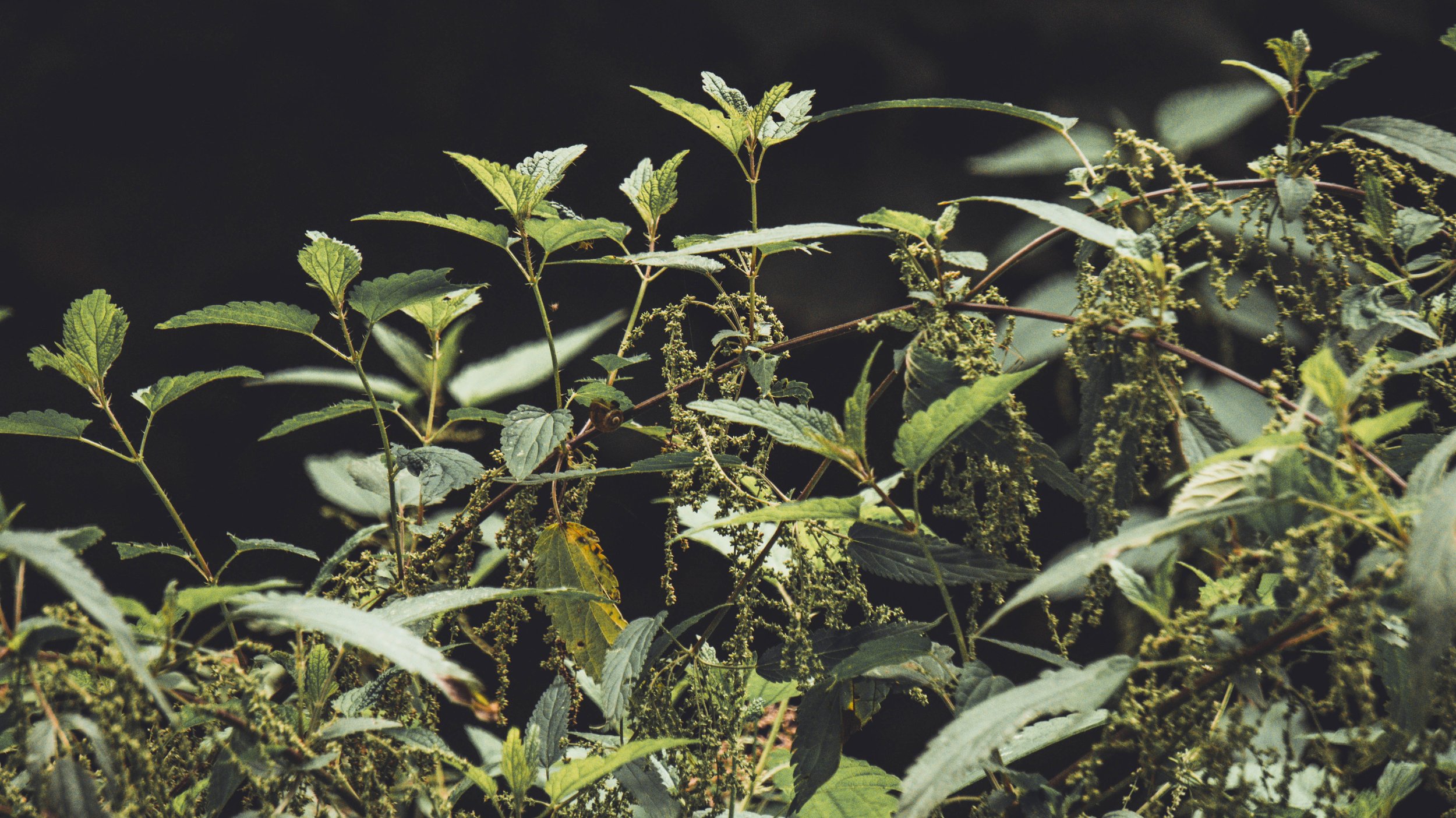
nettles for allergies

image via @merrij

Finding Balance: Managing Seasonal Allergies

Herbal Actions: Anti-inflammatory, antihistamine, anti-catarrhal, and respiratory tonics

Here's my caveat about herbs and allergies: I do think that many folks benefit from working one-on-one with a local herbalist to help figure out your allergies and reactivity because a) allergies can be tricky to figure out and the individualized care a practitioner can offer can be essential, b) there are often layers of reactivity occurring (including food allergies and neuroplastic reactivity) that need exploring and c) a local herbalist can help you work with local herbs which is often very beneficial to alleviating allergies. 

All that said, there are a lot of herbs that are generally useful for allergies and helping the body be less reactive and inflammatory during allergen abundant times like spring. The following herbs are protective against seasonal allergies, energize body systems, and generally help the body move from winter to spring. 

Nettles (Urtica dioica): A nutritionally dense plant ally, Nettles is a great herb to work with in strengthening and nourishing our body. It has antihistamine qualities and helps to "build the blood" which speaks to both its iron content, but the herbs overall nutritive and energizing (but not stimulating) healing qualities.

Goldenrod (Solidago spp.): A beloved ally for helping to alleviate seasonal allergies, Goldenrod is adept at relieving congestion and sinus pain.

Lemon Balm (Melissa officinalis): A good tonic herb, known for bringing joy and life to those who ingest it. Lemon Balm helps to protect against overwhelm, whether that's feeling overwhelmed by change, social situations, spring allergies or whatever else is looming large in your life. 

Peppermint (Mentha piperita): If you're feeling particularly sluggish this spring, turn to Peppermint to help sweep away the remaining drowsiness of winter so you can connect with the energy of the new season. The anti-inflammatory qualities of Peppermint help us to breathe deeper, reduce the brain fog that often come along with allergies, and infuse us with some hope that this too shall pass.

Dandelion (Taraxacum officinale): The arrival of Dandelion on the Land I live with is a time of celebration. There will be medicine that can be made again for the year ahead and enjoying Dandelion medicine during the early days of spring is like filling up the body with spring energy from the inside out. Dandelion helps to reduce sinus inflammation and expel excess mucus (along with the allergens it carries). 

The Internal Fire: Nourishing Digestion

Herbal Actions: Bitters, cholagogues, anti-spasmodic, anti-inflammatory, carminatives, and nervines

One of the most important ways of supporting health from a traditional western herbalism perspective, is supporting the digestive fire (or metabolic processes) of the body. After the slowness of winter and the long stretch of cold, in the spring we want to support the building up of digestive effectiveness as we become more active and the days heat up. Finding the right digestive herbs for your constitution can take a bit of effort (which is why working with an herbalist one-on-one can be so valuable - you deserve such support), but when you find your digestive plant allies, it can be life changing. 

Dandelion (Taraxacum officinale): The roots are a good overall spring tonic, helping to wake up our winter bodies to the season of spring. I like to drink a decoction of the roots during early spring (sometimes with a recipe like this) and enjoy making and taking my own whole plant Dandelion tinctures (i.e. the roots, leaves, flowers of Dandelion) to enjoy throughout the year.

Chamomile (Matricaria chamomilla): Another good overall spring to summer tonic and digestive aid, I especially like recommending Chamomile for highly sensitive people who tend to get upset stomachs when experiencing disruption to their day and routine (including struggling with the change of season). Chamomile is also a plant ally for folks who tend to have an overactive or fast digestion (may be indicated via signs of cramping, diarrhea, and gas). 

Calendula (Calendula officinalis): Deeply reparative to the digestive system and often a good ally for folks who suffer from bloating, fatigue, and gas after meals.

Rose (Rosa spp.): A helpful ally when it comes to supporting the microbiome of our gut, acting as a prebiotic as well as supporting digestion through the promoting the production of bile. 

Other digestive spring aids include Lemon Balm (Melissa officinalis), Peppermint (Mentha piperita), Ginger (Zingiber officinalis), Rosemary (Rosmarinus officinalis), and Sage (Salvia officinalis).

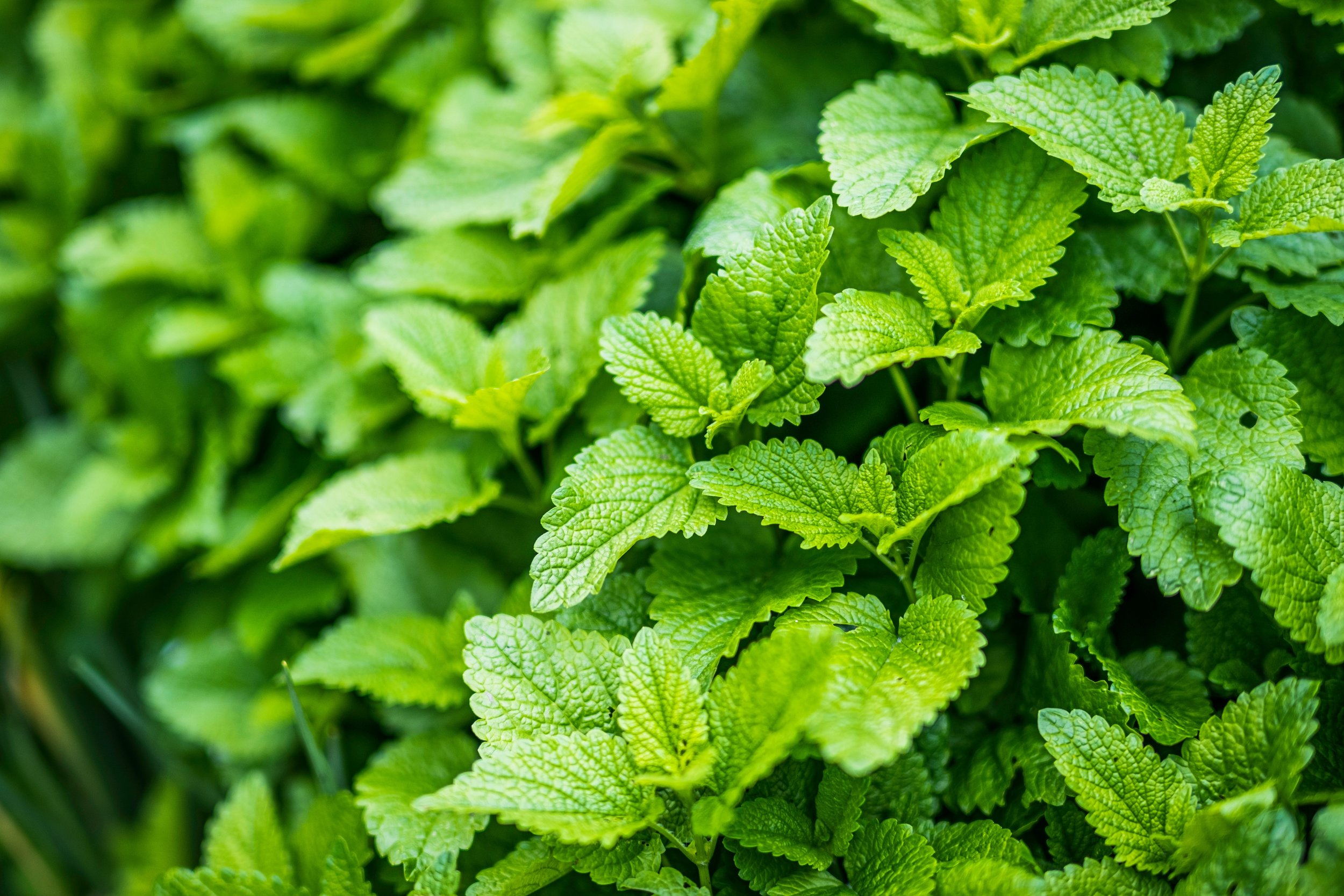
lemon balm plant ally

image via @victorserban

Waking Up From Winter: Brain Fog & Brain Tonics

Herbal Actions: Nootropics, nervines, and adaptogens along with herbs for digestive health to support the brain-gut axis.

The winter season has hopefully brought some much needed slowness and rest to your life. Just like getting up in the morning after a long night's sleep, waking up from the winter months can take a bit of time. I like to reach for herbs that support brain health and mental clarity, helping to sweep away the cobwebs of winter so that I can best enjoy the energy of spring.

Lemon Balm (Melissa officinalis): My favorite ally for alleviating brain fog and helping to promote mental clarity. It's also a plant ally known to bring joy and support our ability to feel part of the world and not be overrun by it - something which can feel especially useful between the slowness of winter and the speediness of spring.

Sage (Salvia officinalis): A classic brain tonic, Sage is known as an herb of wisdom, promoting mental clarity and discernment.

Milky Oat (Avena sativa): A great ally for those feeling exhausted and not ready to be doing much of anything, much less transitioning into a new season. A supremely generous tonic for the nervous system as well as supporting our mental health.

Other brain tonics include Gotu Kola (Centella asiatica), Gingko (Gingko biloba), and Ashwagandha (Withania somnifera).

Two Steps Forward, One Step Back: Springtime Colds & Fevers

Check out my winter apothecary post for recommendations on herbs for different types of colds, coughs, and fevers.

Breathing Deeply: Respiratory & Lung Health

Herbal Actions: Anti-inflammatories, demulcents, astringents, aromatic, and expectorants.

Honoring the breath is an important part of my personal and professional practice. I've written about breathwork and the herbs that support breathwork practices, all of which can be incorporated into a spring apothecary.

Yerba Santa (Eriodictyon californicum): If you have the sort of spring allergies which cause a lot of damp and mucus, drying Yerba Santa might be a good ally for you. It's a respiratory tonic and nervine helping us to connect deeply to our breath and nervous system.

Mullein (Verbascum thapsus): If you've had a long season of being sick this past winter, Mullein can be a great ally, especially if there is a lingering cough. I like combining Mullein with Elder (Sambucus nigra) and Peppermint (Mentha piperita) for a lung-opening, immunomodulating blend. A helpful ally for those whose asthma is irritated by the increase in heat and allergens that spring brings.

Elecampane (Inula helenium): A good herb for seasonal allergies and stubborn coughs of all sorts. 

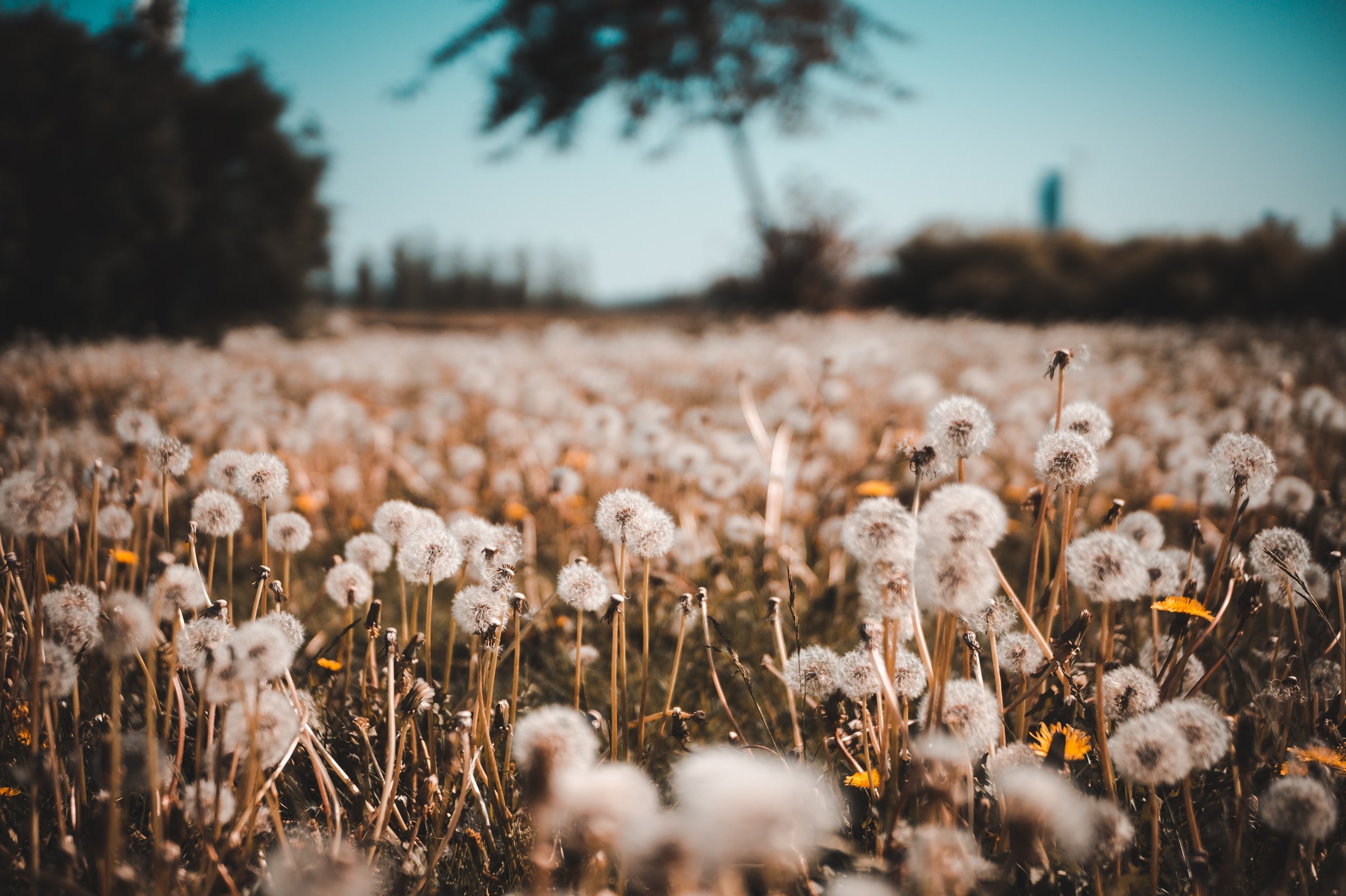
dandelion herbal uses

image via @jiihu

The Body In Motion: Supporting the Lymph Nodes

Herbal Actions: Lymphatic, alterative, anti-inflammatory, and astringent

Some of the first herbs to spring up after winter are ones that support lymphatic health, helping to drain congested lymphs and reduce overall inflammation. Often considered weeds by the general public, these herbs deserve respect and can be a beautiful and inexpensive way to access herbal medicine. Be sure to leave enough herbs to go to seed and continue to spread out across the Land to where they are most needed.

Cleavers (Galium aparine): These sweet and sticky herbs help to support the activity of white blood cells clearing out congestion in our lymph nodes. These are best taken fresh either as a tea or blended into smoothies.

Calendula (Calendula officinalis): If you're in a state of lymphatic congestion, Calendula can be a beautiful ally to work with. The bright flowers shine through our system, chasing out shadows of sluggishness, helping to promote lymphatic drainage and circulation.

Dandelion (Taraxacum offcinalis): Dandelion helps to repair and support the filtering systems of our body including our liver, kidneys, digestive tract, and lymph nodes. The herb helps to promote the production of lymphocytes which makes it a wonderful lymph tonic to work with throughout late winter and early spring.

Other lymph tonic herbs include Chickweed (Stellaria media), Echinacea (Echinacea purpurea), and Ocotillo (Fouquieria splendens).

🌿

There you have it friends - herbal allies for the spring season! I hope you're feeling inspired to build your own home apothecary using a few easily accessible herbs to support your health and the health of those you serve. In my own life, spring is a time of trying to use up last year's stock of herbal remedies so that I can make space for new ones, long and lovely hours in the garden, checking in with the energy of the season, and working all sorts of springtime magick.

You can also learn about the seasons from an astrological perspective, starting with Aries. If you’re in the southern hemisphere the start of spring is marked by Libra.

I hope that you find the rhythm of seasonal change that works the best for you and your loved ones, so that you can thrive in times of change and feel nourished by the possibility of what is coming into being.

This post was made possible through patron support.
❤︎ Thanks, friends. ❤︎

 
magick mail newsletter

We respect your privacy.

Thank you for signing up for Magick Mail! Once you have confirmed your subscription to the list you will gain access to our member's only apothecary.

4 Likes
categories / plant allies
tags / dandelion, taraxacum officinale, spring, spring herbs, spring plant allies, spring wellness, elecampane, sage, nettles, yerba santa, peppermint, rose, calendula, lemon balm, rosemary, ginger, milky oat, mullein, cleavers, wellness apothecary series

My Favorite Tarot Decks for Herbalists & Plant Folk

April 23, 2022  /  Alexis J. Cunningfolk

botanical tarot decks

As an herbalist who reads the tarot (and a tarot reader who talks with plants), I'd thought I'd share with you some of my favorite tarot decks with herbal themes. I’d also thought it also be of interest to folks who are following along with my project of the year - tarot and tea practices for each of the twelve signs of the zodiac.

We are living in abundant times when it comes to tarot decks and many feature botanical imagery, but the connection between tarot and the plant world is nothing new as the cards have long been connected to plant lore, healing, and magick. As an herbalist, I use tarot in my healing practice and as a tool to help folks connect with plant allies. While, the deck that I most often use for myself is the very first deck I ever purchased - my beloved Smith-Waite Tarot that came in the blue box set - is full of botanical imagery and meaning, it's not the only deck I turn to when looking for plant-rich imagery.(1) When I'm in the mood for something a bit different or reading for or with others, the following decks are what I've been turning to in recent years. 

These are certainly not the only plant-themed tarot decks out there and I'm planning on a second part to this post where I also include a few of my favorite oracle decks (in which there are many, many more of them when compared to tarot decks). I've also tried to include a mix of mass market and indie decks, being mindful of the varying budgets of my readers who might be interested in picking up a plant-centered deck of their own.

So let's meet the cards!

The Herbcrafter’s Tarot by Joanna Powell Colbert & Latisha Guthrie

The Herbcrafter's Tarot

Here's the thing. For years and years I wanted a tarot deck that was made for and by herbalists that I could connect to. When I was gifted a copy of The Herbcrafter's Tarot by Joanna Powell Colbert and Latisha Guthrie out of the blue (not by the creators themselves, but a friend of a friend), I felt such expansive joy. Friends, this is a lovely deck and it arrived at a particularly potent turning point in my own practice. My first reading with the deck was at twilight, sitting amongst Roses (Rosa spp.) on the Land I live with and it reads like a dream. In fact, I highly recommend reading with this deck outside if you can, especially the first few times you work with it. 

The art of The Herbcrafter's Tarot is rich and evocative, relying on a relatively uncommon medium for tarot decks (colored pencils), that Colbert is recognizable for (she is the creator of The Gaian Tarot, a diverse and inclusive deck published little over a decade ago). The deck celebrates the mixed heritage of the designers (Celtic and Mexican-American), including renaming the court cards with Spanish names and with the landscapes that appear throughout the deck. The guidebook is lovely, with a number of ways to connect with the cards both through key ideas, longer description, and activities inspired by the plants featured on each.

The Herbcrafter's Tarot

The Herbcrafter’s Tarot by Joanna Powell Colbert & Latisha Guthrie

The court cards are some of my favorites in the deck. Instead of having human figures throughout the deck, the cards focus on plants and their habitats, including wild places and home spaces like altars and kitchens. It's only on the court cards that we see just the arms or hands of folks - no faces or any other parts of the body - and they are young hands, old crone hands, working and resting hands. They are some of my favorite interpretations of the court cards of any deck I've worked with. While the absence of human figures doing things in most of the cards might feel intimidating to read to some, the cards are so beautifully thought out in their composition that the plants are alive and singing with story. The deck evokes a feeling of being present to the work of herbcrafting in a way that I've not experienced with another deck.

Of the three decks I'll be in this post, The Herbcrafter's Tarot is the most obviously plant-based one and is explicitly made for and by herbalists. This is the deck I've started to bring with me to in-person classes and the one that I find myself just shuffling through because I enjoy the art so much. It's also obviously designed by an herbalist who understands both the practical as well as magickal uses of plant medicine which I really appreciate and is not always a given with cards that feature a lot of botanical imagery. I really can't recommend this deck enough and I hope you get to hold a copy in your hands one day.

The Future Ancestor’s Tarot by Alexa Villanueva

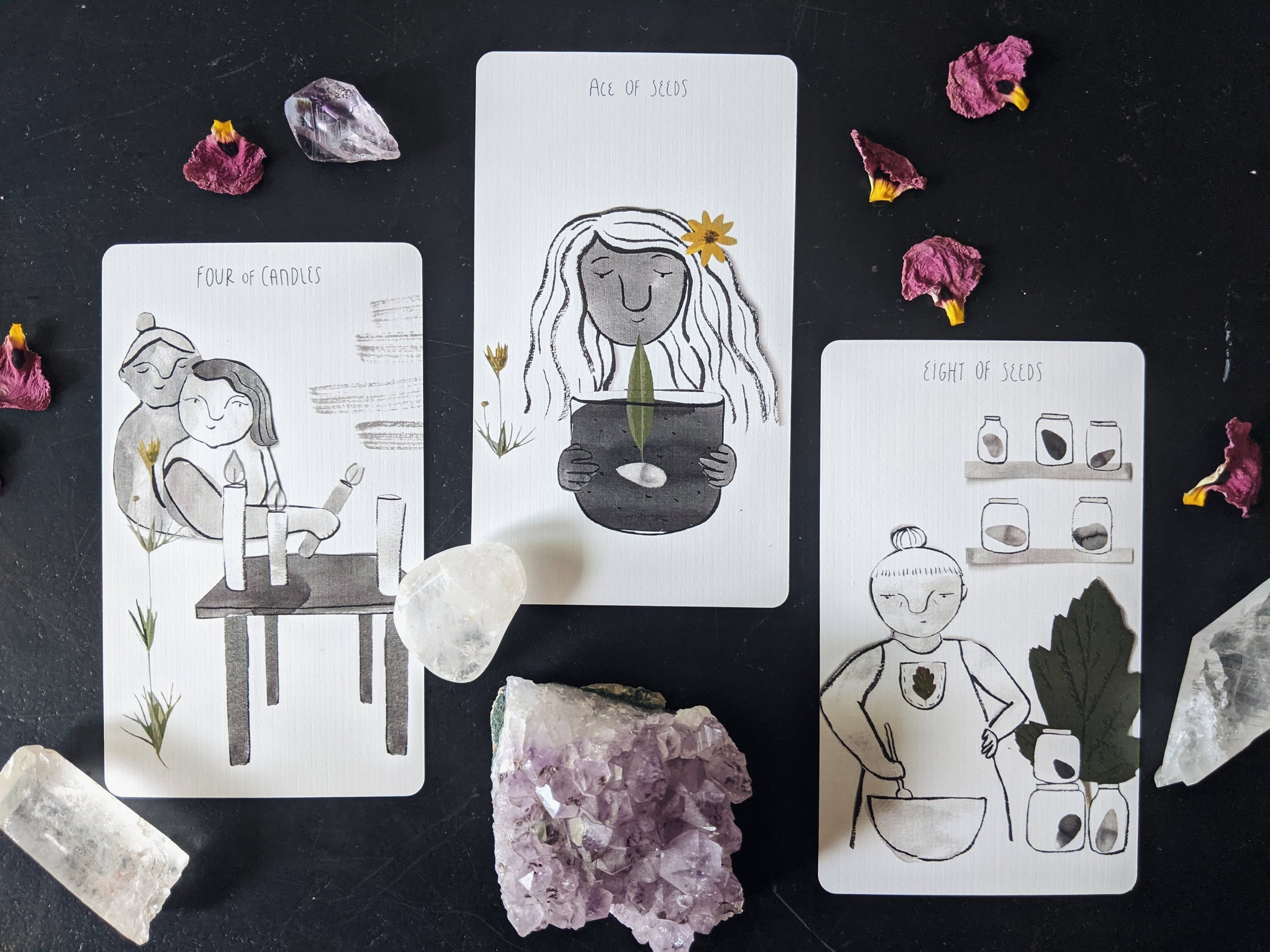
The Future Ancestor Tarot

There's something really special about The Future Ancestor Tarot by Alexa Villanueva of Lexa Luna Studio. The deck was created during 2020 and carries an energy of making space for and exploring grief, as well as what it means to connect with our beloved living ones when they have traveled to the land of the ancestors, and what our own ancestral becoming looks like while we're still living. 

Of the three decks featured in this post, The Future Ancestor Tarot has the simplest aesthetic and yet no meaning or depth of interpretation is lost. There are calm gestures, furrowed brows, sweet embraces, and the difficult to name feeling that comes from experiencing profound peace amidst a storm of grief. These cards convey, through their images and energy, the feeling I often experience when sitting in a herbal session or class with someone. I know that this is in part because I purposefully make space for grief to be expressed and explored during these times and so often grief arrives as an honored guest in these moments, and The Future Ancestor Tarot seems to treat grieving with the same reverence. And that's also why it's such a sweet and joyful deck for me - it makes space for the difficult moments, so that we can experience all of our feelings with as little fear as is possible in any given time.

The Future Ancestors Tarot

The Future Ancestor’s Tarot by Alexa Villanueva

Then there are the plants on each card which makes these bits of paper and the characters and spirits which inhabit them that much more alive. The renamed court cards feel particularly suited to my own herbal practice and I'm sure will resonate with many of you. The Pages have become the Students, the Knights are Explorers, the Queens are Listeners, and the Kings are Makers. The renamed Queens feel particularly powerful and they are some of my favorite cards, which is not traditionally the case for me with Queen cards in other decks. And speaking of favorites - The Star card is one of the images from the tarot that I love the most and The Star in The Future Ancestor Tarot is so beautiful that it makes my heart break open just a little wider every time I see it.

I think that this deck would sing well to those folks who appreciate a more intuitive than strictly traditional approach to tarot. The images reference the RWS system enough to guide you, but are also so unique and inviting for those who like a more open-ended approach to tarot. Just in life, the plants featured on each card are constant companions that we share space with and every card in this deck feels like there's a secret recipe hidden within them.(2) One of the other reasons I like this deck so much is that it is visually similar to my favorite black and white tarot deck, Thea's Tarot by Ruth West. The Future Ancestor Tarot feels like the soft little sibling or nibling of Thea's Tarot and I hope that comes across as the compliment that it is. The energy of the deck is so inviting and would be wonderful to use with clients in one-on-one sessions or with a whole class of plant-hearted folk. Currently, the deck comes with a little one page guide, but you can also join me in supporting Villanueva as she writes the full guidebook to the deck which I'm looking forward to reading!

The herbcrafter's tarot review

The Witches’ Wisdom Tarot by Phyllis Currott & Danielle Barlow

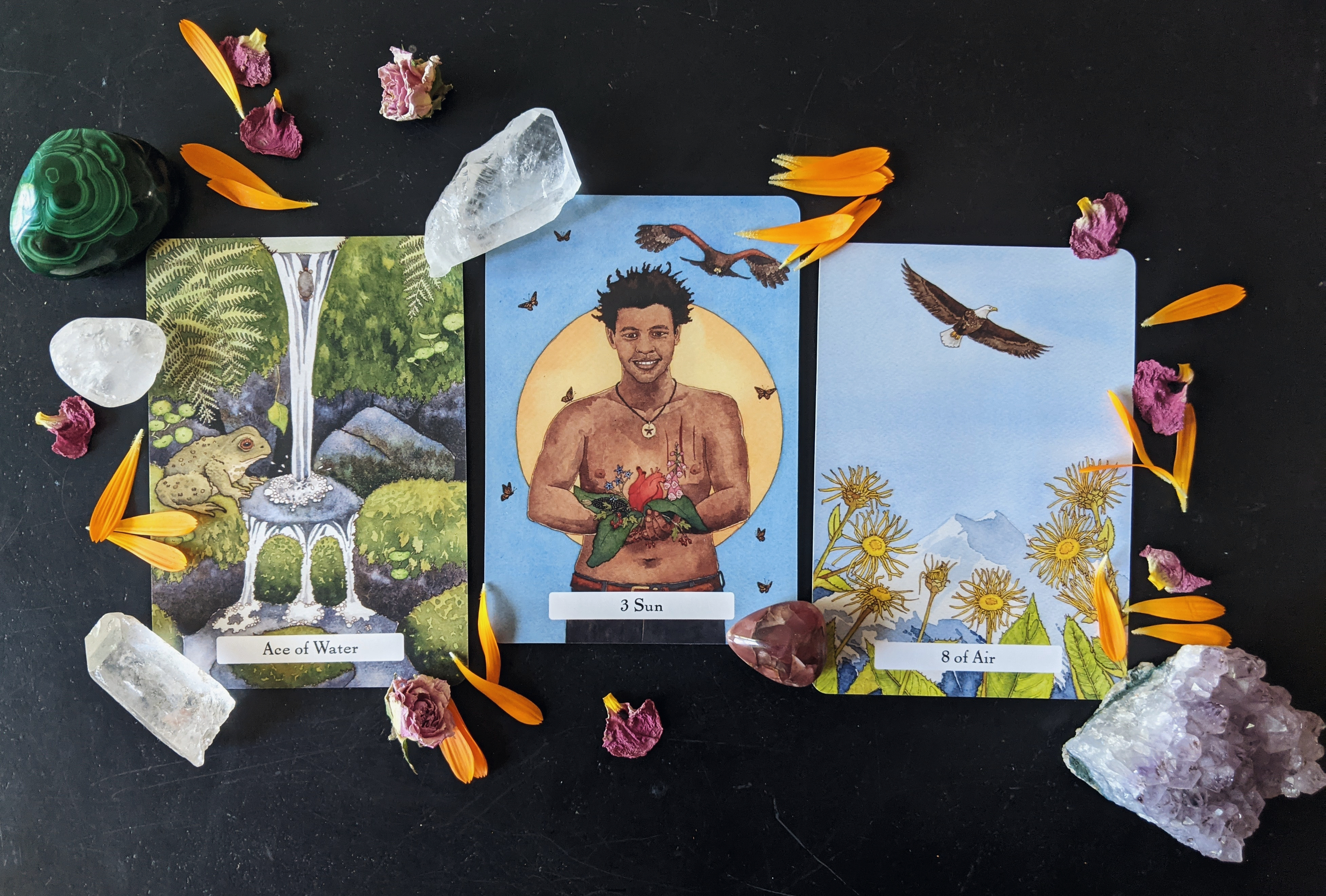
The Witches' Wisdom Tarot

Look, there was little doubt that I wasn't going to love a deck produced in collaboration by Phyllis Currott (I re-read her autobiography over and over again as a young witch) and Danielle Barlow (a Dartmoor based artist who I've been a fan of for years and years). First, I like the deck because it experiments with the RWS system in interesting but meaningful ways, which helps readers to approach familiar systems in new ways. I like fresh takes on old practices and The Witches' Wisdom Tarot does this while still feeling traditional. The deck really shines with Barlow's depictions of plant and animal life which show up on every card and Currot's interpretation of the cards feel full of the wisdom carried by an elder of the Craft without becoming stuffy or rote.  

As an herbalist, I appreciate how much the botanical images correspond with the meanings of each card. Sometimes herbal decks can feel more like flashcards than living oracles, but The Witches' Wisdom Tarot avoids this with Barlow's paintings which reflect her own love and connection with plant and animal life. The Ace of Water (Cups) card, for example, is so beautifully depicted as a lush and watery space, capturing the movement, complexity, and sensitivity of the emotional worlds that the Cups represent in tarot. I just love the life and lushness of The Witches' Wisdom Tarot and the way that it reflects the spirit of interconnectedness between all living beings. 

herbal tarot

The Witches’ Wisdom Tarot by Phyllis Currott & Danielle Barlow

If you're a Witch (and especially some variation of Pagan Witch), this might be a deck that speaks the most to you out of the three I've featured today. The Witches' Wisdom Tarot is a world unto its own that draws you in and it's a space that I love to visit. It's a deck that is meant to be journeyed with, displayed on your altar, and included in acts of magick. 

🌿

Do you have a favorite plant-inspired or botanically focused deck to work with? Are you feeling inspired to work with one that I've described above? 

If you're looking for more posts about tarot, including a whole collection of spreads, come this way. I've also written a whole post on incorporating tarot into your healing practice and if you're wanting to learn about the intersections of herbal medicine and the tarot, I explore that in-depth in The Tarot Apothecary.

Wherever your tarot journeys take you, may you experience revelation and the sort of reconciliation that occurs when we're able to sit with ourselves and realize that we're sitting in a vast web of life - all of us just singing our spirits home.

This post was made possible through patron support.
❤︎ Thanks, friends. ❤︎


Notes

(1) The set is called The Original Rider Waite Tarot Pack and is still available today. There are so many versions of the RWS deck out there these days, but this remains my favorite version because it's the one I grew up with. The Smith-Waite Tarot Centennial Deck is a close second and I actually carry the tin version of this deck with me wherever I go.

(2) And yes, I'm thinking I might try and summon them from the liminal space that they live in and create a book of 78 tea recipes for my own enjoyment…

 
an invitation to join my newsletter

We respect your privacy.

Thank you for signing up for Magick Mail! Once you have confirmed your subscription to the list you will gain access to our member's only apothecary.

1 Likes
categories / tarot + divination
tags / tarot, tarot herbalism, tarot apothecary, the herbcrafter's tarot, the witches' wisdom tarot, the future ancestors tarot, tarot herbal wisdom, tarot plant allies, tarot decks for herbalists, herbal tarot

Embodying Presence: Tarot and Tea for Taurus Season

April 18, 2022  /  Alexis J. Cunningfolk

Welcome to Taurus Season!

Join me as I explore tarot practices and herbal allies for the twelve seasons of the zodiac (you can learn more about the series over here). In this post we’re meeting with the Bull and learning about tarot for Taurus season and Taurus herbs to help us connect with the energy of the season (i.e. the middle of Spring in the northern hemisphere or the middle of Autumn in the southern hemisphere).

We've moved through the intensity of Aries Season, which can sometimes feel like everything needs to be done right now, into the slower pace of Taurus the Bull. In astrology, Taurus is referred to as a "fixed" sign which means that it's really good at creating roots and grounding energy. If the signs were writing books about the seasons they inhabit, Aries would give you a few quick bullet points on a post-it note (that may or may not have a corner torn off) while Taurus would present you a whole book on the subject (and the book may or may not be handmade).

With Taurus there is no big rush to get somewhere as the energy of the Bull helps us to feel what it is to arrive and be present to a place and space (including our internal environment as well as our external one) for a greater length of time than we might be used to. Taurus season can be a helpful time to explore concepts of embodiment, to seek out experience first instead of jumping into analysis mode, and to imagine ourselves as moving gardens. 

Taurus is a sign of slowness and embodiment, of being of the Land. As an earth sign, Taurus helps us to connect with seasonal changes as a source of wisdom, including the seasonal and tidal changes of our bodies. Taurus season encourages honesty born of observation (i.e. knowing what sort of conditions are needed to grow a particular plant and not pretending or teaching otherwise).

Taurus asks us, "How would you grow if you didn't feel rushed?"

An important aspect of Taurus season (and where Taurus lives in your birth chart) is recognizing that everything takes time and nothing is grown in a vacuum. In other words, we can make choices of how we embody time (whether or not we're experiencing it at any given moment as too fast or too slow) but it takes a lot of soil and bugs and sun and water and hope to grow a thing, much of which we have no control over. The following Taurus Season tarot spread encourages us to pause and observe so that we can tap into the wisdom of what we need, the resources we have, and how we can better support our slowness.

Embodying Presence
Taurus Season Tarot Spread

Card 1 & 2. That Which Centers & Nourishes You

These cards help you connect to the steadiness that Taurus Season can bring, highlighting the practices, people, places, and experiences which center and nourish you. These are things which you might seek to bring more into your life during Taurus season so that you are better able to connect with the energetic flow of the next month.

Card 3. That Which Needs Slowing Down

The gift of Taurus is learning how to slow down and take account. This card highlights what area of your life would benefit best from taking a moment to pause, rest, and consider what it is you really need. It's an invitation to switch from autopilot mode to intentional presence.

Card 4. That Which Helps You Grow

This card helps you to connect with the question posed earlier - "How would you grow if you didn't feel rushed?" In other words, this card helps to highlight allies in helping you grow in ways that support your becoming, that help you flourish in the garden of our interconnectedness.

Card 5. A Message for Taurus Season

A general message, signs to pay attention to, and perhaps next steps to take as we move into Taurus season.

Bonus Card: That Which Guards the Neck

If you feel connected with the philosophy of astroherbology you can pull an additional card to help you understand the current energies of your neck, throat, and voice, including physical experiences and energetic ones, and what tension or wisdom you might be keeping there. I encourage you to take a somatic approach with this card - when you pull the card, first observe before rushing to analysis, following the feelings and sensations that it evokes from your body to understand its meaning. 

taurus herbs

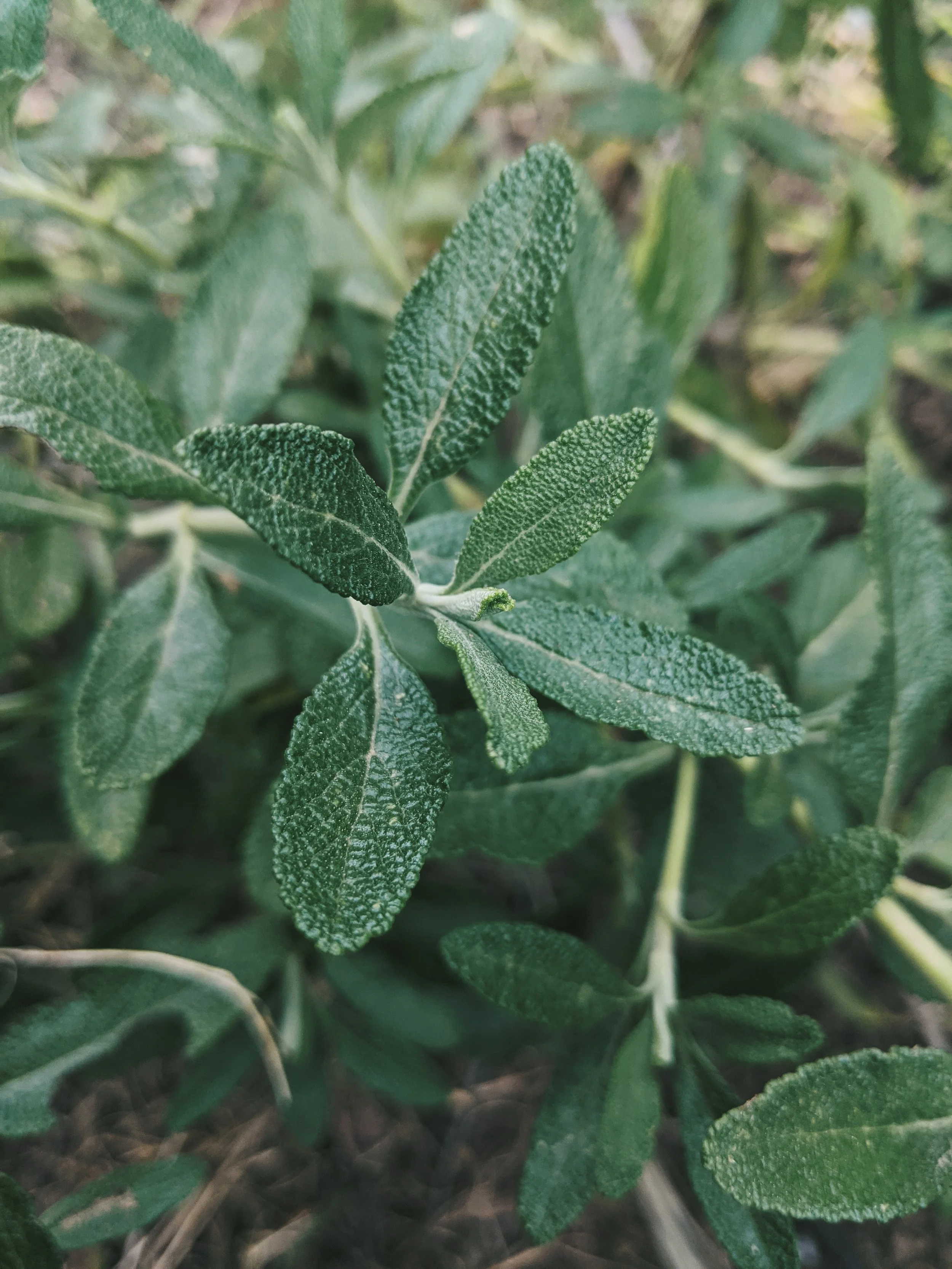
Salvia mellifera - photo by author

A Tea for Taurus Season

How do we nourish the sign of Taurus? As one of the slowest-moving signs of the zodiac, Taurus asks us to slow down and take account of what we need. Taurus also traditionally guards the neck, throat, and vocal cords (click here for a full list of traditional correspondences for Taurus), so our tea blend combines herbs that help us feel grounded, expressive, and deeply nourished. Sage (Salvia officinalis) is a classic Taurus herb - earthy and associated with longevity, Sage helps to support throat health, enhance cognition, and connect with the wisdom of the world around and within us. Rose (Rosa spp.) is an herb of Venus, Taurus' guardian planet, and an important plant ally for finding wisdom distilled through experience. Finally, Rosemary (Salvia rosmarinus) adds just enough warmth and energy to help us still feel momentum to show up in our life in the ways that we are called to.

Sidenote: You'll find that there is overlap between the herbs used for the Taurus Tea and the herbs used for the Aries Tea. This is for a few reasons, first of which is that Aries and Taurus (and Gemini) all share the same season so it makes sense that there would be similar herbs associated with each sign. Second, I'm trying to keep the variety of herbs I recommend throughout this series to a minimum so folks don't feel overwhelmed with the need to go out and get fifty different herbs. I hope it brings a feeling of calm to your practices and encourages a depth of relationship with our plant allies.

To make your tea, combine the following herbs:

  • 4 parts Rosemary (Salvia rosmarinus)

  • 1 part Sage (Salvia officinalis)

  • ½ part Rose (Rosa spp.)

These proportions are only suggested guidelines, so feel free to play around with them to your liking. As you make your tea, slow down, breathe deep, and infuse the blend with your intentions for the season (or whenever you’re drinking this tea to connect with the energy of Taurus). If you’re looking for more breathwork practices to help you connect with the energy of the season, come this way.

image via @danielabeleva

Seasonal Reflections

What does the land feel like, look like, smell like this season?

What is coming to the surface from within me?

What is receding within me?

What am I feeling grateful for?

What am I grieving for or feeling challenged by?

What am I feeling inspired and where is it calling me to this season?

What am I calling to me?

What am I called to give?

᠅

May Taurus season be steady and full of blessings for you and your community. If you’re looking for more spring inspired healing ways and magickal practices, come this way.

Beltane is part of the season of Taurus and here is where you can find an in-depth tarot spread for the sabbat (for my southern hemisphere friends, you can find a tarot spread for Samhain over here). Enjoy!

signature

This post was made possible through patron support.
❤︎ Thanks, friends. ❤︎


Notes

*Sometimes I think that Taurus is in fact a very fast moving sign but appears slow to us in the same way that light traveling from a dying star may appear to be relatively static to us but is, in fact, traveling at nearly the speed of light.

 
magick mail free newsletter

We respect your privacy.

Thank you for signing up for Magick Mail! Once you have confirmed your subscription to the list you will gain access to our member's only apothecary.

4 Likes
categories / astroherbology, recipes + tutorials, tarot + divination
tags / taurus, taurus season, zodiac, astrology, astroherbalism, rose, rosemary, sage, salvia rosmarinus, salvia officinalis, taurus herbs, taurus tarot, tea and tarot for the zodiac, astro seasons, tarot astrology, seasons of astrology

How to Write A Plant Profile (and create a materia medica you'll actually use)

March 30, 2022  /  Alexis J. Cunningfolk

how to make a materia medica herb book

There's a bunch of them on this site. You'll find them in all the herb books. They're handed out in classes and gatherings. Plant profiles are an essential way that information is shared in herbal communities and if you're reading this post you're probably interested in creating your own.

Perhaps you're just starting out on your herbal studies and are feeling overwhelmed by all the ways that herbalists record knowledge about herbs. Or perhaps you're an herbal practitioner trying to figure out how to create plant profiles that you'll actually reference in your work with clients. Maybe you're an herbalist who has never written a plant profile and don't know where to start.

If you've studied herbalism in any sort of formal classroom fashion, you've probably had to write at least a few plant profiles to complete your education. A lot of the time you're expected to use a format developed by your teacher or learning program - which is great! Humans are very good at learning through mimicry and following in the footsteps of herbalists before us when it comes to the format of our plant profiles makes a lot of sense. 

For some of us, after our formal herbal studies we don't write another plant profile because we don't really need to. While most herbalists keep notes of some sort, the actual writing of complete plant profiles doesn't happen. Which is just fine! It's not a requirement that every individual herbalist write their own plant profiles and doesn't indicate whether or not you're a competent herbalist. What happens though, is that some of us will get to a point where we realize we have all this knowledge and we want to record it in some way not only for our own benefit but for the benefit of our students, clients, and the generations to come. 

Other herbalists' herbal education did not happen in a classroom setting that required or expected written plant profiles. Herbalists are trained in all sorts of ways including through apprenticeship models and oral traditions where written records are not needed, expected or given high priority. It's essential to keep these forms of learning alive, too, and you might be interested in recording in writing the wisdom you hold. In addition to written forms of plant profiles, I'll talk about how you can record oral traditions and organize them in ways that make sense to you because these forms of herbal knowledge are vital.

Then there are also a lot of self-taught herbalists out there who haven't tried writing a plant profile of their own yet but you don't know where to start. Tenacious self-taught herbalists are one of the main reasons we have such a thriving traditional western herbal community today - these herbal elders kept alive traditions that they had to go out and find in books, through speaking with their elders, and from the plants themselves. So if you're a self-taught herbalist you're in good company and I'm excited that you're interested in learning one of the ways you can contribute to keeping our traditions thriving.

Maybe you fit into one of these categories or somewhere in-between. Maybe you have your own system of creating plant profiles but are a curious sort of creature and like to see how other folks create systems that work for them (I definitely count myself in this group). Maybe you got lost on the internet and found yourself here (hello, this is a nice slow place, enjoy yourself, have a cup of tea). Whatever reason you're here and are called to create your own plant profiles, I hope that you'll find the following tips of use!

how to make a materia medica plant profile

deck shown is Dirt Gems Oracle

Figuring Out Your Why

The best place to start, with the making of something you hope will endure and enrich your practice for years to come, is to ask yourself why you want to do something like this in the first place. Here are three questions to get you started:

Why do you want to create plant profiles? 

What will you use them for (i.e. primarily for personal reference, to hand out to clients and/or students, to keep for the next generation)? 

What would it feel like to have a collection of your very own plant profiles created by you?

I recommend answering these questions out loud or writing them down (and then speaking them out loud if you want to be particularly thorough). The speaking out loud or moving in answer (such as through writing) is a way to help wake our brain-hearts up and get us engaged with the activity at hand.

How you answer these questions will also shape the structure of your plant profile. Profiles that you intend only for your own personal use can be as idiosyncratic as you want them to be - no one else needs to be able to decipher them or understand what's in them. They are purely for you to enjoy. Whereas profiles that you're creating with the intention of sharing them with others benefit from having a relatively clear and uniform structure that can be easily explained and act as a teaching tool. 

You don't have to know exactly what you want your plant profiles to look like and how personal versus communal you want them to be - you'll find your stride as you play around and experiment with structures and forms that work for you.

The One Thing Every Plant Profile Should Have

And recognizing that I just spent a bunch of time talking about making a plant profile uniquely your own, there is one part of a plant profile that I do find to be vital for everyone if you're planning on ever letting another person read it: latin binomials. Latin binomials are unique names assigned to different species that are (usually) unchanging and help folks to know that they are talking about the same plant across different languages. When you read a plant profile, mine included, most will list the name of a plant that many are familiar with (i.e. Sage) and then in parentheses and italicized you'll find the latin name (i.e. Salvia officinalis). The name "Sage" is known as a Common or Folk Name - these names change across languages, cultures, and regions. Common and Folk Names are an important part of herbalism as they preserve tradition, communicate ideas about plants often in an easy to comprehend way, and they are a living lexicon that is constantly being added to. Latin binomials help us to communicate across languages and regional differences. What someone calls Sagebrush in one region might be called Desert Mugwort in another and it's the unchanging Latin binomial (in this case Artemisia tridentata) which helps herbalists to identify what plant everyone is referring to.

You don't have to have Latin binomials memorized (though having familiarity with them is useful), but you should have them written down. Now, if you never plan on sharing your plant profiles with anyone else, including Latin binomials might not be a priority for you. That's fine, I just think it's useful and important to include them in plant profiles that someone else might see.

Ok, that's it for the strong suggestions - onwards to more choose your own adventure type ones! 

Styles + Structures

So what do you put in a plant profile? There are a few ways to help you figure this out. One is to start by copying the structure of your favorite herbalist. I've been using the same structure for years in my plant profiles (and you can find a printable template for the structure if you sign-up for my newsletter and access the member's only posts). My structure is a combination of my own needs with the plant profiles structures of my teachers and favorite materia medicas. Since I'm writing my plant profiles to be used as teaching tools, they are on the longer side, use language that is on the more accessible side of the spectrum (as opposed to relying too heavily on medical and scientific language), and include stories, personal anecdotes, and metaphor. I write my plant profiles in this way because I enjoy the structure I've created and this is a style that my international, multilingual student population connects to and expects.

The plant profiles that I most often reference as a practitioner, however, are usually very different from the ones I write. I appreciate brevity, quick guides and lists, and precise summaries, because when I'm sitting with clients I don't have time to read through a long plant profile to find the information that I need. Some of my most referenced materia medicas using this style are listed in the footnotes below. Your own needs as an herbalist might lean towards much more succinct than my teaching-focused plant profiles that you find on my site. That's good to know so you don't feel the pressure to write a full length essay for every plant profile you create.

While you'll find variations between plant profiles by different authors here are the basic components that appear again and again:

  • Common and Folk Names

  • Latin Binomial

  • Parts Used (i.e. use the leaf versus the root of a plant)

  • Herbal Constituents: the active phytochemistry the herb)

  • Herbal Actions (i.e. a list of what the medicinal actions are of a plant using terms like anti-inflammatory, lymphatic, cholagogue, and so on)

  • Main Uses (i.e. the internal and external medicinal uses of the plant)

  • Dosage Recommendation

  • Contraindications and Drug Interactions 

In addition to the above components, you'll find additional listings in a plant profile depending on tradition, diagnostic techniques, cultural need, and personal preference, including:

  • Indications (i.e. a list of physical, emotional, and mental indications that a plant may be of use. For some folks this shows up in the Main Uses section of a plant profile while others list it out separately for quick reference.)

  • Habitat (i.e. the places that the plant is found in uncultivated spaces)

  • Growing Conditions and Collection

  • Flavor or Taste

  • Temperature

  • Moisture

  • Tissue States

  • Doshas

  • Personality Indicators (i.e. the "Chamomile Personality")

  • Doctrine of Signatures

  • Magical Uses

  • Tarot Correspondences

  • Elemental Correspondences

  • Astroherbalism Correspondences (including zodiac signs, planets, and lunar correspondences)

  • Combine With or Works Well With (i.e. herbs or therapies that the plant being written about works with)

  • Recipes

  • Emojis (a fun and modern shorthand for the emotional states that an herb best serves)

Here is where you get to pick and choose a structure to fit your needs. As a teacher, the long-form style of plant profile that I write is important for me: it helps me to gather my thoughts and experiences about a plant into some sort of cohesive narrative which I can then use as a tool and resource for my students. When I'm learning about a new plant in books, I appreciate longer profiles full of stories and some of my favorite herbal books don't follow any of the structures I've talked about but rely on personal narratives and mythology to convey a plant's healing qualities. As a practitioner my needs are slightly different which is why my short form plant profiles that live in handwritten form in my notebooks before they become (if they ever do) profiles I share with the public, emphasize actions and indications alongside the energetics of traditional western herbalism that I work with including the elements, tissue states, and astroherbalism. Knowing your needs and interests as an herbalist will guide your structure, so spend some time investigating them.

Once you've chosen your structure there are even more ways to personal how you write out a profile including whether or not your profiles are kept digitally or written down within a book or binder; using shorthand symbols or abbreviations (I do this for astrological information); and whether or not you include images with your profiles. For my studies, I rely on pen and paper, but all of my plant profiles are eventually typed up. I also keep an additional spreadsheet that has herbs categorized for quick reference, but that is something that I rely on primarily for keeping track of information as a teacher. But that is probably beyond the needs of most of you reading this, but if you like color coded spreadsheets, please know you can incorporate that into your herbal practice, too.

You can also create plant profiles that are less word-filled and more art-filled. Color, symbolism, and your choice of art medium (from painting to textile art and beyond) can convey all sorts of meaningful and intuitive information. Conveying information about herbs and healing practices through images with multifaceted meanings is an ancient form of communication and if that is the sort of plant profiles you feel called to create, go for it!

how to write a plant profile

Adding Your Stories

Every herbalist has a unique relationship with the plants and I think that it's a useful and beautiful thing to include some sort of personal narrative or signature in your plant profiles. Even if you're primarily creating your plant profiles by collating information from the writing of others, I think that if you're going to the effort of creating a profile it benefits all who read it to understand your approach, interests in the plants and their medicine, and personal anecdotes.

Who I am and my relationship to our plant kin is interwoven into the structure of my plant profiles. As a traditional western herbalist practicing the full spectrum of what our tradition has to offer, I include standard profile components like herbal actions, constituents, growing conditions, and so on alongside magickal uses, astrological correspondences, and the tradition of writing about the personality signatures of plants that I was taught by my teachers. All of these components inform my practice and so I include all of them in my plant profiles. Talking about plants as living beings and not just allies but elders and teachers is another important aspect of my plant profiles because that is inherent not only to my herbal practice but my spiritual practice.

I also include personal stories and anecdotes from my years of practice as well as the stories shared with me by others. Many of these don't necessarily make it into my public plant profiles, but they are included in my own notes that I'll pass to my own family and those apprentices who study with me.

I am incredibly grateful for the scientific studies on plant medicine that help us to better understand the ways that plants work in our bodies and the environments we live in. I also think that it is so important for individual herbalists to record anecdotes and stories about our plant allies. These are teaching stories that keep plant medicine a practice of the people which will help it survive and thrive for generations to come. If you ever have the opportunity to go to a gathering of herb folk (or just get to spend time with a plant story filled person) and get to sit around listening to and offering stories of plants I hope you can experience what I have time and time again - the power of the story of a plant to heal, inspire, and guide. If it feels right to put a story experienced or gifted to you on paper, I hope you do.

Oral Traditions + Audio Recordings

There is something that is captured via audio or video that can't quite be held by the written word. Audio recordings also help us to record songs and rhythms gifted by the plants that would be difficult to translate to paper. So if you're called to record oral traditions and your plant profiles as audio files, I encourage you to. I dream of an herbal library that is full of all sorts of resources from audio recordings and books, paintings and soundscapes, documentaries and textile arts, and so on that help to convey the long relationship between plant and people. When we spend time making our own records we are helping to create a legacy for others to benefit from (and make it harder for these things to be forgotten or taken away). 

My tips for audio recordings are simple. Label your digital files and organize them. Do this upon recording so you don't have to manage a bunch of unlabeled or improperly labeled audio files later on (because sorting through audio files can be an arduous task - please make it easy for yourself). If having a searchable database is important to you, create a document or excel spreadsheet with the name of the plant and the key actions and other meaningful correspondences written down so you can easily search for them later.

Storing Your Stories

Finally, consider how your plant profiles will be stored. You want to be able to use these profiles with ease in your practice so make them easy to access. I spend much of my working day on the computer, so it makes sense for me to have a digital archive of my plant profiles that I can easily access. My handwritten profiles are stored in notebooks that I keep within easy reach on my bookshelf. Additional information is stored in binders as well as simple paper files. I'm currently working on creating a completely handwritten and illustrated herbal for my own joy as I've always been intrigued and inspired by the handwritten herbals and grimoires of old and hope to contribute to this art as a sign of gratitude. One day, I hope this'll sit next to my altar, opened to  a page showing a beloved plant ally.

Plant profiles are living documents, meant to be amended and added on to as the need arises. I used to feel that I had to get my plant profiles "right" on the first go around and now I enjoy reading through old profiles noticing what has evolved, changed, and stayed the same through my many years of practice. Let there be flexibility, patience, and play in your practice. And most importantly, listen to the plants all along the process. As Cree and Métis herbalist and ethnobotanist Mary Siisip Geniusz says, "Plants have so much to give us, all we have to do is ask." (1)

🌿

If you're looking for some visual inspiration check out my pinterest board for creating your own herbal. Other sources of inspiration include historical herbals and journaling spaces like the bullet journal and art journal communitites. But remember, it's more important to go ahead and make a plant profile then try to be a "perfect" enough writer or artist to accomplish the task. 

Are you feeling inspired to create your own plant profiles? I hope so and I also hope that you  find the same enjoyment with your own growing collection of plant profiles.

May your work become a living book of green wisdom and to be of benefit to yourself and those you serve.

This post was made possible through patron support.
❤︎ Thanks, friends. ❤︎


Notes

(1) Plants Have So Much to Give Us, All We Have To Do Is Ask: Anishinaabe Botanical Teachings by Mary Siisip Geniusz is a beautiful example of a plant-led and culture-centered book of stories and plant profiles. I hope you have the chance to read it.

The following are a few, though certainly not all, of my favorite materia medicas that I reach for again and again when I need information quickly (i.e. in a client setting): 

Dispensing with Tradition: A Practitioner's Guide to using Indian and Western Herbs the Ayurvedic Way by Anne McIntyre

The Desktop Guide to Herbal Medicine by Brigitte Mars

Bartram's Encyclopedia of Herbal Medicine by Thomas Bartram

300 Herbs: Their Indications & Contraindications by Matthew Alfs


We respect your privacy.

Thank you for signing up for Magick Mail! Once you have confirmed your subscription to the list you will gain access to our member's only apothecary.

3 Likes
categories / recipes + tutorials
tags / plant monograph, materia medica, how to write a plant profile, plant profile, herbal monograph, herbal book, how to be an herbalist, herbal students, herbalism for beginners
Newer  /  Older

© 2010 - 2026 Worts & Cunning Apothecary | All Rights Reserved | Disclaimer | Land Acknowledgement
. live your magick .