• Home
  • Offerings
    • My Book
    • Magick Mail (It's Free!)
    • The Lunar Apothecary
    • The Tarot Apothecary
    • The Plant Ally Library
    • Solace: Herbs for Sensitive People
    • Begin With the Breath
    • The Green Bottle Method
    • Gatherings
    • Patreon
  • Blog
    • most recent
    • plant allies
    • astroherbology
    • moon studies
    • recipes + tutorials
    • magickal arts
    • tarot + divination
    • sliding scale
    • archive
    • search
  • About
  • FAQ
  • Search
  • More
    • Support the Work
    • Calls to Action + Resources
    • Recommended Reading
  • Home
  • Offerings
    • My Book
    • Magick Mail (It's Free!)
    • The Lunar Apothecary
    • The Tarot Apothecary
    • The Plant Ally Library
    • Solace: Herbs for Sensitive People
    • Begin With the Breath
    • The Green Bottle Method
    • Gatherings
    • Patreon
  • Blog
    • most recent
    • plant allies
    • astroherbology
    • moon studies
    • recipes + tutorials
    • magickal arts
    • tarot + divination
    • sliding scale
    • archive
    • search
  • About
  • FAQ
  • Search
  • More
    • Support the Work
    • Calls to Action + Resources
    • Recommended Reading

Worts & Cunning Apothecary | Intersectional Herbalism + Magickal Arts

Path of Beauty: Rose (Rosa damascena) Plant Profile

November 03, 2025  /  Alexis J. Cunningfolk

Two years ago, I was offered the opportunity to write a book by a publishing company whose back catalogue Iโ€™ve read most of since first spotting their ankh marked books in my local library as a kid.

When I eventually said yes I knew I wanted to fill the pages with some of my most beloved plant allies. Rose (Rosa spp.) was one of the first plants that came to mind since it was the first herb I wrote of in the style that would become the prototype for the plant ally profiles you'll find throughout this community blog - and I even painted a (nearly fluorescent) watercolor of to go along with that original but retired post.

To celebrate the official release of The Apothecary of Belonging: Seasonal Rituals & Practical Herbalism it felt like a lovely bit of magick to share the Rose plant profile you'll find within its pages. I first came to know Rose as a young witch, then as an herbal student, and over and over again as a community herbalist - it is a layered and beautiful form of plant remedy, generous in its wisdom, and protective in its energy. I'm happy to be sharing the stories and healing ways that I've come to know about Rose as I release the book that I've describe as a love letter - reminding us that we can always find our way back home to each other. 

So with heartfelt thanks for all your support over the years that made The Apothecary of Belonging possible, let's get to know Rose.

byrev, CC0, via Wikimedia Commons

Rose
(Rosa damascena)

Common + Folk Names : Queen of flowers, rosa, satapatri, witchโ€™s briar, thorn mother, oginii-waabigwan

Elements : Water, air, fire

Zodiac Signs : Embodies the energy of Taurus and Libra. A remedy for all signs.

Planets : Venus, Jupiter, Mars, Moon

Moon Phase : Full Moon

Parts Used : Flowers, hips, roots

Habitat : There are 47 species of the Rosa genus growing wild in Europe and 10,000 varieties, both wild and cultivated, worldwide.

Growing Conditions : Partial shade to full sun with frequent watering

Collection : Collect rosehips before flowering. Collect flowers in the spring and summer.

Flavor : Bitter, sweet, astringent

Temperature : Cooling

Moisture : Moist (flower + seed), Dry (hip + root)

Tissue States : Heat, Relaxation, Cold

Actions : Diaphoretic, carminative, probiotic, hepatoprotective, emmenagogue, reproductive tonic, aphrodisiac, aperient, decongestant, febrifuge, nervine, anxiolytic, antidepressant, anti-inflammatory, astringent, hemostatic, antimicrobial, antidepressant, analgesic, vulnerary, deodorant. Flower: Anodyne, antibacterial, antidepressant, antifungal, anti-inflammatory, antiseptic, antispasmodic, antiviral, aphrodisiac, aromatic, astringent, blood tonic, cardiotonic, carminative, decongestant, diuretic, emmenagogue, expectorant, hemostatic, hepatic, kidney tonic, laxative, refrigerant, sedative. Hip: Antibacterial, anti-inflammatory, antimutagenic, antioxidant, antiviral, astringent, blood tonic, cardiotonic, digestive, diuretic (mild), emmenagogue, kidney tonic, laxative, nutritive, stimulant, tonic. Seed: Diuretic, laxative. Root: Astringent, carminative.

Contraindications : Caution during pregnancy and while nursing

Dosage : Standard dosage
rose herbal uses

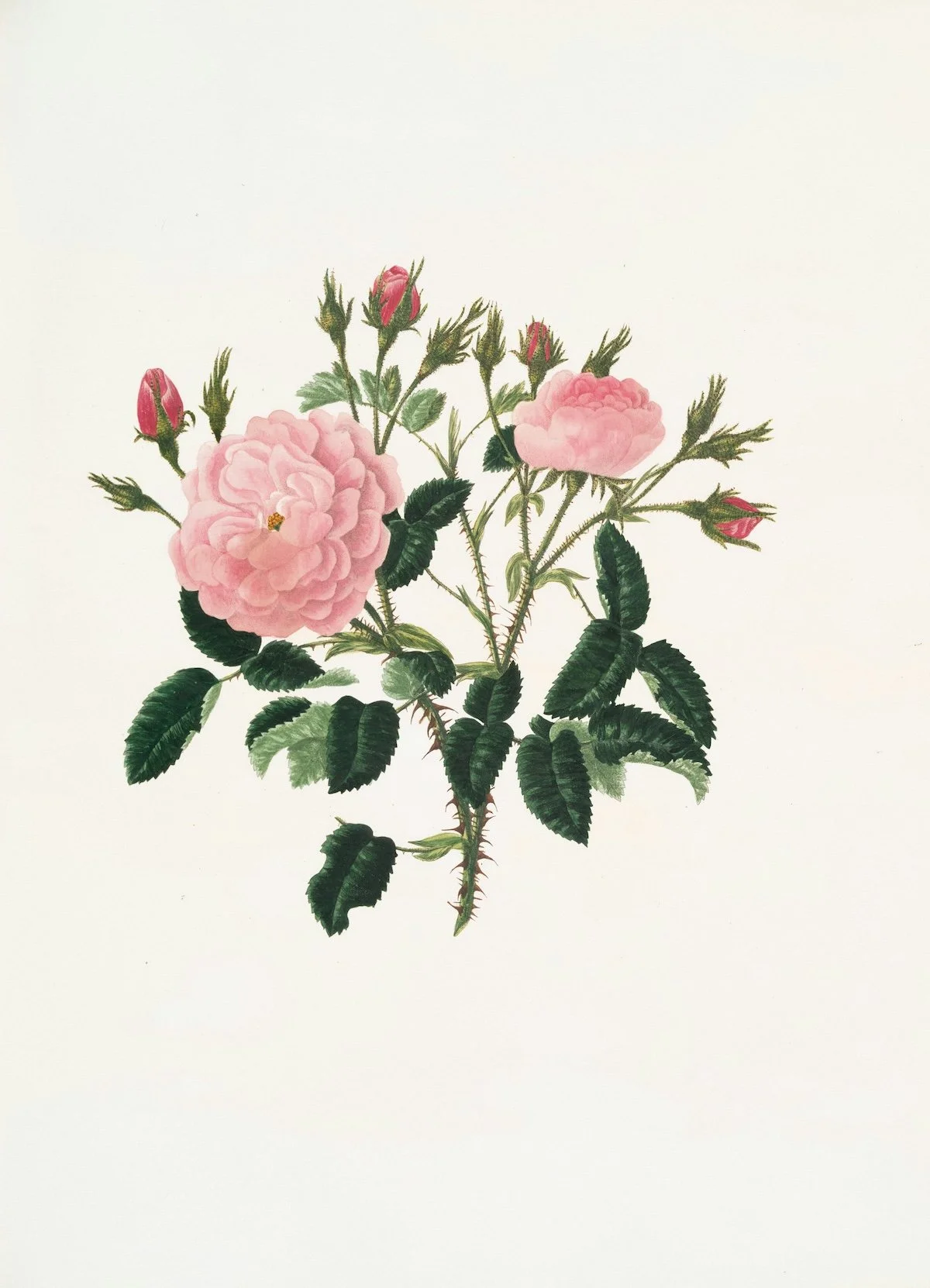
image via New York Public Library

Rose is one of the elder plants of our home planet, used medicinally for thousands of years and a beloved ancestor of our herbal practice. The herb helps us tap into ancestral wisdom, honor the ancient animal nature of our sensitivity, and learn how to unfold into our gifts just as a many-petaled Rose unfolds into maturity. As a sweet medicine that calms the nervous system, Rose assists with memory and promotes clarity of mind, heart, and spirit by connecting all three centers of experience. Within Ayurveda, Rose is considered a rasayana (rejuvenative tonic) and medhya (brain tonic and nervine) for all of the doshas. The Anishinaabe have a myth about Rose that teaches that โ€œ[t]he sight and smell of a rose are here to remind us of the harmony inherent in our world. The thorns are there to keep us mindful of greed that endangers the balance and thereby endangers the whole of creation.โ€ยน

Rose is an essential remedy for imbalances arising from excess inflammation. The flower relieves pain from heat and inflammation, including gastritis, peptic ulcers, and cooling an overheated liver. Roseโ€™s cooling qualities also alleviate the heat that can accompany autoimmune conditions and assist topically and internally with arthritic pain, improving flexibility of movement. Use as a remedy for fluid imbalances that lead to depletion of energy and blood in the body, including diarrhea, excess bleeding, and the accumulation of fluids. Rose prevents and alleviates colds and can also be used in the case of flu, sore throats, excess mucus, and coughs, including bronchitis. Rose is an uplifting, soothing, and nourishing medicine for those with weakened vitality, including children, elders, and people in recovery from illness. For fluid imbalances Rose can be effective in cases of an overactive bladder, bed-wetting, night sweats, and general excess excretion of fluids. Excessive menstruation is eased by a strong tea of dried Rose, and the herb is also useful for uterine spasms and cramping. A vaginal douche can relieve infection, inflammation, and conditions such as vaginitis and thrush. As an astringent, Rose can be useful for diarrhea and internal hemorrhage as well as acting as a healing herb in postpartum sitz baths.

As a digestive aid, Rose has wonderful probiotic qualities and supports healthy gut flora. Use Rose during and after taking antibiotics to rebuild gut flora as it encourages the growth of beneficial bacteria while countering harmful pathogens. As a clearing herb, Rose improves circulation and promotes healthy blood flow, breaks up kidney stones and helps the kidneys process toxins, and relieves brain fog.

As an aphrodisiac, Rose is an openerโ€”it opens the heart and body to healing experiences with oneself and others. Like many aphrodisiacs, Rose has nervine qualities that relax the body into a place of connected intimacy. For those seeking fertility support, Rose has also been shown to increase sperm count. In addition to the powder and juice of Rose, a Rose honey can be a topical treatment for inflammation, rashes, wounds, ulcers, acne, herpes, and similar skin imbalances. My favorite form of Rose skincare is rosewater, which adds and maintains water in the skin and can be used as a mild antiseptic for first-aid needs. Use as a mouthwash for ulcers and bleeding gums. Rose vinegar or a strong tea is especially cooling and repairing for the skin after prolonged sun exposure. Apply externally on the eyes as a soothing compress to relieve eye-strain and conjunctivitis and improve vision.

image via @cristina_glebova

Seasonal Uses

In spring Rose skincare recipes rejuvenate winter skin. A Rose herbal oil can loosen up stiff joints, waking the body up to the new season. In summer, use rosewater, a strong Rose tea, or Rose vinegar for after-sun care, and keep Rose honey or Rose petal powder handy for stings, bumps, and bruises. In autumn rosehips are a great addition to tea to prevent colds and flu. Add Rose petals to teas and desserts during winter to gladden the heart and as a digestive aid so that the body can rest deeply during the darkest part of the year.

Magickal Uses

The Rose is a symbol of many ancient goddesses, including Ishtar, Isis, and Aphrodite. The flower also has a special relationship to Sappho and lesbians as it is from Sappho that Rose received the name โ€œQueen of Flowers.โ€ยฒ Use Rose in spells and charms for love, desire, charm, and attraction. Add the petals to your dream pillow to dream of love. Rose is a great plant ally for those desiring to deepen their spiritual study and experience. Add to charms of mirth, reverence, and joy. Use in charms of secrecy (โ€œunder the rose . . .โ€). Use in handfasting rituals for divine blessing of the union. Thorns can be included in charms of protection. Rose tea awakens psychic visions and connects us to our intuitive heart-knowings.

The Rose Personality

The Rose personality has lost their spark of desire. They might have trouble sleeping, be restless and exhausted, and ultimately not have enough energy to explore their worlds either physically or philosophically. The desire to create and experience life and relationships of all kinds is low; their vitality stagnant. What they think they should be doing dominates their thoughts more than what they want to be doing. Sometimes they are not even sure they know what they want to be doing. Many Rose folks experience a disconnection in relationships, creating distance between themselves and those they love. For those whoโ€™ve been in this state of exhaustion for a while, their brain and heart fog can be punctured by sudden overwhelming feelings of despair, like they are living without a light in the dark. Sometimes, unresolved anger simmers deep below the surface - Rose teaches us how to use both our thorns and petals to set up boundaries and supportive spaces to express how we really feel. Working with Rose helps folk reconnect to their wildness, their fierceness, and their determination to know and name their heartโ€™s desires.

Rose helps folks to dream and want and feel and move closer to the relationships that feel whole and holy, closing the distance between themselves and the people, places, and creatures they love. Ultimately, Rose connects folks back to the secret excitement of mystery, where it is safe to express desire and seek it out. The profound gift of Rose folks is the ability to name desire, honor it in others, and shine like a fiery, welcoming, and protective light wherever they go.

๐Ÿต๏ธ

I hope you enjoyed this exploration of Roseโ€™s healing and magickal gifts. You can find many more plant profiles in my archive and my complete collection of plant profiles in The Plant Ally Library. If youโ€™d like to learn more about the thorn energy of Rose, come this way. Rose has a special relationship with Venus within astroherbalism, and if youโ€™re into connecting with the wise crone energy of Venus during the yearโ€™s renewal at Samhain, you might like this tarot spread.

If you are one of the folks who have already preordered The Apothecary of Belonging or are planning on purchasing it today or requested it at your library - thank you! Thank you for your enthusiasm - I hope the book is useful to you and your practice, becoming appropriately tea-stained and well-worn in the years to come.

This post was made possible through patron support.
โค๏ธŽ Thanks, friends. โค๏ธŽ


We respect your privacy.

Thank you for signing up for Magick Mail! Once you have confirmed your subscription to the list you will gain access to our member's only apothecary.

0 Likes
categories / plant allies
tags / rose, rosa damascena, rose herbal uses, rose medicinal uses, the apothecary of belonging, plant allies, plant ally, the plant ally library

Autumn's Herbal Magick: Making Traditional & Modern Folk Charms

October 13, 2025  /  Alexis J. Cunningfolk

I love autumn and all it has to offer - itโ€™s still warm enough to work magick outside but not so sweltering like summer with plenty left to forage. The energy of harvest season is abundant and the veils between the worlds are that much easier to move through. I love coming back home after being out on a blustery autumn day to my magickal workspace, hands itching to craft a charm or two as daylight gives way to the long dusk of dark season.

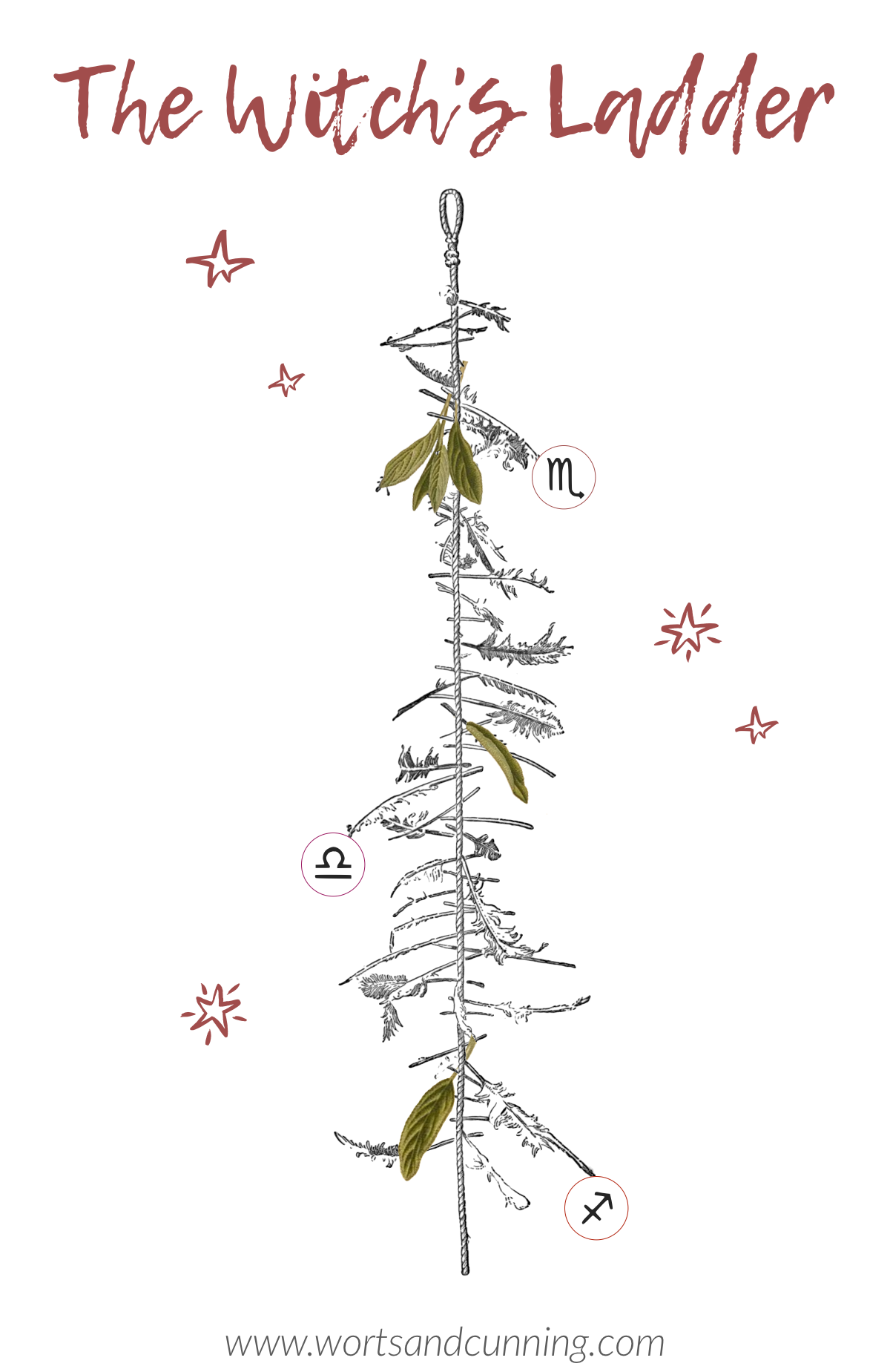
In the third part of my Seasonal Magick series we'll be exploring three folk spell traditions, incorporating plant allies of autumn to aid us in our magick. From a witch's ladder that binds up pesky energy to a witch's bundle to welcome in plenty and a witch's bottle for protection, these three herbal charms are easy to make, tap into our legacy as magickal practitioners, and help us to connect with the energy of the season. To find the full introduction to this series and why I love simple folk magick so much, including additional insight into each of the three traditional charms we'll be exploring, come this way.

So let's explore how we can create witch's Ladders, bundles, and bottles as one of the ways to connect with the seasonal rhythms of the year and our beloved plant allies.

The Witch's Ladder

Traditionally made of woolen cord, rope, woven thread or hair and knotted with items like feathers, holed stones, sticks and bits of metal, witch's ladders are a beautiful form of magick that combine charm-making with knot magick and weaving spells. The witch's ladder has remained popular among modern practitioners, supported in part by the Priestess Doreen Valiente's Spell of the Cord, an inspired modern variation of older forms of spoken knot magick. Energetically, they can act like a net, gathering up energy to hold in place and to either be drawn upon (in the case of beneficial energy) or released elsewhere (in the case of baneful energy).

A Witch's Ladder To Bind Up Pesky Energy

A witch's ladder can be a lovely little trap for the sort of pesky, irritating energy that can build up over time because of stress. Autumn's energy of drawing down and in, where decay and decomposition feed the land before winter's slumber, can be tapped into as we shed the layers of the year, including energetic patterns we no longer need taking up residence in our energetic, feeling body. For autumn, I love a witch's ladder that sings to the bones of the year, acknowledging the strangeness and frustration that can flow through our lives, and creating a space to shed bothersome energy.

Garden or Common Sage (Salvia officinalis) is a beautifully protective herb that has additionally space and energy clearing qualities. And to be very clear, I'm not speaking about using White Sage (Salvia apiana) which is so over-harvested it is at risk of endangerment, but any of the many common varieties of Sage typically used in cooking. In my experience, Sage has a magnetic, almost hungry, energy for pulling unwanted, troublesome energy from the energetic body (including the "body" of a home or workspace or mode of transportation). The medicinal uses of Sage reflect its magickal qualities - it is a wonderful "processing" tonic that helps us move energy and information throughout the body through healthy circulation and brain function. Working with Sage as a plant ally to bind up pesky energy can help us to process and release what we no longer need in our lives and energetic field. 

A Sage Charm

Salvia, panacea
Hungry herb of healing
Feast upon this energy
That no longer needs feeling

Other herbs to consider are Juniper (Juniperus officinalis) branches and/or berries and Rue (Ruta graveolens). Adding tassels (a tool in traditional witchcraft) and small woven orbs to your witch's ladder can serve as places for pesky energy to become entangled and trapped. Consider using dark colors, such as deep red and black, and symbols of spiders (who so deftly trap objects in their web) as part of your witch's ladder. 

Creating Your Ladder

To create a witch's ladder use cord, thread or yarn to braid or not your chosen objects into a long hanging cord. How long you make your witch's ladder is up to you, but I find that they work better when shorter when being hung outside and can be a bit longer when keeping it inside. I like to start by laying out all objects I'll be tying into my witch's ladder before me on my altar, blessing them with the four elements of fire (candle light), air (incense), water (water infused with flower essences or salt), and earth (sprinkling herbs over the items or laying the items on a stone surface). I like to use some variation of a cord charm when knotting my items, like Valiente's or the one written above, changing the language for my needs. 

Once all items are added, the witch's ladder can be hung up by an altar, window or door. For a spring witch's ladder I like to make ones that'll either hang just outside my door or beside a window, so that the ladder is able to dance in spring's winds.

You can add extra magick to your summer witch's ladder, by placing it in a sunny spot at the height of noon for a few minutes to charge up - better yet is it is surrounded by a circle of quartz crystals. Over the next year, I like to use pass my witch's ladder over my deck of tarot cards or other divinatory tool before doing a reading when I feel like I need an extra boost of illuminating clarity.

autumn herbal magick

The Witch's Bundle

The simplest of our three traditional folk magick charms, a witch's bundle is a collection of exclusively or mostly plants with other items (such as old skeleton keys, a nice stick, a hunk of rock) tied up together and hung up above a door (or bed or other auspicious place). Witch's bundles, like all of the magickal crafts listed here, can be endlessly personalized to match your need, your aesthetic preferences, and reflect your relationships. If you're studying a particular plant ally you might include them in your witch's bundle (if the herb has already been dried and processed, you can add some into a little pouch and tie it to your bundle). If you are working with a deity that is fond of one particular color, choose that color of cloth or string to tie up your bundle. If you're a cool goth witch, add the skulls and gothic crosses to your bundle of dried Rose (Rosa spp.). Let yourself enjoy the process of finding your creative magickal expression - it helps you understand better what it you're using magick for in the first place.

The Witch's Bundle To Welcome in Plenty

Autumn is a season of harvest festivals, of celebrating the labor of those gone before us, the fruits of our personal and collective effort, and the regenerative harvest of endings and beginnings. Along with spring, autumn is a time of equinox, walking the path between day and night before tipping towards the sacred dark. Working with autumn's magick we can learn to identify what it is we need during the long sheltering night ahead, what we want to carry with us to the wheel's bright half, and where it is our plenty lies. For autumn I like to create bundles that connect me to the abundance of the year so that I know what it is that keeps me full and well and steady on my path.

Little mounds of enchanting Thyme (Thymus vulgaris) make me feel abundance whenever I spot them in my garden because of their tenacious ability to thrive in the heat and cold, but also because I know a harvest of Thyme will help protect from and support the body through winter illnesses. Thyme has a generosity of spirit that I turn to again and again in my practice to learn how to find plenty even when encountering scarcity. Working with Thyme during the season of harvest festivals is one of the ways that we can connect with the plenty in our lives, letting it flow through us into the lives of others, and back to us again and again. 

A Thyme Charm

Thyme upon my lips
Thyme upon my eyes
Thyme upon my spirit
Where hope and plenty thrives

Witch tip! You can replace the word โ€œhopeโ€ in the charm with another desirable quality such as love, peace, joy, and so on.

Additional herbs to consider are Peppemint (Mentha piperita) and Lemon Balm (Melissa officinalis) which are abundant growers and spreaders in the garden, representing abundance. Items that symbolically represent plenty to you, from seeds to money to images of good times together with friends and family, can also be placed in your bundle.

Creating Your Bundle

Bless all your objects as described in the above section "Creating Your Ladder." Once you've collected all of your items (such as a few sprigs of Rosemary), use a colored thread or ribbon of choice to tie up your bundle. I like to tie the top part and leave the rest loose, but you can tie up everything from top to bottom. The advantage of the latter technique is that you can tie larger objects inside the bundle, even hiding them from view if that's your preference. Once tied up, hang the bundle above an altar, door, or window. 

autumn herbal magick

The Witch's Bottle

Traditionally, witch's bottles or jars were buried or hidden away from view in the back of cupboards, sometimes even between walls, beneath floors, or high up in the attics. They embody the magickal practice of doing the work and then letting it be, allowing the magick to continue to unfold in its own time. Sometimes jars are made for a short period of need (such as a honey jar for attracting a job) and then the contents are offered back to the earth, while others are more permanent and meant to be mostly forgotten. Other times, jars and their contents can be renewed on a regular basis (such as at the Full Moons or the sabbats). Energetically, witch's bottles tend to act like generators, helping to generate an outcome or a specific type of energy.

A Witch's Bottle For Love

One of the classic types of witch's bottles are those for protection. Autumn is a time of changing seasons, when summer's easiness fades away and winter's hardiness is just around the corner, so it makes sense to cast protection spells during this liminal time of year where nothing is quite certain. I find autumn's magick to be a combination of drawing on summer's strength while inviting in winter's quiet, honoring the work done earlier in the year to make the rest in the dark of the year possible - spells of protection are part of that process for me. 

The hedgerows are places of magick, liminal and wild, home to wild creatures, medicinal plants, and doorways to the otherworld. Hawthorn (Crataegus monogyna) is a sacred hedgerow plant, marking the seasons of the year with its blossoming flowers in early summer and appearance of red berries in the autumn. One of the most prized herbs of the heart in traditional western herbalism, Hawthorn not only supports the health of the physical heart but the repair of the emotional heart as well. It is also an energetically protective herb with its long thorns and tales of the plant protecting secret passageways to the otherworld - keeping them hidden until the seeker is ready (or until the Good Folk become interested in you). I love using all the aerial parts of the Hawthorn - the flowers, leaves, berries, and thorns - in my witch's bottle, but use what you have available to you.

A Hawthorn Charm

Round and round the Hawthorn green
Thorn and flower and berry
Round and round safe shall I be
Thorn and flower and berry

Witch tip! You can visualize a magickal and protective hedge that encircles around you, keeping out harmful energy and allowing in beneficial energy.

Other herbs to consider for your protection magick include Garlic (Allium sativum) and Basil (Ocimum spp.). Consider adding sharp objects like nails, even broken glass, to increase the protective energy of your bottle, as well as items that represent protective guides and familiar spirits (like cat hair if you work with a cat familiar). You can also consider adding your own hair or bodily fluid (a very traditional ingredient in witch's bottles) to bind the protective energies of the bottle to you.

Creating Your Bottle

Bless all your objects as described in the above section "Creating Your Ladder." Make sure you have a tight sealing bottle or jar so to prevent items from leaking out if you are using any fluids or from pests getting in. Add your herbs and charms in one-by-one, naming their purpose as you go, and then you can seal your jar with wax or tie it up with ribbon to seal in or bind up the magick. Once completed choose where your bottle is going to live, whether in the house, mode of transportation, place of school or work or buried (especially good for banishing magick, though make sure all items are biodegradable).

๐ŸŒป

For more herbal inspiration for your summer, how about creating your own autumn wellness apothecary? Or a might-do list for the Autumn Equinox? I also explore more of autumnโ€™s plant allies, healing paths, and magickal ways over here.

I hope youโ€™ve found inspiration for your own autumn magickal practices and feel a little more connected to season of the witch and all the witch folk gone before us.

This post was made possible through patron support.
โค๏ธŽ Thanks, friends. โค๏ธŽ


We respect your privacy.

Thank you for signing up for Magick Mail! Once you have confirmed your subscription to the list you will gain access to our member's only apothecary.

2 Likes
categories / recipes + tutorials, magickal arts, seasonal practice
tags / seasonal rituals, seasonal herbalism, seasonal magick, seasonal witchcraft, autumn plant allies, autumn, autumn magick, autumn herbal magick, autumn witchcraft

The Betwixt Season: Tarot for Magick & Possibility

September 29, 2025  /  Alexis J. Cunningfolk

Where I live, in the land of easy summer, autumn has to work hard to find footing, but she eventually finds her color and her gothic coolness.

There is some part of me that settles into a form of contentment I only experience in autumn - a feeling like everything around me from the weather to the colors fits just right. Where I live, autumns are short and fleeting, a shooting star arching between summer and winter that illuminates the night sky with its precious and unusual light and then is gone. Between Harvest Home and Samhain, we are in the thick of harvest season, where the energy of summer's abundance is dissipating into the fog of autumn's life-nourishing decay. 

It's no surprise that this time of year of rapidly changing landscapes and growing shadows (at least in the more northern and southern parts of our planet), that itโ€™s a season associated with witch folk, the unfamiliar, and the liminal. Autumn greets us with the reminder that all is finite - from the green leaf to the barley field - and yet, there is life still to be lived. The pull between the worlds grows stronger as the veil between all places begins to thin - part of the training of witch folk is to know how to stay rooted on one side while connecting with the other.

While I love this time of growing dark and in-betweenness, I can also find myself harried and hurried, trying to do all the things that the season inspires. While facing the finite can be a relief, it can also bring with it the fear of what might be ending, the grief of what is no longer with us, and the hopelessness that can come from feeling that some aspects of life on this planet (such as the horrors of hungry war and profit machines) feel relentlessly infinite. 

One of the reasons that witch folk practice magick - beyond the consciousness-changing effects that occur in ritual which evoke a sense of empowerment in one's life - is that magick helps us to access our current of the infinite. Magick does not guarantee an outcome but it helps to expand our notion of what is possible. For me, autumn is one of the most magickal times of year, with its dance between the infinite and finite, with light and shadow, and full of sabbats calling us to gather and share abundance. It is where we can gather betwixt and between the challenges of life, the expectations of overcultures, and unrealistic pressures of modern living, to connect with the visions of worlds and futures abundant with kindness and possibility.

While my betwixt season appears between the Autumn Equinox and Samhain, your betwixt season might appear at another time of the year. I encourage you to find your own season of liminality and I hope the following tarot spread helps you to notice the sudden shimmer of magick and possibility throughout all parts of your year. 

Tarot for Magick and Possibility

The following tarot spread is to help you connect with your current of magickal energy and find areas of possibility in your life - all with a little help from our beloved ancestors. If you're stuck on a problem or an area of your life feels particularly stagnant, this spread can help you notice where a shift of perspective can lead to a shift of energy. It is a great spread for times when you're feeling the bigness of life and the universe, but haven't quite figured out how to stay rooted and centered in your explorations. Alternatively, if you're feeling inspired to work magick, but don't know where to focus your efforts, this can be a helpful spread to cast (for both individual practitioners and magickal groups). 

 โœจ Card 1. Something Afoot

This card highlights the current of magick swirling around you at the moment. Often this card is inspiring and can be a big energetic "yes, that's what has been calling me!" Challenging cards in this position can highlight things that you might feel afraid of or uncertain about but want to explore or a part of your life that is calling for transformation.

 โœจ Card 2. The Crossroads 

The place you find yourself in your practice and why things are feeling muddled or uncertain. This card often highlights the choice you feel like you're trying to make or the ways that it feels that the possibilities are limited.

 โœจ Card 3. The Veil Parts: This Side

As the veil thins, meetings are made. This card highlights the inherent gifts you carry within you, often showing a possibility for the path ahead that you may have missed or not given enough weight to.

 โœจ Card 4. The Veil Parts: That Side

As the veil thins, the ancestors arrive to meet us. This card highlights a gift that your ancestors are bringing you to support your ability to connect with the magickal energy of the season. Like the previous card, this one often reveals a possibility for the path ahead that you may not have noticed yet or forgotten.

 โœจ Card 5. A Tool to Use

This card highlights a tool (such as a magickal or healing technique or practice) to call on for the path ahead. The element of this card (for example, the fiery energy of a wands card) can point you towards a particular element-inspired practice (such as the fiery energy of a candle magick ritual). The Major Arcana can inspire all sorts of magickal acts or might be pointing you towards certain aspects of personal or community care.

 โœจ Card 6. A Step to Take

This card suggests the next step to take to tap into your current of magickal possibility.

๐Ÿ

So are you a child of autumnโ€™s glow or are you eager to get onwards into winter?

While you can peruse through my complete archive of tarot spreads, you can also find the rest of my in-between tarot series below:

๐Ÿชฝ The Soft Season: Tarot for Clarity & Inspiration

๐ŸŒธ The Blossoming Season: Tarot for Big Feelings 

โ˜€๏ธ The Bright Season: Tarot for Connection & Purpose

May you find the shimmer of magick wherever your life takes you, highlighting pathways of possibility that are hidden to the heart until they are finally named.

This post was made possible through patron support.
โค๏ธŽ Thanks, friends. โค๏ธŽ


We respect your privacy.

Thank you for signing up for Magick Mail! Once you have confirmed your subscription to the list you will gain access to our member's only apothecary.

1 Likes
categories / tarot + divination
tags / tarot spread, tarot spread for autumn equinox, tarot spread for mabon, tarot for in-between the seasons, tarot for witches, tarot for magick

The Apothecary of Belonging: An Introduction

September 03, 2025  /  Alexis J. Cunningfolk

the apothecary of belonging

Friends, I wrote a book, and I thought it would be fun to share the introduction with you!

The Apothecary of Belonging: Seasonal Rituals & Practical Herbalism will be in bookstores this November and is currently available for pre-order. Thank you for all of your support and encouragement over the years - this work was shaped by our community and I hope that it is received as a big-hearted thank you.

So if you like hardcover books with built-in bookmarks (fancy!), color illustrations, and a mix of the practical (seasonal indications guides for plant allies!) and the magickal (simple rituals and a unique oracle practice for you to create!), then I hope that youโ€™ll check The Apothecary of Belonging out. Also, all the cute art youโ€™ll see below is from the book! If youโ€™re looking for even more of a sneak peek, you can check out the first 40 pages for free.

In the meantime, please enjoy the full introduction from my book and my evergreen gratitude for all of you.

the apothecary of belonging

The Apothecary of Belonging: Seasonal Rituals & Practical Herbalism by Alexis J. Cunningfolk

A Place of Belonging

The wheel of the year turns and seasons shift, a dancing pattern of life, death, and transformation, weaving together all that was, is, and shall be. Each of us is woven into the yearโ€™s turning, bodies of land sustained by the same earth, air, fire, and water that sustained our ancestors and will sustain all who come after us. All of us are shaped by and shape our entanglementsโ€”the well-being of the land, our bodies, and our communities intimately interconnected through a deep kinship. And even though we might forget our interconnectedness, the land always remembers. 

The Apothecary of Belonging is an invitation back into the wisdom that, by being of the land, we have always belonged. While many of us may feel disconnected from the land and one another, through working with the seasons of the year we can partake in a profound reconciliation of all parts of ourselves back home to the land, our bodies, and our communities. Within these pages, weโ€™ll work with plant allies and simple rituals to connect with the energy of each season, mixing practical herbalism with inner work, mapping pathways of wisdom, well-being, and sacred relationships.

While this is a book mostly about the seasons of the lands we live with, in many ways it is also a book about bodies. For we are all land - there is no other - and though we may call land by many names, it is from a body of land that we are formed and it is as a body of land that we experience life. We are our physical bodies, mental bodies, emotional heart bodies, and bodies that are shrines for our infinite spirit. We are bodies of land, sea, and sky, as well as bodies that hold memories and stories experienced in our present life, inherited from our family and cultural lines, and carried for generations yet to be. As we seek out belonging and the places in the land within and around us in most need of healing, we travel through time, to sites of old pain and early wounds in the past, all while uprooting the belief that healing is an act of individual willpower and moving forward into futures that we are pulling toward us as much as we are being pulled toward them. Exploring seasonal rhythms of kinship helps us recognize what it is we want to make time and space for, developing the ability to cultivate connection in our lives no matter where we come from or where we might be going.

There are so many ways our ability to feel our belonging can be disrupted. Many of us have complex direct or ancestral experiences of displacement, migration, settlement, and return. Or we have challenging experiences with our family of origin or cultural upbringing that have made us feel like an โ€œotherโ€ from an early age. Pernicious and overt systems of oppression work to divide up land - including our land-bodies - keeping us separated by fear-based borders and creating uncertainty around our own inherent dignity and sacredness. What I hope to explore with you in The Apothecary of Belonging is how, rather than a hindrance, the complexity of our land-bodies is an affirmation of our belonging to one another. We are already kin, but it takes practice to develop an intentional and healing relationship with the land and one another.

While the tools needed to dismantle oppressive systems will be as diverse as the people, places, and creatures living under them, there are some simple and useful earth-centered practices everyone can engage with. The central practice I hope to offer is finding connection with the seasonal rhythms of the land as a process of coming home to the healing seasons of your body and the kinship of community. When we begin our healing work from a place of deep knowing we already belong - being inherently of the land -we can begin to untangle beliefs about not being enough, worries about whether weโ€™ll ever fit in, or concerns about finding a place for who we are presently as well as who we are becoming. I want you to be guided by the simplicity and complexity of the changing land to accept that you have always belonged and there is abundant space for all of who you are. 

Like many of you, Iโ€™ve experienced the discomfort, pain, and confusion of not knowing quite where I belong. As a third-culture kid, mixed womxn, lesbian who is allergic to binaries of all kinds, and someone who has experienced life at different class levels, Iโ€™ve had my share of experiences of believing or being told I donโ€™t belong. At the same time, Iโ€™ve had profound experiences of belonging that have been life-changing and hope-sustaining. These experiences of otherness and belonging have shaped my practice as an herbalist, and Iโ€™m called to help folks cultivate a resilient and persistent sense of belonging regardless of what culture or family or systems of power may want them to believe is possible. I canโ€™t resolve complicated family stories or identities for you, undo the pain of traumatic experiences, or directly place you in a community of loving peers (that would be the most amazing superpower!), but I can help you develop the skills of discernment and self-knowing to recognize how deeply, how profoundly, how beautifully you already belong and how to (re)connect with yourself and the world around you from that place of belonging.

The Path Ahead

Within The Apothecary of Belonging weโ€™ll explore with our plant allies how to know ourselves as land and as beings who deeply belong to the land and each other

through three primary practices:

๐ŸŒฒ Connecting with and telling the story of the land within us

๐ŸŒฟ Observing and engaging with the seasons of the land around us

๐Ÿ•ธ๏ธ Embodying our kinship through ritual and community practice with the land between us

Weโ€™ll begin by getting to know our plant allies, our guides to the land around, within, and between us. Then weโ€™ll learn about the energetic foundations of traditional western herbalism that flow through the seasons within and around us, exploring ways we can map our inner landscape, and then journey through each of the four seasons with plant allies as our guides and companions. In each seasonal chapter, weโ€™ll explore the common themes each part of the year brings as well as ways to connect through your body with the land from breathwork to sacred inquiry.

Each seasonal section also contains an indications-based guide to plant allies for common ailments. Indications are a succinct way of identifying what plants might be most appropriate for a condition through observations of the body. Being able to discern in our body, for example, a dry and hacking cough versus a damp and weak cough is one way to find the best herbs to work with. I have focused on herbs that are generally considered safe with few contraindications, but you should always reference the contraindications appendix as well as look up any plants you want to work with in your trusted materia medica or with an herbalist.

Youโ€™ll also find community clinic suggestions in each seasonal chapter. While not every one of us will or wants to work in a community clinic setting, these ideas can easily be applied to personal apothecaries, households, and friend groups, acting as a guide for sharing herbal gifts and making seasonal donations to herbal calls to action, neighbors, and communities in need. There are also simple tea recipes to support your energy season to season, rituals that can be adapted for solo or community practice, including divination techniques for the inner landscape maps youโ€™ll be creating, and lunar blessings to support your remedy-making throughout the year.

the apothecary of belonging

Shared Language

As we journey together, I want to begin by defining some of the terms youโ€™ll find here. I use body and land-body interchangeably to refer not only to the physical body, but our emotional, mental, and energetic bodies as well. When I write of bodies, whether our own individual and finite physical forms or bodies of land, I am speaking of bodies in their most expansive and complex forms.

When I speak of ancestors, I am referring to ancestry in the broadest way possible, from familial, cultural, and spiritual ancestors to nonhuman ancestors, including ancestors of place, plant, stone, and water. I use the term kin to refer to human and nonhuman kin alike, and sometimes I use terms like beyond-human kin and kindred to refer to these connections as well. When I write of relationships, it is about relationships of all varieties, not just romantic or family-based. Writing about consultations and clients can refer to professional practice but also encompasses the casual conversations you might have with friends or family members when suggesting herbal care.

Finally, the term traditional western herbalism is an imperfect way of describing not only my training and background as an herbalist, but the vast, complicated, and beautiful path of herbalism that such a phrase is trying to encompass. Traditional refers to the fact that what I practice is derived from ancient and modern herbal practices, from the evidence-based (including Indigenous science) to the folkloric and magickal. Western is much less useful, and I wish there was an alternative for it. Traditional western herbalism has ancient roots in North African, Greek, and Arabic medicine, having journeyed throughout Europe and on to North America, changing and adapting through the centuries. The more I learn about the ways traditional western herbalism developed, the more Iโ€™ve come to appreciate and love its multicultural roots. Terms like western, eastern, global south, and global north flatten culture and create misleading binaries about diverse swaths of people, places, and societies. I am sure a better term for this path of herbalism will emerge as language continues to grow more expansive and inclusive. In the meantime, traditional western herbalism is a widely used and recognized umbrella term and a meaningful differentiator from other herbal traditions.ยน

While Iโ€™ll be wandering through the energetics of traditional western herbalism as a useful form of observation and storytelling, the primary focus of the herbal practice within these pages is building a relationship with our plant allies, which weโ€™ll explore in the next chapter. 

As we journey along the path of The Apothecary of Belonging, may each chapter serve as a map, marked with the places where we might find benevolent plant allies and words of magick, simple rituals and skills of connection, as we trust in our shared belonging and travel the wheel of the year back home together.

๐ŸŒ™ ๐Ÿ“– ๐ŸŒฟ

If you want to read more Iโ€™d love for you to get a copy of The Apothecary of Belonging from your neighborhood library or local bookstore. Of course, you can also peruse through my complete archive for more herbal and magickal writing. If you liked this introduction, you might enjoy some of my seasonal-focused posts from Between the Seasons series to my series on the wheel of the year.

Thank you again for all of your support over the years - may there be many more years together of exploring the green world and places in-between.

This post was made possible through patron support.
โค๏ธŽ Thanks, friends. โค๏ธŽ

๐Ÿ“š

Footnotes

1. I spent so much time wrestling with this paragraph and trying to squeeze libraries of complexity into a few sentences - something that I felt nervous to do especially knowing that this was going to right at the front of the book no less! I spent a lot of time trying to figure out how to refer to regions and cultures, going back and forth between increasingly specific to much broader categorizations. If I were to rewrite it I might use a term like SWANA in place of North Africa - one of the biggest points I wrestled with. Still what I wrote works for now and I hope it conveys that traditional western herbalism is a living tradition built upon living traditions, shared at the crossroads of cultures, and changed by all who practice it.


We respect your privacy.

Thank you for signing up for Magick Mail! Once you have confirmed your subscription to the list you will gain access to our member's only apothecary.

2 Likes
categories / path of the herbalist
tags / the apothecary of belonging, seasonal herbalism, seasonal magick, seasonal rituals, seasonal witchcraft, astroherbalism, astroherbology, theory and application of traditional western herbalism, path of the community herbalist

Herbs for Highly Sensitive People: Monthly Herbal Practices for Wellbeing

August 25, 2025  /  Alexis J. Cunningfolk

We've explored daily and weekly practices, now it's time to look at the monthly practices with our herbal allies that can help keep us centered and connected as highly sensitive people. Monthly practices might take a little more effort, but as they are only meant to happen once a month and carry us through to the next month (or lunar cycle as I like to use to mark time) they can be well worth the time. 

For me, these monthly practices are like gifts for my future self as they often involve planning ahead for the next monthly cycle (where my future self is already waiting). They also act like an energetic tuning fork, helping me to retune and reconnect with the subtle practices that help me stay steady and in kinship with all that I love - something which feels more and more needful as we continue through this long season of organizing for a more just and kind world.ยน Ultimately, I try and shape my monthly practices to be something I look forward to and I hope that the following list of ideas will inspire your own monthly places of pause and restoration.

herbs for highly sensitive people

image via @thefinalshot

Through the Herbs for Highly Sensitive People series we'll be exploring ways of creating these little zones of peace throughout our days, weeks, and months, making space for us to reconnect with our sensitivity in ways that feel empowering. Herbalism is a sensory rich healing tradition, full of sights, scents, tastes, and sensations, that draws us back into the collective wisdom pooled in our body and pulled up by our plant allies. Working with plants is one way that we, as sensitive folks, can honor the sensitive ways of our body by strengthening a resilience that reconnects while alleviating the symptoms of overstimulation. 

When I write of the body, I am referring to the body in its most expansive form including the physical, emotional, mental, and mythological body. I'm not trying to describe the emotional body as a separate part from the physical body, but rather that our bodies have emotional experiences intertwined with physical experiences intertwined with mental and mythological  experiences. Part of the practice of highly sensitive people is to explore through our bodies what we have been asked or forced to separate rather than create a healthy boundary. Being called "too sensitive" over and over again, for example, asks us to separate from our very real lived experience instead of creating healthy boundaries that help us feel less overwhelmed by our depth of feeling.

And for those who might balk at the term "highly sensitive" but find yourself reflected in a lot of the descriptions of high sensitivity - I feel you on that - and you might want to check out my first post in this series exploring some of the limitations of the "highly sensitive" moniker and how folks like Chris D. Hooten have proposed more culturally expansive and inclusive terms like highly responsive to your environment or HREs. I really like the term HRE and I highly encourage you to give Hooten's article a read.

I hope that these simple practices will fit in alongside any mental health services, community support groups, and the general network of good company in your friends and family. Plant medicine thrives as a stress-reducing, nervous system reparative, and preventative modality while helping us to return to a more earth-centered and affirming way of being in the world - a great path for any highly sensitive person to be on.

Monthly Herbal Practices for Highly Sensitive People

herbs for highly sensitive people

image via @micmurph12

Take Stock of Your Apothecary

Throughout our Herbs for Highly Sensitive People series I've recommended various types of herbal remedies to consider as part of your regular routine. Hopefully you'll have a few key remedies on hand to bring with you on outings, keep at school or work, or in your home apothecary. These will inevitably run out if they prove useful so having a regular check once-a-month to see if something needs restocking is a good practice to have. It feels much better to have your favorite anxiety-reducing tea on hand when you need it rather than having to scramble to blend together or buy more of it when you really need it.

I'll be honest that I haven't always had a good restocking practice for my home apothecary. For the first few years of my herbal business I made and sold remedies at markets and online, but after closing that part of my business - which required a lot of detailed stock management - it was difficult to find pleasure in maintaining my own personal apothecary. Looking back now I recognize that I was also burnt out after years of intense remedy making, packaging, shipping, and all the administrative work that goes along with it, so it makes sense that this essential part of my personal care would feel overwhelming. Slowly I built up a ritual around it, tying my apothecary check-ins with the lunar cycles and the seasons of the year, lighting candles, singing spell songs, and finding gratefulness in being able to work with these remedies on a daily basis. Some practices need some enchanting to feel sweet again especially if they are necessary but feel a bit tedious. 

I also think that there is a beauty in regularly, consistently pushing back against far too many societal norms that ask us to forever push sensitive selves past exhaustion, by protecting a little bit of time each month to make space for moments of slowness and pause in the month ahead. These monthly restocks are little meetings with our common allies in the effort to reshape personal, familial, and social cultures into something that works for the many and not just enrich the lives of the privileged few. 

Practice Recommendations

The heart of a monthly take-stock practice is to make things easy for yourself. If you have a favorite tea blend that you make, have the recipe written on the jar you store the herbs in or in another easy to find spot (e.g. in your notes app, written on a scrap of paper stuck on your fridge, in your apothecary notebook). A monthly restock is easier when you're not having to spend extra time looking for stuff, whether recipes or supplies, so keep both in the same spot so they are easy to pull out when you need them.

It's a good idea to not only have your essential remedies, but a few types of herbs in your apothecary, especially if you're just starting to work with herbs for your sensitivity and don't know where to start. Below you'll find my recommendations for the kind of herbs that I think highly sensitive people would benefit from always having on hand.

Essential Plant Types for Highly Sensitive People

๐ŸŒฟ Nervines: Also known as nervous system tonics, these are herbs that help to reduce stress, regulate the nervous system, and alleviate the symptoms of sensory overwhelm. Nervines are foundational to most herbal protocols, but they're especially important for folks with extra sensitivity to their physical, emotional, and social environments. There are different kinds of nervines from stimulating nervines (like the caffeinated tea plant Camella sinensis) to relaxing nervines and general nervous system tonics that both stimulate or relax the nervous system given your current needs. In general, I think HSPs benefit from a nervine that can be taken over the long term - Milky Oat (Avena sativa) is one of my favorite nervines to recommend for this exact reason. Other great nervines include Lemon Balm (Melissa officinalis), Linden (Tilia x europaea), Skullcap (Scutellaria lateriflora), Catnip (Nepeta cataria), Chamomile (Matricaria chamomilla), and Vervain (Verbena officinalis). 

๐ŸŒฟ Adaptogens: These are plants that help the body to respond to stress in a balanced and aid the recovery process afterwards. While some adaptogens are going to be far too stimulating for a number of highly sensitive folks, I think adaptogens that are more energetically balancing and stress relieving in their healing gifts are great allies. Some of my favorite neutral to relaxing adaptogens for highly sensitive people are Ashwagandha (Withania somnifera), Reishi (Ganoderma lucidum), and Eleuthero (Eleutherococcus senticosus).

๐ŸŒฟ Ancestral Herbs: There's a lot of interesting science on the epigenetics of trauma, sensitivity, and the ways that generations of (mal)adaptive survival can sit in the bodies of descendants. I believe that there is a useful magick that occurs when we work with one or more herbs that our ancestors would've been familiar with as a way to heal some of those inheritances that may be making our ability to thrive as sensitive people more challenging. If the body remembers the wounds of generations past I believe it also remembers the healing allies like our beloved plants. If you don't know where to start, I recommend looking to your cultural kitchen spaces and the cooking herbs and spices that you find there. 

highly sensitive people herbs HSP

image via @myr0326

Connect With Your Plant Ally

I stumbled into breathwork and meditation as a kid not because I had any idea what either of those things really were but because I'd read that breathwork could help my asthma and that meditation could help my witchcraft. It's been a multi-decade learning experience ever since and I believe that these simple practices of connecting with my breath, learning to pause and be still with my busy sensory experiences, and embracing the passing nature of whatever it was I was currently feeling saved my life as a young person. Meditation and breathwork is so often portrayed as some strenuous practice at being both immensely peaceful and one with the universe that it can be easy to forget that these are just tools of little adjustments over a long period of time. 

Learning to steady and thrive in your sensitivity is a practice in little adjustments. While there might be big life-changing moments (like quitting your job, ending toxic relationships or dramatically downsizing your belongings) these are meant to be every once in a great while happenings, not regular occurrences. Strength in our sensitivity often relies on much subtler but important adjustments to our inner and outer landscapes - breathwork and meditation are free and accessible tools that we can use to create these adjustments. 

One of the ways we can connect with plants as allies is through meditation and breathwork, where we set aside a reliance on the spoken word and let ourselves communicate through our felt body. Plants are great communicators in the spaces between waking and sleeping - a state that meditation and breathwork brings us into. I hope that if you are interested in working with plants over the long term that you'll consider developing a regular meditation practice with your plant allies - and once a month is a great way to start.  

Practice Recommendations

Building on the sitting with plants practice found in my suggestions for weekly practices for highly sensitive people, the plant ally meditation focuses on a direct connection with a plant you are currently working with. If you are able to sit with your plant ally in a wild or garden space, I recommend starting with the sitting with plants practice before proceeding. Not all of our plant allies are available for all of us to sit with in person, so you can simply begin by preparing whatever remedy you use of your plant ally (such as a cup of Rosa damascena tea if you are working with Rose) and taking a moment to immerse yourself in the sensory experience of that tea from its color, scent, taste, and the feel of holding the cup in your hand. 

For some, sitting is the best position for breathwork and meditation while others find laying down much more practical. When you are ready, take nine slow and steady breaths, letting your chest and belly to comfortably fill with air, pausing at the top of your breath, then exhaling, pausing again when your lungs are empty. You might experiment with breathing in through your nose and out through your mouth - find what feels most comfortable. 

After your cycle of breathwork, imagine a soft light glowing all around you. You might instinctively imagine a certain color, otherwise I recommend visualizing a starry, twinkling milky way white. When you have a good sense of your energy glowing around you, imagine that your plant ally is before you. Visualize that around your plant ally is a soft, sparkling light - It may be a different color, it may be the same color as your own energy. 

Next, let your light extend and curve around your plant ally before coming back to you, forming a lemniscate (which looks like the number eight on its side: โˆž). The soft light of the plant ally extends around you in the same way, both of your energies merging into a gently flowing river between and around the both of you. Take some time to be in energetic communion with your plant ally, letting your lights drift and mingle together. Sometimes insights arise in this place, sometimes just pleasant sensations - I encourage you not to try and seek anything out in this space beyond simply staying present to the experience. 

Once you feel ready, let your energy begin to draw back into your body, noticing that your plant ally's energy is drawing back as well. Let your energy settle in the place it feels most comfortable at this time or in a place needing extra love and healing. When you are ready, take a series of deep breaths, stretching and moving your body as you like, settling back into a state of wakefulness.

After your meditation practice it can be helpful to work with grounding and centering plant allies that not only help us integrate any insights we may have had during our practice, but guide us back into steadiness in our bodies for whatever lies ahead of us.

Herbs to Ground & Center With

Hawthorn Berry (Crataegus monogyna): I find the berries of the Hawthorn plant to be particularly grounding. Within traditional western herbalism, Hawthorn is honored for it's cardiotonic gifts as well as the way it helps us to heal after a period of heartbreak. But it also possesses the gift of helping us to feel our wisdom alongside thinking and acting in our wisdom - a great post-meditation ally, indeed!

Common Sage (Salvia officinalis): Practical, grounded Common Sage is a lovely post-meditation and post-breathwork ally, working to connect all of our body systems harmoniously, but especially the path between our head and our heart. All Sages have a clearing quality to them (which is why many varieties across cultures are burned before rituals to cleanse a space) and Common Sage is gently cleansing, but mostly helps to settle energy.

Sacred Basil (Ocimum sanctum): Sacred Basil is one of my favorite herbs for highly sensitive people. The herb helps with the dispersal of stuck energy, promoting a healthy energetic cycle in the body, alleviating the tension and anxiety that can arise from stagnant energy. Stagnant energy doesn't just sit low in the body, it can also sit high creating lots of tension wherever it shows up. Sacred Basil helps us to ground and center by moving energy back to where it should be, bringing relief to worn out systems, and energy to undernourished body systems.

image via @anniespratt

Gather In Community

Perhaps the most broad of my recommendations, but in many ways, the most essential. One of the ways that we learn to embrace our high sensitivity as a gift is by showing up as our sensitive selves in beloved community. Whether a knitting group, a tabletop game campaign, a gossip session at a local cafe, volunteering with your dog at your library's local read-with-dogs program, community events on your block or local park, and so on there are so many ways to gather. There are so many ways because there are so many kinds of people, including some like you with their own high sensitivity and sensory needs. It might take some time to find the group that you want to return to again and again, but the effort is worth it, and with the rapid decline of third spaces (driven by tech oligarchies and capitalist enterprises), gathering together in-person is an increasingly revolutionary act - and one that needs to be practiced regularly.

I have placed this recommendation within the monthly practices list because there is power in setting yourself up for success. Once a month is a relatively small commitment, but it'll result in a dozen gatherings over your year and that's great! It's a good way to get into the flow of gatherings without feeling overwhelmed by them. If this practice leads you into more gatherings on a bi-monthly or weekly basis - great! - but don't think that has to be an end goal. Once a month is a great starting and ending place.  

If you want to start your own gathering, maybe one focused on herbal studies, I have a guide for you.

Practice Recommendations

Before you head out for a gathering, enjoy some nervines and remind yourself why you are choosing to make all this effort to get yourself somewhere. Saying your reason out loud with some encouraging words is a goofy and effective way of encouraging yourself. If you have a partner or friend you can check in with ahead of time that can also encourage you, do that, too. Make sure to bring items that you know will help you regulate your sensory environment whether noise reducing earplugs that still allow you to hear conversation or things like gum, a fidget ring or handcrafts that help you regulate energy.

If you are going to a new-to-you gathering in a new-to-you space, it can help to look up the location ahead of time, including transportation details as well as getting a sense for what the space is going to look like. After your first gathering you'll have a better sense of what it is you might want to bring (like wearing cooler clothes if it is a space that is relatively small and gets warm easily) or prepare ahead of time. Ask questions, take bathroom breaks, and choose to do the self-regulating things you need to do (like taking sensory breaks by stepping outside or in a quieter spot of the venue).  

And remember that gathering is a practice. You found yourself feeling overwhelmed? That's ok, this is practice, and you're practicing what it is going to take to make regular gatherings enjoyable for you (including things like suggesting a venue change to a quieter location). There might be an increase in feeling overwhelmed after returning home from a gathering, even if it's mingled with feelings of excitement or enjoyment, and that's to be expected. Draw on your tools from those stress-alleviating evening tea to sitting with plants to body-honoring and sensory calming routines. Let yourself find a rhythm to monthly gatherings, not trying to rush the process, but also trusting that there are ways for you to gather together with good folk that lets you thrive as a sensitive person.

Plant Allies for Gathering Together

When appropriate, I love bringing herbal remedies for sharing. Most often I bring some sort of freshly brewed tea, but sometimes I'll bring flower essences and I've also been known to bring a bliss-inducing tincture or two. The following herbs are some of my favorite to feature in brews for community events.

Skullcap (Scutellaria lateriflora): Skullcap has a wonderfully calming and centering energy. It's easy to add to blends with its relatively mild flavor and it's featured in one of my favorite tea blends. A great herb for gatherings where chill conversation or even gentle tarot readings will be the focus.

Rose (Rosa spp.): One of my favorite herbs for helping to set the tone of an event as joyfully heart-opening and connecting. Rose has an extraordinary way of bringing people together in a way that feels deep, but not too vulnerable. It helps that it's a wonderful nervine without being too relaxing. 

Lemon Balm (Melissa officinalis): Lemon Balm is a great plant ally for balancing out the energy of the event and helping everyone gathered feel like they are in resonance. It's a great herb for generating easy-going social connections, from game night to coven gatherings. 

๐ŸŒผ

I hope you found these simple monthly suggestions to take care of yourself useful, and that you're feeling inspired to imagine all the ways that working with plants regularly can cultivate an inner gentleness that is profoundly centering and strengthening. If you are interested in finding ways to mark time beyond the school or work week, you might find my series on moon phase rituals and plant allies to be a fun place to start.

For those of you looking for a more in-depth approach to herbalism and high sensitivity or if you work with a highly sensitive client base (including family members), I invite you to join me in Solace: Herbs & Essences for Highly Sensitive People.

Be sure to check out the first post in the series, Herbs for Highly Sensitive People: Daily Herbal Practices for Wellbeing, for more suggestions. As always, may you find the gentle ways of being in the world that strengthen your gifts, your community ties, and the ways that you find and bring beauty to the world.

This post was made possible through patron support.
โค๏ธŽ Thanks, friends. โค๏ธŽ

๐Ÿ“š

Footnotes

1. For those interested in the ways that plant folk organize for change, I have a page full of resources for you.


We respect your privacy.

Thank you for signing up for Magick Mail! Once you have confirmed your subscription to the list you will gain access to our member's only apothecary.

0 Likes
categories / recipes + tutorials
tags / herbs for highly sensitive people, highly sensitive people, practical herbalism in daily life, herbs for HSPs, herbs for HREs, rosa damascena, lemon balm, lemon balm for the nervous system, milky oat, linden, vervain, skullcap, reishi, ashwagandha, eleuthero, hawthorn, sage, sacred basil, tulsi, rose, scutellaria lateriflora, monthly practices for highly sensitive people
Newer  /  Older

ยฉ 2010 - 2026 Worts & Cunning Apothecary | All Rights Reserved | Disclaimer | Land Acknowledgement
. live your magick .