• Home
  • About
  • Offerings
    • My Book
    • Magick Mail (It's Free!)
    • The Lunar Apothecary
    • The Tarot Apothecary
    • The Plant Ally Library
    • Solace: Herbs for Sensitive People
    • Begin With the Breath
    • The Green Bottle Method
    • Gatherings
    • Patreon
  • Blog
    • most recent
    • plant allies
    • astroherbology
    • moon studies
    • recipes + tutorials
    • magickal arts
    • tarot + divination
    • sliding scale
    • archive
    • search
  • Contact
  • Search
  • More
    • FAQ
    • Support the Work
    • Calls to Action + Resources
    • Bookshop
  • Home
  • About
  • Offerings
    • My Book
    • Magick Mail (It's Free!)
    • The Lunar Apothecary
    • The Tarot Apothecary
    • The Plant Ally Library
    • Solace: Herbs for Sensitive People
    • Begin With the Breath
    • The Green Bottle Method
    • Gatherings
    • Patreon
  • Blog
    • most recent
    • plant allies
    • astroherbology
    • moon studies
    • recipes + tutorials
    • magickal arts
    • tarot + divination
    • sliding scale
    • archive
    • search
  • Contact
  • Search
  • More
    • FAQ
    • Support the Work
    • Calls to Action + Resources
    • Bookshop

Worts & Cunning Apothecary | Intersectional Herbalism + Magickal Arts

Peaceful Places: Meeting The Star Card
January 14, 2021  /  Alexis J. Cunningfolk

the star card

a radical sabbatical post

herb emoji.png


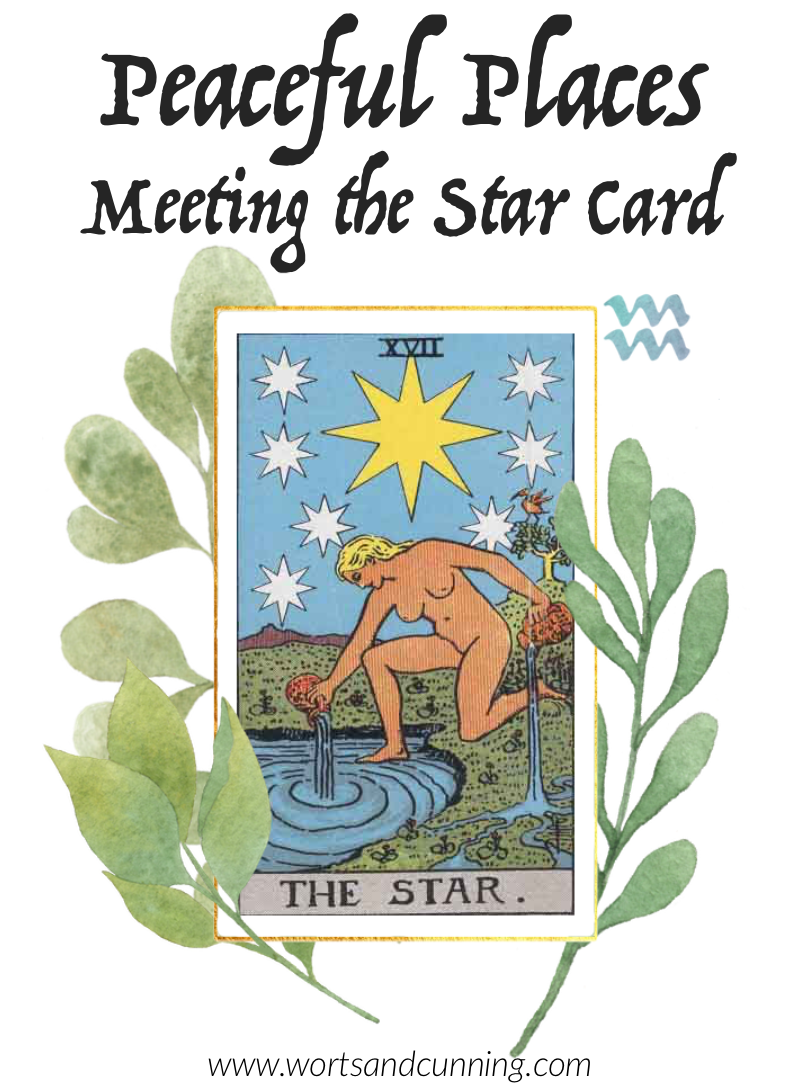
As I was contemplating my own sabbatical one of the images that helped me to connect with the power of rest was the Star card. The Star is one of my favorite cards in the tarot deck and this quiet place of intuitive rest can be overlooked considering the card rests between the often feared Tower card and the quintessentially tarot tarot card, the Moon. But it is with the Star that we discover that we can’t fast-track to wisdom, that our intuition thrives when we take time to cultivate spaces of stillness and contemplation in our life, and that rest is holy, holy, holy.

So while I am on my own period of rest, I wanted to share with you the profile on the Star card that I wrote for The Tarot Apothecary that explores the card from a place of healing and herbal wisdom. I’ve written about the intersections of tarot and herbalism before and I hope you enjoy the following healing stories (and simple recipe) inspired by the Star card.

image via @alex_andrews

image via @alex_andrews

The Star Card

Astrological Correspondences : Aquarius (Saturn Guards + Neptune Exalted)
Key Ideas : Peace, quiet, healing retreats, a break from the world, time, healing power of nature, calm after the storm.
Nouns : Sacred space, holistic healing practitioners, temples.
Adverbs : Peacefully, meditatively, hopefully, intuitively, sweetly, quietly.
Adjectives : Timely, trusty, indescribable, extraordinary, restful, precious.

Divinatory Meaning : I Restore. The Star card is one of my favorite in the pack. It is the card that I seek when I am in need of restorative healing and peace of mind. The Star appears after the storm of the Tower has passed and offers us respite after a dramatic change. Everything feels sudden and sharp with the Tower but the Star introduces the power of time as a way to recenter yourself in the world. The Star has a similar position as Temperance, but instead of containing the energies within, there is trust that our power to recuperate and transform is infinite. The figure in the Star is close to the earth and touching, almost floating, above the water. The water that they pour out from their pitchers returns again and again to the same source of greater water and energy. The small bird in the background represents the still voice of intuition that always rests in the tree of wisdom but sometimes requires us to be quiet and patient to hear their advice.

The Star card is a welcome sight in a health reading for it represents being able to access quiet, healing spaces. It is a place of peacefulness that we can return to again and again whenever we need assistance on our healing path. Our intuition which may have been overshadowed by the Tower is now able to be heard freely - be sure to listen to it because you are receiving messages about what it is you need to do next for your own wellbeing. I always feel that in the midst of the mystical experience the Star describes there is real practical wisdom, too - drink enough water, get enough rest, and allow yourself to tune out distractions and tune in to you.


Herbal Allies : Myrrh (Commiphora myrrha), Cacao (Theobroma cacao), Kava Kava (Piper methysticum), Lavender (Lavandula spp.), Peppermint (Mentha piperita), Skullcap (Scutellaria lateriflora), Star Anise (Illicium verum), Valerian (Valeriana officinalis).

Essence + Crystal Allies : Aloe Vera (Aloe vera), California Wild Rose (Rosa californica), Cosmos (Cosmos bipinnatus), Elm (Ulmus procera), Hound’s Tongue (Cynoglossum grande), Morning Glory (Ipomoea purpurea), Oak (Quercus robur), Olive (Olea europaea), Star Tulip (Calochortus tolmiei).

Magickal Workings : Rituals of rest and sleep. Nightly rituals to prepare the self for sleep. Charms against nightmares. Rituals of water, especially herbal baths. Magickal workings to strengthen your connection to your intuition. Examining scarcity mindsets that keep you from believing that there is enough and that you are enough.

Questions : How do I need to rest? What is my relationship to time? Does my well of energy feel dry and depleted or overflowing? In what ways can I live a more restful life? Do I practice regular self-care including drinking enough water, eating good food, and getting enough sleep? If I were to get very quiet what would I hear? What is my intuition telling me?

Health : Conditions of Aquarius. Health complications and imbalances arising from lack of rest and sleep. Overworking and not learning the lesson of previous burnouts. Dehydration and its complications. Excess fluid buildup and stagnation. Neurasthenia. Emotionally disconnected with the heart of the matter.

Inversions : Overworking and placing self-worth solely in one’s ability to produce and be of service to others (Elm Flower Essence). Continuing to push past one’s reserves leading to burnout (Oak Flower Essence). Ignoring one’s inner knowing (Star Tulip Flower Essence). Unable to enjoy the pleasures of the present (Aloe Flower Essence).


Myrrh (Commiphora myrrha) : Myrrh is a temple herb - it sanctifies sacred spaces and can help us to connect with the energy of the Star. For those who have or are experiencing oppressive situations, Myrrh can guide us through processing and releasing trauma. With its ability to part the veil between the world of the living and the dead, Myrrh aids in healing lineages of ancestral oppression. Burn Myrrh as a smudge to bless yourself as a sacred vessel of spiritual energy. Keep a small bowl or incense box of Myrrh on your altar to maintain rich levels of sacred energy. Carry Myrrh on you as a charm to help you find peace and quiet whenever you need to.

Myrrh is a supreme tooth and gum tonic, used traditionally in tincture and powdered form for a variety of mouth diseases including cavities, gingivitis, and halitosis. Use it as a tooth powder or a mouthwash to reduce swelling and alleviate sore throats. The herb is also useful for the treatment of inflamed skin conditions such as boils, hemorrhoids, and infected wounds. Overall, Myrrh alleviates feelings of stagnant, swollen heaviness.

Key Qualities : Alterative, analgesic, antibacterial, antimicrobial, carminative, diaphoretic, diuretic, emmenagogue, rejuvenative, vulnerary.

Contraindications : Avoid during pregnancy.

Dosage : Small amounts for a short period of time.

Star Temple Liniment

My ideal sacred space involves the adornment of sacred herbs on the body to restore balance. The following external use only liniment is anti- inflammatory and antiseptic - soothing sore muscles, painful bug bites, and irritated wounds. Combine the following herbs in an airtight jar, cover with rubbing alcohol for one cycle of the Moon, and then decant for use.

  • 1 part Myrrh (Commiphora myrrha) powder

  • 1 part ground Juniper Berries (Juniperus communis)

tea emoji.png

May you be loved and supported in your rest.

As I am currently off on sabbatical for three cycles of the Moon, this post was autoscheduled (you can find out more here). May these words have arrived with the magick of not quite knowing where it’ll land, but choosing to chance it anyways. Want to know when I get back? Sign-up for Magick Mail below.

I look forward to connecting with you all again upon my return.

Signature Summer 2019.png
 

This post was made possible through patron support.
❤︎ Thanks, friends. ❤︎

MagickMailAd 2019 hag.png

We respect your privacy.

Thank you for signing up for Magick Mail! Once you have confirmed your subscription to the list you will gain access to our member's only apothecary.


0 Likes
categories / tarot + divination
tags / tarot apothecary, star card, tarot, tarot herbalism, myrrh, healing arts

Crone of Wisdom: Sage Plant Profile

November 14, 2020  /  Alexis J. Cunningfolk

Sage Plant Profile

a radical sabbatical post

The Ancient Greeks, one of the many ancestral lines of traditional western herbalism, called the Goddess of universal remedy, Panacea. She is one of the Holy Ones invoked in the Hippocratic Oath and for herbalists like myself She has lended her name to describing those special herbs - called panaceas - which offer a broad spectrum of healing gifts. Sage (Salvia officinalis), the herb teacher we’ll be meeting today, has long been revered as a panacea not only because of the ways that it supports inherent vitality and longevity, but because it helps us to process knowledge into wisdom.

So let’s meet, Sage!

image source

image source

Sage
Salvia officinalis

Folk Names : Sawge, common sage, garden sage
Element : Earth, Fire, Air
Moon Phase : New Moon
Zodiac Signs : Gemini, Sagittarius
Planets : Jupiter, Moon, Mercury
Parts used : Aerial parts
Habitat : Native to southeastern Europe, but naturalized widely.
Growing conditions : Full sun and well-drained soil with moderate watering.
Collection : Spring before plant flowers.
Flavor : Pungent, bitter
Temperature : Warm
Moisture : Sometimes dry + sometimes oily
Tissue States : Damp/Relaxation, Dry/Atrophy, Cold/Depression, Tension
Constituents : Beta-carotene, B vitamins, niacin, vitamin C, calcium, iron, magnesium, volatile oils, flavonoids, tannin, phenolic acids, phytoestrogens, resin.

Actions : Anaphrodisiac, antifungal, antigalactogogue, anti-inflammatory, antioxidant, antiseptic, antispasmodic, antisudoforic, aromatic, astringent, carminative, choleretic, emmenagogue, estrogenic, expectorant, diaphoretic, digestive, hypotensive, hypoglycemic, nervine, phytoestrogenic, vermifuge.

Main uses : Sage is an impressive panacea of a plant. It’s an herb of longevity, promoting long life and protecting brain function as we age. The herb is warming and strengthening to the body and helps to clear out respiratory congestion. In other words, Sage helps us to breath deeply. Sage has an amphoteric relationship to the fluids of the body which is why it is categorized as both oily and drying in nature. If there is excess fluid, mucus, and catarrh, Sage’s astringent qualities dry out and expels it. The herbs astringency, for example, can be used for excess sweating and heavy periods. If there is lack of moisture, Sage’s oily qualities come into play, lubricating dry and atrophied passageways and organs of the body. The herb is used as part of weaning as it dries up breastmilk.

Sage is well-known as a circulatory tonic, but I would further classify it as a “processing” tonic in that it not only helps to move blood, heat, and information throughout the body, but it helps us to process these parts of ourselves as well. The herb moves energy downward from the crown of the head through the feet which is one of the reasons that Sage helps to calm us down, get restful sleep, and help with digestion.

image source

image source

As a digestive tonic, Sage assists us with processing and digesting fats as well as nutrients from our foods. Look for signs of flatulence and cold digestion. The herb can be used for both chronic and acute infections, especially when fatigue is present. It’s a powerful herb that can be used for everything from the common cold to Staph aureus infections. As a neuroprotective brain tonic, Sage assists with the processing of information and memory, by protecting and improving cognitive function. Additionally, Sage helps to relieve the Tension Tissue State, helping someone shift from being reactive to receptive. 

Topically, Sage is a great addition to hair rinses, helping to prevent hair loss, reduce dandruff, and even return or improve the color of the hair. It is also an excellent herb for burning and all varieties - not just the over-harvested and dangerously endangered White Sage (Salvia apiana) variety - are wonderful for cleansing the energy of body and place. One of my favorite ways to use Sage is as a gargle for sore throats and canker sores in the mouth. It can also be used topically for cuts, burns, bruises, bites and stings. It makes a very effective pain and inflammation-relieving compress for swollen and sprained joints.

Magickal uses : Sage is probably best known magically as “smudge” and it works powerfully to cleanse a space. But please do not purchase White Sage (Salvia apiana) but grow your own and protect the few remaining plants in the wild. The plant has been dangerously overharvested in the name of spiritual practice which is a fundamentally un-spiritual act. The great news is that other Sages can be used in place of White Sage including Black Sage (Salvia apiana) and Garden Sage, both of which can be harvested sustainably. Use in spells of longevity and immortality. A great herb not only for physical health but for spiritual health. Use in rites of grieving. An herb of the Crone, work with Sage to connect with the Old One. 

The Sage Personality : Every one of us is growing and maturing. Some of the time we feel able to learn from our growth, develop as people, and feel a little bit wiser at the end of the day. Other times aging and growing feels ungraceful, traumatic, and miserable. Sage is particularly useful for folks for whom the latter is true, especially if their stall in maturation is a chronic one. The Sage personality isn’t a classic victim or martyr type but is more often fixated on being ill-fated. They might be able to learn from their previous life experiences in a logical manner, but the wisdom has a difficult time permeating into their body. Sage folks often struggle with their body, bodily changes, and signs of aging. If they are so dissatisfied with their physical form why would they want to inhabit it deeper? Fortunately, Sage isn’t here to force us to be embedded in a body we struggle with but to learn how to descend into the wisdom that resides in our physical form without getting hung up on it. In a state of balance, Sage folk are the wisdom keepers and elders (regardless of age) that we are always in need of.

image source

image source

Contraindications : Avoid large doses during pregnancy. Avoid while nursing (it dries up the milk). In very large doses, its thujone content may adversely affect those with epilepsy, high blood pressure or kidney disease.

Dosage : Standard dosage. Hot tea to induce sweating, cold tea to stop sweating and discharge. 1 tsp per 8 oz water; Adults 30 - 60 drops tincture or 1 - 10 drops for drop dosage.

White Sage Smudging Alternatives

Since White Sage (Salvia apiana) is endangered, unless you are growing it on your own (which you should to help our beloved survive), I strongly encourage you to use a different herb for the purposes of smudging. Here is a short list of herbs that offer a wonderful alternative to White Sage as a smudge: 

  • Garden Sage (Salvia officinalis)

  • Juniper (Juniperus officinalis)

  • Cedar (Cedrus spp.)

  • Lavender (Lavandula officinalis)

  • Rosemary (Rosmarinus officinalis)

  • Mugwort (Artemisia spp.)

  • Myrrh (Commiphora myrrha)

  • Frankincense (Boswellia spp.)

  • Copal (Protium copal)

  • Pine (Pinus sylvestri)

Smoke-Free Smudging Alternatives

Smoky smudge may be popular but it’s not always feasible (enclosed spaces, housing restrictions, allergies, etc) and there are plenty of smoke-free ways to cleanse a space.

  • Room Spray with salt and/or essential oils and/or flower essences

  • Crystals placed in a room or waved through the aura

  • Sound including your voice, bells, chimes, singing bowls and other instruments

  • Candles made of high-quality wax

  • Sunlight and fresh air

Croaking Toad Cough + Sore Throat Oxymel

An oxymel is a form of herbal syrup combining honey (or other liquid sweetener like agave or coconut syrup) with raw apple cider vinegar. Croaking Toad is a great remedy to have during cold and ‘flu season as it contains a combination of soothing expectorants and vitality supporting herbs to help us find our way back to feeling well.

Begin by combining the following dried herbs:

  • 1 part Licorice Root (Glycyrrhiza glabra)

  • 1 part Marshmallow Root (Althea officinalis)

  • 1 part Elecampane Root (Inula helenium)

  • 1/2 part Sage Leaf (Salvia officinalis)

  • 1/4 part Chlorella Powder (Chlorella vulgaris)

Place all herbs in a glass jar with a tight sealing lid. Since we are using raw apple cider vinegar as our menstruum, you might choose to use a plastic lid or place wax paper between the metal lid and the blend to prevent corrosion. Cover your herbs with (preferably local) raw apple cider vinegar so that there is roughly 3/4 inch of the vinegar floating above or below the herbs. Let your blend brew for a few weeks - I typically brew all of my extracts for one cycle of the Moon.

Once ready, strain the herbs from the vinegar. Then, mix local raw honey with your herbal vinegar. My weight ratio for the vinegar to honey is 1 part vinegar to 6 parts honey. Basically, add honey to taste. If you want a sweeter elixir or oxymel, that is less herbally potent, add more honey. For a more herbally potent oxymel, add less honey. Stir together the honey and vinegar until they dissolve into one another in a loving embrace of healing wellness. Bottle and store in a cool dark place. I store mine in the refrigerator.

A dose of 1 teaspoon - 1 tablespoon is recommended up to 3 times daily during times of cough and sore throat.  You'll want to refrigerate your Croaking Toad Oxymel use within 6 - 12 months.

As I am currently off on sabbatical for three cycles of the Moon, this post was autoscheduled (you can find out more here). May these words have arrived with the magick of not quite knowing where it’ll land, but choosing to chance it anyways. Want to know when I get back? Sign-up for Magick Mail below.

I look forward to connecting with you all again upon my return.

Signature Summer 2019.png

This post was made possible through patron support.
❤︎ Thanks, friends. ❤︎

 
MagickMailAd 2019 hag.png

We respect your privacy.

Thank you!
2 Likes
categories / plant allies
tags / sage, white sage, salvia officinalis, salvia apiana

A Love Letter to the Witch Who Has Lost Their Magick

October 25, 2020  /  Alexis J. Cunningfolk

Witch Lost Magick.png

a radical sabbatical post

herb emoji.png

If you choose to take up the art of magick
you have also chosen to lose it

even the most devilish and beautiful of witches 
lose their fierce
and forget the words to their most familiar spell

usually it’s in a time of great and monstrous undoing
when the unfairness of the world
uses your own heartbeat
to beat
you
down

and then magick seems to be a thing imagined
bourgeoisie and useless
small-minded and exorbitant
abandoning you
even after all your vows
spoken between the moon and midnight…

what remains is this

the ability to breath into your stillness
when electric wave upon wave demands your distraction

to know the name of leaf
and how the fire bends

and that a witch never dies
nor does their magick

my words to you,
my witch kin, 
tangled up in your fear that it’s really, truly gone
is to remember 

Magick is impermanent 
un-guaranteed
there and gone

but as the moon is always full
just hidden from our eye

you are always full
if impermanent in your perceptions

always whole

because magick
remembers
you

As I am currently off on sabbatical for three cycles of the Moon, this post was autoscheduled (you can find out more here). May these words have arrived with the magick of not quite knowing where it’ll land, but choosing to chance it anyways. Want to know when I get back? Sign-up for Magick Mail below.

I look forward to connecting with you all again upon my return.

This post was made possible through patron support.
❤︎ Thanks, friends. ❤︎

 
MagickMailAd 2019 hag.png

We respect your privacy.

Thank you for signing up for Magick Mail! Once you have confirmed your subscription to the list you will gain access to our member's only apothecary.

1 Likes
categories / magickal arts, enchanted life
tags / witchcraft, love letter, poetry

In the Garden: A Relationships Tarot Spread

October 07, 2020  /  Alexis J. Cunningfolk

Garden Relationship Spread.png

This tarot spread was born of a project made possible by the generosity of my patrons. My very first goal on Patreon was to create a tarot zine that collected thirteen spreads that are based on the types of ways that I've cast cards again and again over the years. Basically, these spreads are what I would pull out if you were coming over for a bit of tarot and tea.

If you're interested in getting a copy of the zine (and all of my ebooks) check out my patreon and thanks in advance for your support! My patrons make the work of creating low-cost and free herbal and magickal resources online and in-person so much easier and more joyful. In the meantime, enjoy one of the spreads from my zine which is for relationships of all kinds.

Growing Together is a spread for learning about ourselves in our relationships. You can use this spread in any kind of relationship where you're hoping to cultivate growth and understanding be it romantic, familial, work or friendship. For the final two cards of the spread, I recommend pulling only from the Major Arcana to help you understand the greater themes of your own individual journey as embodied in this relationship as well as that of the other person.

Side note for my polyamorous folks. If you want to read for multiple partners at once, you have a few options for making alterations to the spread. You can read cards 1 through 5 for all involved and simply add as many Journey cards as you need. Or pull multiple versions of each card for each person (i.e. a Relationship Significator card for you and Person A and another one for you and Person B). It mostly depends on how many cards at once feels like too many on the table for you to read.

Card 1 · The Relationship Significator

A card to represent the relationship. You can also choose a specific card from your deck for this spot.

Card 2 · The Recent Past

A card representing the recent past - typically 3 to 6 months - of your relationship.

Card 3 · The Recent Future

A card representing what may come - usually only within the next 3 months - of your relationship.

Card 4 · Too Much

A card which helps us to understand what there might be too much of, including what we might be focusing too much on, about our relationship.

Card 5 · Too Little

A card which helps us to understand what there might be too little of, including what we might not be paying aHen4on to enough of, about our relationship.

Card 6 · My Bigger Journey

Using only the Major Arcana pull a card to help you understand the bigger energy of your life and development that you are bringing into this current relationship.

Card 7 · Their Bigger Journey

Using only the Major Arcana pull a card to help you understand the bigger energy of the other person's life and development that they are bringing into this current relationship.

At the end of the spread, take a look at the first card again - the Relationship Significator - and read it in the context of what you've learned from the spread in addition to your initial reading of the card.

worts and cunning tea

In addition to relationships with others, there’s a lot of magick to be found in learning about how we relate to ourselves. Here are a pair of spreads for connecting with your future self and your ancient self. For a bit of plant magick here’s a recipe to help connect with wisdoms of the heart and the mind.

Signature Summer 2019.png

This post was made possible through patron support.
❤︎ Thanks, friends. ❤︎

 
MagickMailAd 2019 full.png

We respect your privacy.

Thank you for signing up for Magick Mail! Once you have confirmed your subscription to the list you will gain access to our member's only apothecary.

0 Likes
categories / tarot + divination
tags / tarot, tarot spread

Of Rest + Worth: Skullcap Plant Profile

September 30, 2020  /  Alexis J. Cunningfolk

Skullcap Plant Profile

The two nervines - those plants that help bring the nervous system into balance - that I use the most are Milky Oat (Avena Sativa) and Skullcap (Scutellaria lateriflora). Nervines are an essential part of my practice both in my home and in my wider community. In traditional western herbalism they are some of the most accessible and first learned plants that we encounter as students because caring for our nervous system and its vast network of experience and function is foundational to a body as whole and holy philosophy of practice.

Skullcap is always a close friend of mine and a beloved teacher, but I have found myself turning towards them with greater frequency in the past few years and especially since we all began grappling with our most recent global pandemic. They are a generous teacher and are a powerful ally in some of our most modern maladies, so I hope that the following profile on their healing gifts be a source of inspiration to you.

image source

Skullcap
(Scutellaria lateriflora)

Folk Names : Mad dog weed, madweed, Quaker’s hat or bonnet, blue pimpernel, helmet flower
Planet : Moon, Saturn, Mercury, Neptune, Pluto
Element : Water, Air
Moon Phase : Dark Moon, Full Moon
Zodiac Signs : Gemini, Virgo
Parts used : Leaf and flower
Habitat : Native to North America and Eurasia.
Growing conditions : Full sun with plenty of space and not overly rich soil.
Collection : Summer, before flowering.
Flavor : Bitter
Temperature : Cold
Moisture : Dry
Tissue State : Tense/Restriction, Hot/Excitation
Constituents : B vitamins, calcium, potassium, flavonoids, tannin, scutellonin, stearic acid, linoleic acid, oleic acid.

Actions : Anodyne, antibacterial, antispasmodic, astringent, anxiolytic, bitter, brain tonic, cardiotonic, diuretic, febrifuge, vasodilator, hypotensive, nervine, sedative, spinal cord tonic.

Main uses : A powerful and deeply loved nervine within traditional western herbalism, Skullcap restores strength to an overwhelmed nervous system and accompanying symptoms of muscle spasms and nerve pain all while cultivating calm. For nervousness, fear, and a sense of being overwhelmed, Skullcap stimulates the brain to produce more endorphins in the system due to the presence of scutellarin in the plant which becomes scutellarein in the body. The herb is one of my favorite brain tonics as it not only helps us to develop our pathways of mental clarity, but acts deeply on the nervous system to bring about a sense of wellness and peace. In the USA we live in a culture that glorifies overwork (more on that in a minute) and being productive so Skullcap, with its message of balance and developing awareness between what we're thinking and what we're feeling, is an herb that I turn to often in my practice.

Skullcap is an excellent ally for those who suffer from insomnia, especially when there is difficulty shutting off the busy chatter of a restless mind - Skullcap helps promote healthy sleep patterns. Herbalist Thomas Bartram notes that Skullcap is a wonderful nervine "for workaholics compelled to work long hours with resulting mental exhaustion" and I can attest to this again and again not only for myself but for many folks that I work with. (1) The wisdom of Skullcap is that as a teacher they help us to reassess what pressures are appropriate and inappropriate in our work life, helping us to return not only to a state of mental peace but dignity in work as well.

(Am I suggesting that Skullcap is an anti-capitalist ally? Yes, yes I am.)

image source

The herb can be used for a variety of nervous conditions and imbalances stemming from hyperactivity including ADHD, anxiety, hypertension, nervous exhaustion, hysteria, neuralgia, premenstrual tension, and the effects of withdrawal from caffeine. In general, Skullcap is a gentle ally for supporting folks grappling with addiction withdrawal as well as withdrawal symptoms from tranquilizers and antidepressants. In my experience Skullcap is also an excellent ally to turn to for social media, gaming, and the new forms of online addiction that have emerged in our modern culture. The herb can also be used in general recovery from colds and influenza as well as prolonged periods of stress.

I use it for cases of fear, including nightmares, and the herb has a balancing effect on energy and emotions, helping both pass unhindered and appropriately through the body. Indicators for Skullcap include the collapse of the ability to hide nervous tension - folks are just not able to keep from the world their fears and anxieties which only makes them more fearful and anxious. Skullcap folk have a particular gift for embodying their thoughts, dreams, and possibilities but that means they can get caught up in the abstract and struggle with being in their bodies. Daily small doses of the herb over many months can be a helpful reset and support a return to embodiment. 

Skullcap can also be used in recovery from too much sun exposure, for indigestion with the presence of gas such as in the case of a nervous stomach, for headaches and dizziness, for fevers and colds. Irritability is a big indicator for the use of Skullcap as the plant helps us to release the build-up of frustration. There are not many traditional topical uses for Skullcap that I've come across but I do add the herb to anxiety and stress alleviating bath blends. 

image source

Magickal uses : Skullcap is an herb of oaths and binding contracts from business agreements to romantic unions. The herb is worn by lovers to ensure fidelity. Just as the herb is used to calm nervous conditions in the body, Skullcap can be used in rituals and spells for promoting peace and calm. During trancework, journeying, and astral projection, Skullcap helps keep the spirit secured to the body so that it is able to find its way back after the journey. The herb can also be used to help people ground in any situation, but especially post-meditation or after waking up from an intense dream or nightmare. Skullcap has an affinity for the Autumn Equinox, helping us transition from the bright half of the year to the dark half.

The Skullcap Personality : The Skullcap personality is easy to spot – they are intense, their muscles tense, and they are prone to overthinking. Often, their brow is furrowed, even when they are young children, intensely occupied in thought and their inner worlds. Energetic and quick, they can appear restless or overactive, which they sometimes are, but for Skullcap folk they are purposefully busy and often happily, if very quickly, engaged with whatever project or imaginative game they are pursuing. These are kids who enjoy problem solving in their play - whether puzzles or saving the galaxy from certain doom - but if they do tend towards more nervous energy and fears even if they appear brave and confident in their play and relationships. Skullcap folks can have a hard time feeling present in their bodies and can experience moments of disorientation whether dizzy spells or struggling to find their physical edges. They have to be very careful about frequent burnout and making sure that they take regular time off from their intense periods of thinking and doing The great gift of Skullcap folk is that they have an incredible capacity to remain focused on the theoretical, impossible, and seemingly unattainable, bringing all into the range of accessibility for themselves and their community. Skullcap helps them to access the balance necessary to help save the galaxy and also get enough rest.

Contraindications : Contraindicated during pregnancy.

Dosage : 3 – 10 drops up to 3 times daily of a 1:5 alcohol extract. 1 teaspoon of herb per cup of water. Small doses are quite effective and recommended with Skullcap.

Recipe : My Favorite Tea for Easy Evenings + Self-Care

(1) Thomas Bartram, Bartram's Encyclopedia of Herbal Medicine (London: Constable & Robinson Ltd, 1998), 394.

herb emoji.png

I’ve written about Skullcap a lot so it was about time that I shared a full profile on them. They are featured on my list of herbs and essences for empaths and highly sensitive folks and are definitely one of my favorite eclipse season herbs.

If you’re looking for more plant profiles, come this way. May your the path with the plants be a verdant, wild, and illuminating one full of viriditas.

Signature Summer 2019.png

This post was made possible through patron support.
❤︎ Thanks, friends. ❤︎

 
MagickMailAd 2019 hag.png

We respect your privacy.

Thank you for signing up for Magick Mail! Once you have confirmed your subscription to the list you will gain access to our member's only apothecary.

5 Likes
categories / plant allies
tags / skullcap, scutellaria lateriflora, plant medicine, plant ally, plant profile
Newer  /  Older

© 2010 - 2025 Worts & Cunning Apothecary | All Rights Reserved | Disclaimer | Land Acknowledgement
. live your magick .