• Home
  • About
  • Offerings
    • My Book
    • Magick Mail (It's Free!)
    • The Lunar Apothecary
    • The Tarot Apothecary
    • The Plant Ally Library
    • Solace: Herbs for Sensitive People
    • Begin With the Breath
    • The Green Bottle Method
    • Gatherings
    • Patreon
  • Blog
    • most recent
    • plant allies
    • astroherbology
    • moon studies
    • recipes + tutorials
    • magickal arts
    • tarot + divination
    • sliding scale
    • archive
    • search
  • Contact
  • Search
  • More
    • FAQ
    • Support the Work
    • Calls to Action + Resources
    • Bookshop
  • Home
  • About
  • Offerings
    • My Book
    • Magick Mail (It's Free!)
    • The Lunar Apothecary
    • The Tarot Apothecary
    • The Plant Ally Library
    • Solace: Herbs for Sensitive People
    • Begin With the Breath
    • The Green Bottle Method
    • Gatherings
    • Patreon
  • Blog
    • most recent
    • plant allies
    • astroherbology
    • moon studies
    • recipes + tutorials
    • magickal arts
    • tarot + divination
    • sliding scale
    • archive
    • search
  • Contact
  • Search
  • More
    • FAQ
    • Support the Work
    • Calls to Action + Resources
    • Bookshop

Worts & Cunning Apothecary | Intersectional Herbalism + Magickal Arts

A Might-do List for Samhain

October 28, 2019  /  Alexis J. Cunningfolk

samhain to do

Samhain, known also as The Witches New Year, Calan Gaeaf, Kalan Gwav, Halloween, is the third and final harvest festival of the year. It’s a time when the veil between the worlds is thinnest and all sorts of magick is afoot. Continuing a project started at Lughnasadh, here’s list of nine things that you might-do (or not) for Samhain and the dive into the dark half of the year.

Honor + Commune With Your Ancestors. Samhain marks one of the thin times of the year (the other being Beltane), when the veil between the worlds is at its thinnest. While we are always able to commune with our Ancestors, there is a widespread multicultural attention turned towards the dead at this time of year which, in addition to the thinning veil, makes communion that much easier. Begin with rituals of naming and honoring those who have past, especially those who have crossed over since last Samhain.

Host a Silent Supper. Sitting and eating in silence, with a plate of food and seat reserved for the Ancestors is a beautiful and contemplative way to begin your Samhain celebrations. It can be as simple as setting a plate full of food that everyone is eating before an empty chair or more elaborate with one end of the table becoming an altar of offerings of your ancestors favorite foods and drinks from when they were alive. In silence we remind ourselves that the voices of our ancestors are ever-present if we were to get quiet enough to listen. When a person is done eating they leave the table, taking a moment to honor the ancestors’ place and spend time in quiet meditation (perhaps even divination) until all are done eating and a return to sound begins again.

2019-10-20 11.36.47 3.jpg

Practice Divination. The veil is thin and it’s time to ask some questions. From apple peels to scrying bowls, casting cards or stealing kale (no really, look it up), there is a myriad of ways to divine answers and information at Samhain. 

Take Stock of Your Winter Wellbeing Supplies (and help others do the same). For our ancient ancestors who had to face winter weather (as opposed to our ancestors who lived in more temperate climates), it was vital to take stock of the harvest and supplies that they had to help them survive the winter. Winter can be hard for any number of reasons which is why taking a moment to realize what you do have to help you through the colder months is important. It is also an opportunity to practice gratitude for the things (shelter, medicine, transportation, a full pantry) and people that are vital to our wellbeing. It is also time to collect food and winter goods for others in your community who need extra help, including volunteering your time.

Burn a Bonfire. Look, I could say burn a bonfire at every Sabbat and find precedence for it. But Samhain is a particularly auspicious time for burning big fires. The fires chased away unwanted harmful spirits, attracted good luck, and reminded folks that though the Sun’s strength was waning, there was a power of brightness in one another. And bonfires are really friggin’ fun.

samhain to do list

Find the Magick of Being Silly. Do all the Halloween things you love to do (and always dreamed of doing because you saw it in a made-for-tv Halloween movie). Carve pumpkins or turnips, dress up in costumes, watch your spooky movie of choice (can we please have a queer romcom in which one of them is actually a Witch?), and go trick-or-treating with the little ones in your lives. Because we need the joy of Samhain to carry us through the darkening year - so practice it!

Perform a Dark of the Year Home Blessing. Another traditional practice of Samhain is to bless the home usually through some sort of burnt offering. So, taking some of the light from your bonfire whether through a lit piece of wood or by lighting a candle and walking around the perimeter of your home as a form of blessing. Alternatively, use a bundle of sacred herbs or other traditional plants (such as fir or a bit of turf) to cast a spell of protection over your home, its inhabitants, and all within it. It can be a very sweet tradition to send home your bonfire guests with a candle lit from the Samhain fire.

samhain magick

Take to the Streets With Your Grief. Now, more than ever, we need to show our grief. We need to show our grief so that young people know that it is ok to weep and cry at the state of the world - that nothing is wrong with them. We need to show our grief so that old people know we’re still fighting the fight. Grief is a holy road to empathy and action if we’re allowed to express it fully. Invoke the beansidhe or similar spirit of mourning (and, aptly, warning in our time of climate crisis). We have to grieve and we need to do it together. If the streets are not your style, then host a grief ritual for friends, family or covenmates.

Reconcile. Many a witchfolk, myself included, celebrate Samhain as the end of the old year and the beginning of the new. It is a time to reconcile differences and begin again in the spirit of compassion and goodwill. Reconciliation can be with the living or the dead, people and creature, landscapes and their spirits. Call upon the Ancient Hags and Crones, who have guarded well the gateways between all worlds and relationships since before time began, to guide you.


You know, friends, this list could’ve been much, much longer, but I’m trying to create a might-do list and not a never-ending scroll of suggestions. As someone who could probably write a course on “self-discovery through list-making” these writing this list reminded me that there is a part of my being that holds its breath until the season of Samhain comes round again.

Curious about what else you might-do for the Sabbats? Check out the rest of my might-do lists for the sabbats and beyond.

  • Samhain

  • Winter Solstice (Yule)

  • Imbolc

  • Spring Equinox (Ostara)

  • Beltane

  • Summer Solstice (Midsummer)

  • Lughnasadh

  • Autumn Equinox (Mabon)

Wishing you and yours a whole and holy Samhain season. 

Signature Summer 2019.png
 
MagickMailAd 2019 hag.png

We respect your privacy.

Thank you for signing up for Magick Mail! The digital owls have been dispatched. Once you have confirmed your subscription to the list you will gain access to our member's only apothecary.

6 Likes
categories / enchanted life
tags / samhain, wheel of the year, might-do list

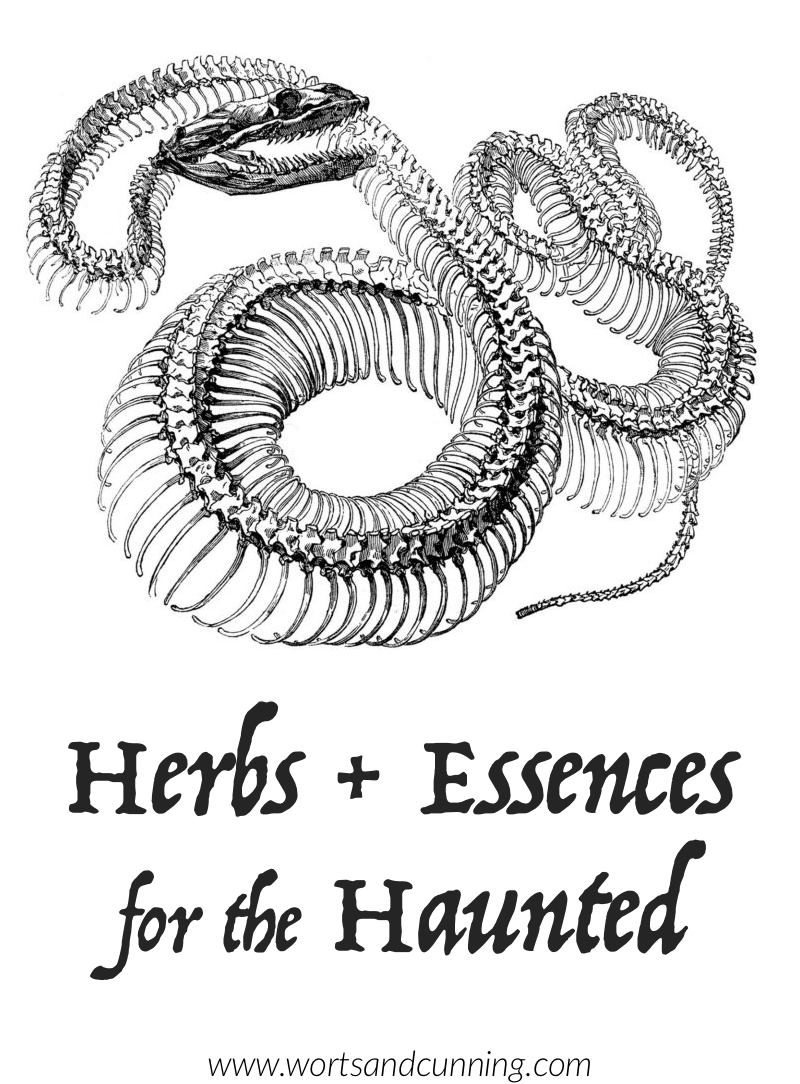
Herbs + Essences for the Haunted

October 23, 2019  /  Alexis J. Cunningfolk

herbs for hauntings

 In some ways, we’re always dealing with ghosts when it comes to healing. We’re haunted by past events, words spoken to us at tender times, promises broken, pleasure denied, the shock of trauma, and the weight of memory. When someone seeks my services as an herbalist and Witch I am not only meeting them in the moment, but I gaze back and forward along their weblines, trying to see what they’ve brought with them and where they might be headed. I get to meet younger and elder you while sitting with the present you.

The shadowlands which we all of us spend time in, meeting with or enthralled by our ghosts, grow all sorts of strange plants that sprout up in our life as grief, anger, shame, despair, loneliness, and more. In other words, the list of recommendations I could have for plant allies that help us to deal with our hauntings could be vast and neverending. That’s not very useful. In fact, the open secret is that if an herb, any herb, is helpful to you on your path of healing, it is an ally to you in facing your ghosts. So, knowing that there are a great many choices out there, I’ve chosen herbs and essences that I’m fond of, that I think are far-reaching in their scope, and because they are the ones that came forward at the time of writing this post.

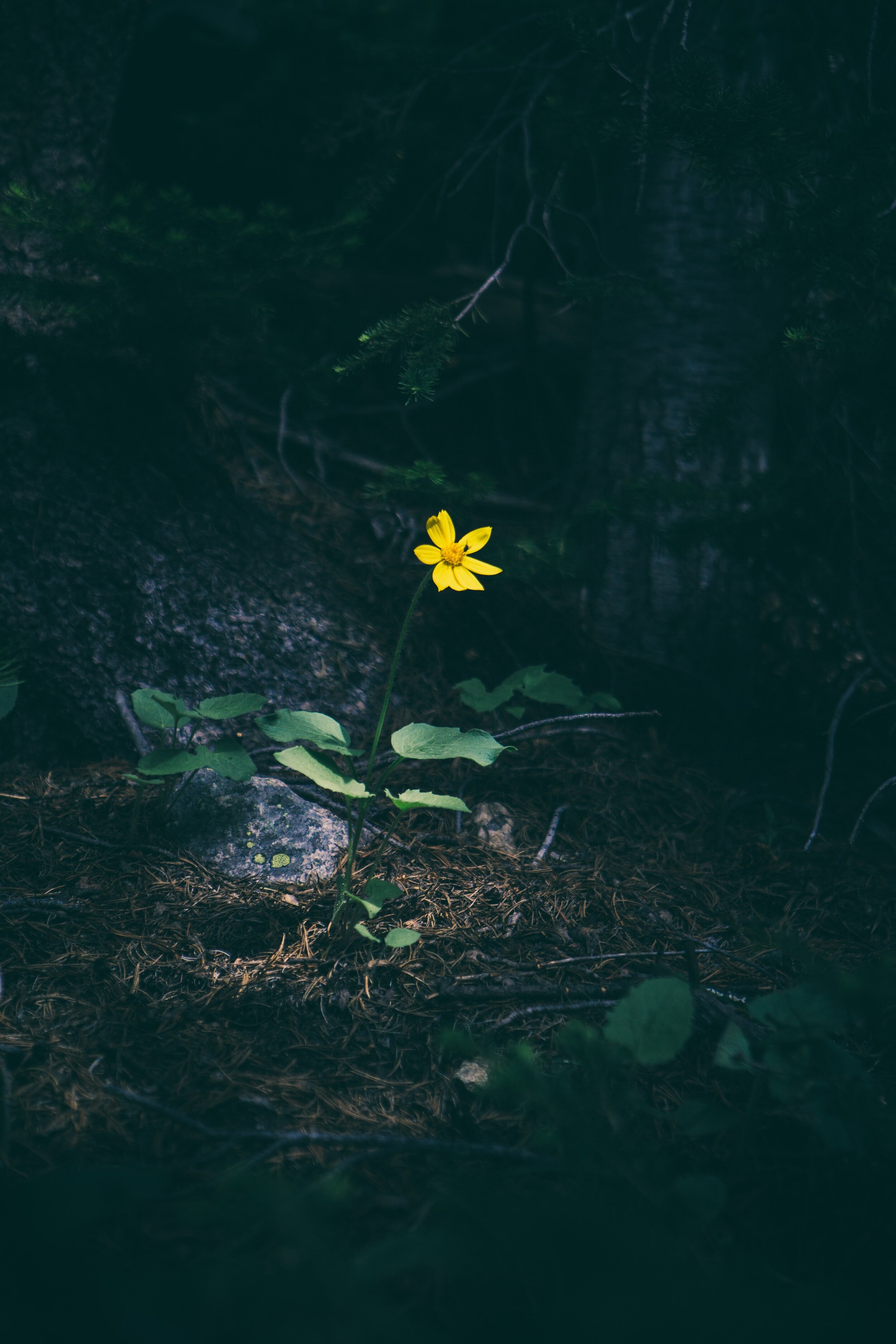
Image by @frostroomhead

Image by @frostroomhead

The Herbs

Thorn magick, such as Hawthorn (Crataegus monogyna) and Rose (Rosa spp.) is a very valuable ally in working with our ghosts. I’ve written more about working with thorn medicine plants here. In short, Rose helps us to deal with our grief instead of running from it and Hawthorn helps us to open our heart again to life.

Mugwort (Artemisia spp.) is our dream ally as so much of what we feel haunted by can be accessed in liminal states. It’s an incredibly powerful herb for integration and in traditional western herbalism it is honored as one of our eldest of herbal allies. Working with herbs like Mugwort, which are considered spiritual elders, to actual ancient plants Gingko (Gingko biloba), and Rose (Rosa spp.) that have been on this planet for millions of years is useful in haunting work. These plants have the ability to travel through our timelines with strength, wisdom, and discernment. Use the essence of Mugwort, too, especially if dealing with nightmares.

Skullcap (Scutellaria lateriflora) is an herb that I talk about a lot and that’s because it is so useful when it comes to dealing with excessive mental chatter, anxiety, and the inflexibility that can arise from both conditions. When it comes to our personal ghosts, Skullcap helps us to move out of our heads and into our bodies. Some of us try very, very hard to logic our traumas, to make sense of our ghosts, and while sometimes we can build stories that make sense, that’s not always the case and that’s not always necessary. Sometimes it’s just about recognizing, deeply and making space for the emotions that arise, that something hurt and that once we do that we can begin to leave that pain behind. Skullcap is a good ally to work with if you don’t know quite where to begin - you feel like there are ghosts everywhere and they’re all talking. Skullcap can help come in and quiet everyone down.

Yarrow (Achillea millefolium) is another liminal spaces herb and one intimately linked with the Good Folk. In my tradition, the Good Folk are some of our eldest ancestors (you’ll see a theme emerging with my recommendations so far - work with the Old Ones). Trauma and the things which we are haunted by can sometimes happen over a slow period of time and sometimes it happens suddenly, shocking the system. There is a lot of lore tied to the Good Folk and shock - they are often accused of being the source of ill but I think they are often the ones who show us that we are already suffering we just hadn’t realized it yet. Another way to understand this pattern of energy is to recognize Yarrow as a plant ally for the wounded warriors and wounded healers among us. They are the ones who facilitate some of the most beautiful and profound healing spaces for others because they carry a great wound themselves. We are at a moment that as a species we are carrying the vast wound of environmental degradation caused by the choices we’ve made and the distance we’ve created between ourselves and the rest of our living planet. I highly recommend Yarrow as an essence and learning more about the Yarrow Environmental Essence that the folks at the Flower Essence Society has created.

Image by @anniespratt

Image by @anniespratt

The Essences

The essences listed below are either available as part of the Bach Flower Remedies or the Flower Essence Society collections.

Aspen (Populus tremula) is helpful for those who are afraid of the unknown that lies beyond their current state of being. It can be scary to imagine what our lives would be like without the familiarity of our ghosts, even if we know that we no longer wish to be haunted. Aspen helps us to face our fear and move beyond it.

Bleeding Heart (Dicentra formosa) helps us to let go of our ghost, releasing attachments to the things, places, and beings which are no longer with us.

Crab Apple (Malus sylvestris) helps us come to release feelings of being somehow “contaminated” with our trauma and that makes us impure or unfit for healing and connection with others. 

Evening Primrose (Oenothera elata) is a great ally when we are processing childhood trauma and its impact on us today. Take before and after your therapy and healing sessions.

Honeysuckle (Lonicera caprifolium) helps us to arrive back in the present moment so that we can move on with our lives.

Rock Rose (Helianthemum nummularium) helps us to befriend the cycle of life, death, and rebirth. For those who are afraid of dying or loss of self.

Sage (Salvia officinalis) helps us to get out of own way, accept the fact that we have and should change as we grow, and come to accept ourselves for who we are now.

Self-heal (Prunella vulgaris) for those of us who don’t believe we have the capacity to heal, that our minds and bodies are broken beyond repair. Self-heal reminds us that our healing is possible, assists us in reaching out to others for help, and learning how to trust ourselves again.

Star of Bethlehem (Ornithogalum umbellatum) helps us to deal with the shock of loss. We’re not always able to deal with the initial feelings of loss in our life and have to make time and space for it at a later point. Star of Bethlehem helps us to navigate that meeting with our feelings.

Wild Mustard (Sinapis arvensis) is one of my favorite essences for the type of sorrow that feels like there is no light left in our life. It helps to bring back the sun.

Willow (Salix vitellina) helps us to forgive, release bitterness, and move forward with out lives.

Image by @whale

Image by @whale

Working With Herbs + Essences When You’re Haunted

Before you use any herb or essence, do your research by referencing reputable materia medicas (i.e. books full of plant profiles) to determine if a plant is right for you and the correct dosage. In general, googling a plant is not the best way to find accurate information or appropriate use. Please use discretion, practice empowered choosing, and ask your local herbalist for help, too!

There is something about water-based remedies that I find to be particularly powerful when it comes to working with the stuff that haunts you. We live on an ocean planet, we are made up of so much water ourselves, and we are formed and shaped in a watery womb. If you have access to a bath, I highly taking an herbal bath. If you don’t have a full bath to use, you can still do a foot and/or hand bath, as well as making a shower rinse (i.e. make a strong infusion of herbs and water, strain, and wash with as part of your shower). Teas are another simple way to use herbs in ghost work and adding a few drops of an essence into your morning water is great, too.

Once you’ve chosen what plant allies to work with begin by stating your need to the plant. Begin by setting up a space in a sacred manner - it can be as simple as cozying up on your favorite comfy chair, wrapped up in a blanket or more similar to casting a circle. Once you’ve set space for the work to begin, set your intention with your plant ally. You might already know the work you want to do and the haunting you want to clear from your soulshrine (i.e. your body and sacred being). Or you might not, in which case it is helpful to journal, cast cards or spend time in meditation. Take a moment to greet your plant ally, introducing yourself and speaking to them with reverence and kindness. Once you’ve determined what haunted room you want to walk into, state to your plant ally:

{Plant Name}, I wish to release the ghosts of my past. I am haunted by {describe your haunting}. With your aid, {Plant Name}, I seek to release it. Thank you, {Plant Name}, for guiding me in my healing work.

Repeat this simple ritual for the next three, six, or nine days. Pay attention to how the description of your haunting may or may not change during this time. Take time for journaling, casting cards, talking with your friends and family, your dog, your therapist. Sharing the stories of our hauntings can help to shed light where there was once murkiness - and then at some point the story may feel all told out. Invite your ancestors in, especially the really old ones whose names have been forgotten but are no longer afraid of earthly haunts.

Image by @anniespratt

Image by @anniespratt

As for how long to take the herbs in haunting work - that depends on the herb and you. In general, using an herb or essence for a cycle of the Moon and reassessing at the end of that cycle can be a good place to start. Does this mean that it only takes a cycle of the Moon to release a haunting? No. Healing work is circuitous, mostly lengthy, and on rarer occasions it feels instantaneous. But when we’ve found the modalities of healing that serve us best, feeling better day by day can become a very familiar feeling. I wish a swift and steady healing for all of you.

May this and all Samhain seasons be ones of reconciliation and healing, of happy reunions and blissful revelations. 

Signature Summer 2019.png
 
MagickMailAd 2019 hag.png

We respect your privacy.

Thank you for signing up for Magick Mail! The digital owls have been dispatched. Once you have confirmed your subscription to the list you will gain access to our member's only apothecary.

6 Likes
categories / recipes + tutorials
tags / samhain, herbal baths, yarrow, rose, hawthorn, mugwort, bleeding heart, crab apple, evening primrose, honeysuckle, rock rose, sage, self heal, star of bethlehem, wild mustard, willow

There Are Only Our Ancestors

October 11, 2019  /  Alexis J. Cunningfolk

Only Our Ancestors.png

There are only our ancestors
There are no others on the tree of life 
Only uncles and aunties and cousins and old folks
The ones we wish were at the table with us
And the ones who pushed us away from home

There are only our ancestors
No other ancestors but our own ancestors
Invaded the lands of our ancestors
Silenced the stories of our ancestors
And then our ancestors wrote those stories down in big books
(poorly and without all the good parts)
In words our ancestors couldn’t read

There are only our ancestors
And it has only ever been our ancestors
Who killed our ancestors
And our ancestors who smashed the temple stones
Of our ancestors
Who salted our fields
Who stole our children
Who escaped and returned home
Through the help of our ancestors

There are only our ancestors
Who taught us how to forgive
Only our ancestors who taught us how to hate
Who taught us when to look away
And when to stare our ancestors in the face
And see our ancestors looking back

There are only our ancestors
Who tore down the mangroves
And it was only our ancestors who replanted them
Only our ancestors who fought for us
To live and breathe in a world familiar and unknown

There are only our ancestors 
And there are only our descendants
No one else will fill up the hills but us
And we’ll only find our ancestors there
Because there is no other
There never has been, never will

There are only our ancestors

How strange for us to forget

How beautiful for us to remember


5 Likes
categories / revolution, enchanted life
tags / ancestors, samhain, poetry

A Might-do List for the Autumn Equinox

September 20, 2019  /  Alexis J. Cunningfolk

things to do autumn equinox

The Autumn Equinox, known also as Mabon, Alban Elfed, Ingathering, and Harvest Home, for a variety of Pagans, it’s a beautiful celebration of the end of the most abundant point of the harvest season. Continuing a project started at Lughnasadh, here’s list of nine things that you might-do (or not) for the Autumn Equinox and the season of Mabon.

Go apple-picking. The Second Harvest is also known as the Apple Harvest and some of my favorite years spent celebrating the season have been when I’m apple to go picking apples. And cutting an apple lengthwise to reveal the pentagram within is a very fun sort of magick. If apple picking isn’t available in your area, celebrate with other seasonal fruits.

Have a festive meal with friends and family. Getting together for celebratory harvest feast with your friends and family is a wonderful way to celebrate the start of Fall. The Second Harvest of the season is sometimes called Harvest Home and for many Pagans, myself included, it’s the choice time of year to hold a big friends and family feast. It’s also a time to be aware of and address the fact that we live in a world where there is enough food to eat but not everyone gets access to the table. Events like Pagan Pride in September gather food and supplies in order to support community members in need and you can spend time (perhaps after your Autumn cleaning), donating goods to local shelters. Even better, get involved with local efforts to create long-term sustainable support for folks struggling with homelessness and the many issues that intersect with it.

mabon autumn equinox

Perform a tree blessing. Honor the trees that surround you with a blessing. Whether through song, incense, water or other earth-friendly biodegradable offerings, honor the trees which shade us, provide food and shelter, oxygenate our air, and contain the wisdom of the ages. Get involved with local and global tree conservation efforts as a way to live your gratitude.

Cast a spell for community resiliency. Work local magick for your local community. Whether performed in your backyard, bedroom altar or local sacred site, in a rising tide of global misinformation and conflict, working spells of peace for our neighborhoods is powerful stuff.

Rebalance your days and nights. As the Equinox is an equal point between day and night, so we can look at our lives and assess where we need more balance. Whether that’s clearing extra activities from our schedule, going to bed or rising earlier, choosing to step into our lives and out of our screens more, 

mabon

Autumn cleaning. While spring cleaning is a more well-known practice, it’s just as important to clean up and clear out before the cold settles in. It can be a time of pulling out warmer clothes (including donated extra clothing to charities and shelters), making sure the house is winter weather ready, and energetically shifting the space to support you in the dark of the year.

Attend Pagan Pride! September is the month of Pagan Pride celebrations. It’s a great way to connect with community, attend public rituals outside of your tradition, donate goods to local charities, and generally have a good time. 

Cut cords. It’s an auspicious time of year from now til Samhain to cut the cords that bind you and entangle you to people, places, and ideas that no longer serve you. While I use the terminology “cutting cords” it’s a similar energetic practice to uncrossing work, a taking off or receiving a limpia and other culturally specific cleansing practices. All of this energetically aligns with the ebbing energy between now and the Third Harvest - where we cut away what is no longer necessary in our life and choose only to carry with us we love and need as we go to meet our ancestors between the worlds.

mabon

Study + practice ancestral traditions. Speaking of ancestors, it’s a beautiful time of year to spend in study and practice of ancestral traditions. An ancestral English custom for late September was singing and shouting at the end of harvest, decorating the home with boughs of grain, and transforming the last standing sheaf in the field as the cailleac, a corn dolly that would be kept in a place of honor until the spring season of planting. Learning of our ancestral heritage (and I speak of this in the broad sense of biology, culture, and spiritual ancestors), is one way that we open up lines of communication with our ancestors. We reverberate the web with our curiosity and the web sings back. 

☾

Our next might-do list is going to be all about the season of Samhain. Looking for even more magick for Mabon? Check out my Autumn Equinox tarot spread as well as healing and magickal practices for the fall. You can also check out the rest of my might-do lists for the sabbats and beyond.

  • Samhain

  • Winter Solstice (Yule)

  • Imbolc

  • Spring Equinox (Ostara)

  • Beltane

  • Summer Solstice (Midsummer)

  • Lughnasadh

  • Autumn Equinox (Mabon)

Friends, may the season of Mabon bring you closer to the ones you love and the abundance of a joyful harvest.

Signature Summer 2019.png
 
MagickMailAd 2019 hag.png

We respect your privacy.

Thank you!
3 Likes
categories / enchanted life
tags / mabon, autumn equinox, autumn, wheel of the year, might-do list

Dreaming with the High Priestess

September 13, 2019  /  Alexis J. Cunningfolk

High Priestess Dreaming.png

It was the High Priestess that taught me how to look into and beyond the images presented in the tarot. When I began my tarot studies with my Smith-Waite deck - at an age that feels both more distant and yet just passed at the same time - I followed the instructions in my first tarot book to perform a pathworking (i.e. a western esoteric tradition word for guided meditation that originated from specific practices of moving along the paths of the Tree of Life as illustrated in Kabbalah) with each card. I did just that and it’s something I’ve continued to do in my own practice and have taught it to my students, too, because I think it is so useful in magickal and healing work. As I was learning this pathworking technique, there were some cards that were my favorite to travel into and the High Priestess was and is one of them. 

Perhaps it is the watery nature of the card that my Piscean heart adored or the fact that I knew early on in my life that I was to one day take vows of a Priest/ess/x. It was an easy, dreamy card for my little witchling self to connect with and I loved learning about the symbolism of the card from the pomegranate’s on the fabric behind the High Priestess, to the Moon beneath their feet, and the pillars framing the scene. 

Decks shown are the Brady Tarot + Smith-Waite Centennial Edition

Decks shown are the Brady Tarot + Smith-Waite Centennial Edition

Then, one journey into the card, I was overwhelmed by the sound of the sea. Suddenly I saw what had remained hidden, but seemed so obvious now. The sense of vastness I got whenever I journeyed into the card was not just because the High Priestess represented a library of arcane wisdom that I was so eager to read, but that they were, more importantly, a keeper of the gates of which beyond was a vast sea to explore. I had been looking at the card all this time but not really seen it - in the process, I had missed an entire world beyond the surface of my initial viewings of the image. 

Such is the way of things, right? We think we are seeing all of it until we look again and find that the world is far more vast than originally thought. As a card of Moon, a representation of our consciousness, the High Priestess teaches us how to connect with the vastness both around and within us through the lunar path of dreamwork. Even more importantly, the High Priestess does this in a way that’s not about keeping secrets or revealing them, but teaches us, instead, how to read our world and discern knowledge through observation.

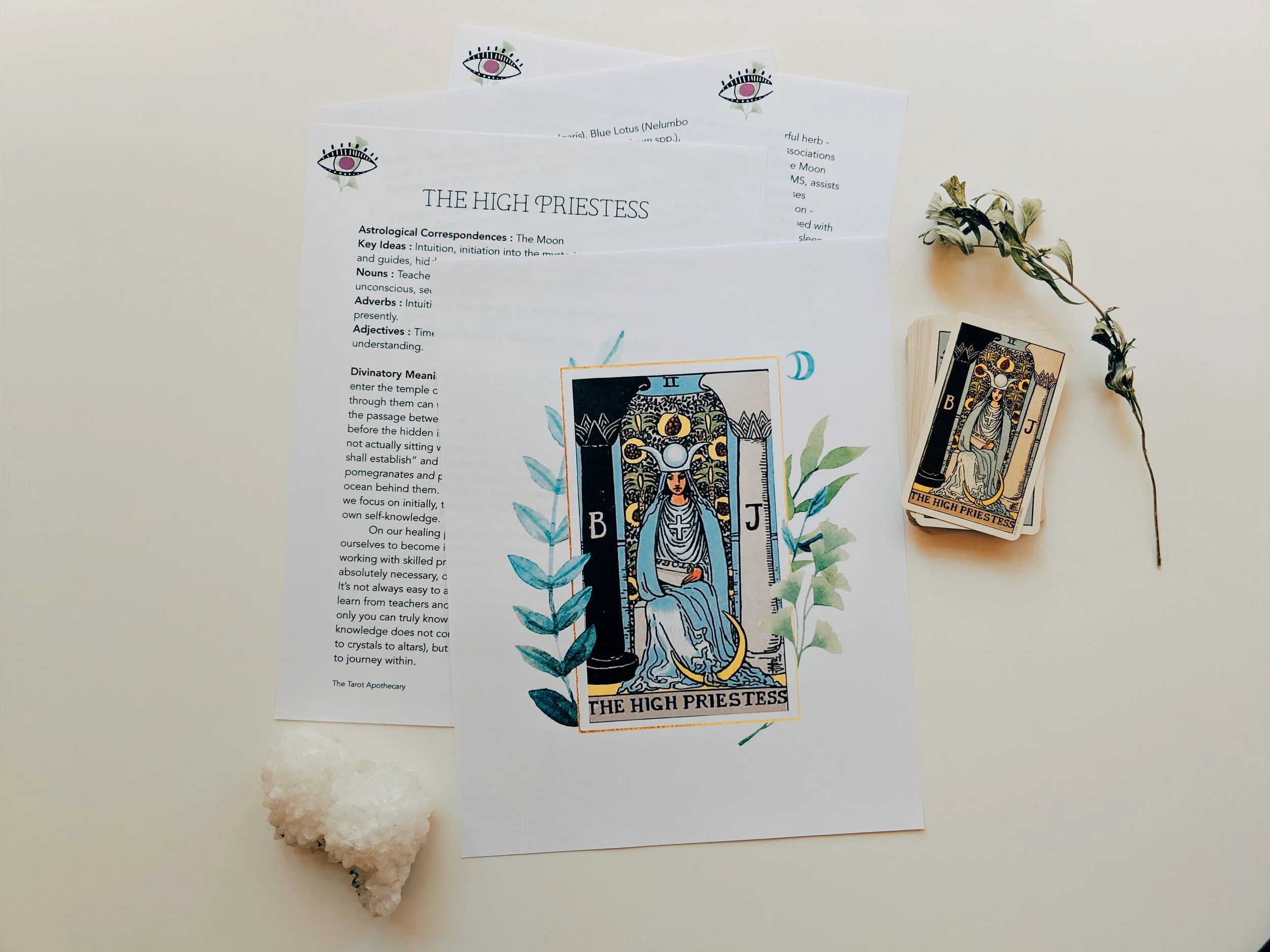
One of the primary herbs that I use to connect with the energy and healing magick of the High Priestess is Mugwort (Artemisia spp.). My favorite way to work with Mugwort is through herbal baths - I’ve shared a recipe for just that below. Tarot has long been rich in plant imagery and the Smith Waite deck illustrated esoteric knowledge of plants through its art, adding yet another layer of knowledge to the intricately layered world of the cards. If you’re enjoying all of this talk of plants and herbs, you can check out my full profile for the High Priestess from my course, The Tarot Apothecary, by joining my free Magick Mail newsletter. You’ll then gain access to a member’s only page full of recipes, rituals, and more. 

The High Priestess profile from The Tarot Apothecary

The High Priestess profile from The Tarot Apothecary

Mugwort Dream Bath

Mugwort is one of the most revered of dreaming herbs in the western materia medica. I am lucky to live in a part of the world where native and migrating versions of the plant thrive, which is why I use three varieties in my dream bath blend. I prefer to bathe with Mugwort when it comes to dreamwork, but for those of you who feel more tethered to the waking world than the one of dreams, you might also try it in tea form. 

I included Anise Hyssop (Agastache foeniculum) in the blend for a number of reasons, not least of which for its lovely smell. It’s a plant of Mercury with Venusian energies meaning that it helps us clear out and connect our pathways of communication (Mercury) through gentle, warming, and uplifting methods (Venus). It has a bit of a guardian energy to it, too, which is always useful in dream work and exploring the vastness of our inner realms.

Juniper Berries (Juniperus communis) round out the blend with their rich purple-black color reminding me of the Dark of the Moon. Juniper serves as a holy herb for burning in Celtic cultures, clearing the air of impurities and cleansing the energetic body. The plant helps us to remember our dreams and understand what they mean. As a Dark of the Moon herb, Juniper assists us in connecting to our depths through dreamwork. 

Decks shown are the Many Queens Tarot and the Numinous Tarot

Decks shown are the Many Queens Tarot and the Numinous Tarot

I combined roughly equal parts of the following herbs, but adjust the amounts of each herb depending on what you have available. If you don’t have multiple varieties of Mugwort to use, simply use more of the variety that you do have.

  • Mugwort (Artemisia vulgaris)

  • Dream Plant (Artemisia douglasiana)

  • California Mugwort (Artemisia californica)

  • Anise Hyssop (Agastache foeniculum)

  • Juniper Berries (Juniperus communis)

Use 1/2 to 1 cup of herbs for a bath. I brew the herbs ahead of time in a jar, strain out the herbs, and add the infusion to my bath water (you can get all my tips and tricks for herbal baths, including bathing with herbs without a bath here). After a dream bath, I suggest going right to bed, spending some time journaling or maybe even pulling a few cards before heading off to sleep. For an extra layer of magick, you can even build a little dream altar ahead of time featuring the High Priestess and a dream pillow full of Mugwort to keep beside you bed.

☾

I hope you’re feeling inspired to look deeper into your tarot cards and, in turn, deeper into yourself. Using dreamwork as a tool of self-discovery is not only effective, but an ancient way of self-knowing. May you seek and find your High Priestess waiting for you to see beyond.

Signature Summer 2019.png
 
MagickMailAd 2019 hag.png

We respect your privacy.

Thank you for signing up for Magick Mail! The digital owls have been dispatched. Once you have confirmed your subscription to the list you will gain access to our member's only apothecary.

4 Likes
categories / astroherbology, recipes + tutorials, tarot + divination
tags / high priestess, pamela colman smith, brady tarot, numinous tarot, tarot, lunar herbs, moon wisdom
Newer  /  Older

© 2010 - 2025 Worts & Cunning Apothecary | All Rights Reserved | Disclaimer | Land Acknowledgement
. live your magick .