• Home
  • About
  • Offerings
    • My Book
    • Magick Mail (It's Free!)
    • The Lunar Apothecary
    • The Tarot Apothecary
    • The Plant Ally Library
    • Solace: Herbs for Sensitive People
    • Begin With the Breath
    • The Green Bottle Method
    • Gatherings
    • Patreon
  • Blog
    • most recent
    • plant allies
    • astroherbology
    • moon studies
    • recipes + tutorials
    • magickal arts
    • tarot + divination
    • sliding scale
    • archive
    • search
  • Contact
  • Search
  • More
    • FAQ
    • Support the Work
    • Calls to Action + Resources
    • Bookshop
  • Home
  • About
  • Offerings
    • My Book
    • Magick Mail (It's Free!)
    • The Lunar Apothecary
    • The Tarot Apothecary
    • The Plant Ally Library
    • Solace: Herbs for Sensitive People
    • Begin With the Breath
    • The Green Bottle Method
    • Gatherings
    • Patreon
  • Blog
    • most recent
    • plant allies
    • astroherbology
    • moon studies
    • recipes + tutorials
    • magickal arts
    • tarot + divination
    • sliding scale
    • archive
    • search
  • Contact
  • Search
  • More
    • FAQ
    • Support the Work
    • Calls to Action + Resources
    • Bookshop

Worts & Cunning Apothecary | Intersectional Herbalism + Magickal Arts

A Might-do List for Lughnasadh
July 30, 2019  /  Alexis J. Cunningfolk

lughnasadh magick

A few years back the idea of a might-do list kept showing up in my world and I was immediately enamored with the concept. As someone who can make a list that turns more into a marathon than an appropriately paced daily jog, I really like the concept of being able to keep my beloved list-making habit while softening my obligation to it. Doing this has actually changed the ways I make lists and plan out my year for the better. 

What makes a might-do list different than a to-do list is that by its very nature you’re not supposed to try and do all the things on that list. It is more like a collection of inspiration to help remind you of how it is you want to be spending your time, not how you think you should be spending your time.

Being a Pagan and celebrator of the Wheel of the Year, I thought I would put together a might-do list for the season of Lughnasadh. Notice that I put season and not just Sabbat. These are activities that you might choose to do on the days of Lughnasadh (also known as First Fruits, Lammas, Lúnasa, Calan Awst, amongst many other names) or spread them out between the First Harvest and the festival of Mabon. 

One more note. In the time of climate crisis and the increasing anxiety that comes with it, we need to draw ourselves closer to the earth rather than farther from it. Of course, as a Pagan, I think we all need to become conscious of our roots in ways that have been previously lost due to assimilation, colonization, and the survival skill of forgetfulness that is so keenly humxn. But hopefulness and the important knowing the one is always in a web of interconnectedness comes about when we take time to re-acquaint ourselves with the seasons of the year, of our lives, and our revolutions.

So here is my list of nine things you might do or not for the season of Lughnasadh.

Perform a harvest blessing. Magickally welcome in the start of harvest season with blessings and offerings to the spirits of the land and waters. 

Have a day of playing cooperative and competitive games with your friends and family. Lughnasadh is traditionally a Gaelic festival and in Ireland, funerary games in honor of the Goddess Tailte (who is Lugh’s foster-mother and one of the reasons for the season) were played. Beyond Lughnasadh, the myth of Inanna and Ereshkigal is another powerful teaching myth of the season.

Visit a festival or faire. The First Harvest is a time of celebration and community gatherings so go out and enjoy a festival or faire in and around your part of the world. Also, protests to bring about a more kind and just world are always relevant to attend!

Support local community efforts and/or raise some funds for your favorite organizations. Since we’re celebrating the hard work of making a bountiful harvest possible, be sure to get out there and support the hard work of others, too. Support food banks, healthy food programs in school, and other food security initiatives are great places to start.

Visit a pick-your-own farm. Support local farms, enjoy whatever seasonal back goods they have to offer, and enjoy a day out harvesting good food for the months ahead (because heck yeah to freezing bucketloads of fresh fruit for autumnal crisps later on in the year).

Harvest your own garden grown fruit, veg, and collect seedheads. In the days leading up to Lughnasadh I really enjoy harvesting herbs, fruits, and vegetables from our family garden to use in the Sabbat feast. Learn how to collect and save seeds for future harvests. I also start creating gifts that I’ll give for Yule. 

Practice some seasonal divination. From watching the weather of August to predict the weather of the coming months or using corn kernels for answering yes and no questions to inquiries about one’s health. Lughnasadh by Melanie Marquis is a good resource for these and other Lughnasadh divinatory traditions.

Practice gratitude and create hopeful harvest cards to share. Honor that which you are grateful for and reflect on all the ways you have grown this year. Pull out your journal or book of mirrors and list all the things you’ve done, big or small, plan and unplanned, and be sure to take time to celebrate and feel these accomplishments in your bones. If you want, create your own variation of the Hope Cards described in Circle Round: Raising Children in Goddess Traditions: 

“Ask the children to think about what they hope to harvest, literally or symbolically, and help them make cards that represent those hopes. They can draw on construction paper or any scrap paper, or create collages from magazines, greeting cards, and old calendars.

All the cards are put into a basket and shuffled. Then each child draws a card. The card each child receives becomes a symbol of luck and blessing for the harvest. And by giving away our hopes, we are asking the Goddess to help them be fulfilled.”

Honor and reaffirm your interconnectedness with the land. The First Harvest is a time of honoring our inherent reliance and relationship to the abundance of the land. Ask yourself how you will care for, re-engage with, and defend the health and vitality of the land. This is something that is wonderful to do in a ritual setting with friends and family.

catalpa magick

I look forward to continuing the “might-do” series with the next sabbat, Mabon. If you’re looking for more Lughnasadh season magick, check out my tarot spread for the First Harvest and a wider look at the magick and herbal healing arts of summer. You can also check out the rest of my might-do lists for the sabbats and beyond.

  • Samhain

  • Winter Solstice (Yule)

  • Imbolc

  • Spring Equinox (Ostara)

  • Beltane

  • Summer Solstice (Midsummer)

  • Lughnasadh

  • Autumn Equinox (Mabon)

Many blessings of the start of harvest season to you and your community.

alexis cunningfolk
 
MagickMailAd 2019 hag.png

We respect your privacy. Blessed be.

Thank you for signing up for Magick Mail! The digital owls have been dispatched. Once you have confirmed your subscription to the list you will gain access to our member's only apothecary!

2 Likes
categories / enchanted life
tags / lammas, lughnasadh, wheel of the year, might-do list

You Only Need to Know One Tarot Spread

July 14, 2019  /  Alexis J. Cunningfolk

one tarot spread

I try and be honest about my mistakes as a tarot reader (and as an herbalist for that matter) but here’s a tip from the successful endeavors archives - I think every tarot reader, especially when starting out, should commit to learning one type of spread really well.

Using one type of spread consistently over an extended period of time (a year and a day is a or thirteen cycles of the moon are both magickal time frames). This doesn’t mean you don’t use other types of spreads, but that you use on spread predominantly.

Learn how to use one spread for a variety of questions. I know some card slingers create new spreads for each new question that comes their way or has different types of spreads for different themes (such as a spread for romantic inquiries versus one for career questions). There is definite merits to both of these styles. But when learning tarot or re-connecting with your practice, I encourage you to choose one spread for almost all if not all of your questions.

By using one spread you are creating a magickal map that is just familiar enough to help you navigate the unfamiliar (i.e. the answer to your questions). 

Being familiar enough with a spread that you don’t have to reference a guide book to cast it. With this skill you’ll be able to improvise around the depth of each position. So, for example, one card in your spread of choice might represent “the past” and over time with different inquiries the past may represent everything from actual events that have happened previously to how a problem may have appeared to you previously or past mindsets.

The Herbcrafter’s Tarot by Latisha Guthrie + Joanna Powell Colbert

The spread I started learning with was the Celtic Cross Spread which is a tarot spread from the western esoteric tradition developed thought to be developed by Florence Farr a magician, feminist, and seer of the Order of the Golden Dawn. It’s a tricky spread, not only because there are many different versions and suggested ways of interpreting the card positions, but also because there are quite a few cards being read at once. Yet, it remains one of my favorite spreads to read with because it feels so familiar. A common mistake some tarot readers make is using too many spreads that they are unfamiliar with. What ends up happening is that you are not only reading the cards but learning the dynamics of a spread all at once. And that’s a lot for anyone to contemplate at once. 

The other spread that I use a lot is the pentagram spread which has a card for each of the five elements of earth, air, fire, water, and spirit. From this spread, I’ve developed all sorts of variations over the years, including the spread that follows. What I hope to illustrate with The Elemental Guardian Spread is how one spread can be read many ways starting with the simple and queerly-forward to the more complex.

While this spread can be used with any deck, I was inspired to create it after getting to play with The Herbcrafter’s Tarot co-created by herbalist and bruja Latisha Guthrie and artist Joanna Powell Colbert (of Gaian Tarot fame). Being not very up on following all the up and coming decks as I’ve been spending less time on the internets (sharing lots about that in Magick Mail), I saw this deck and purchased it on a whim just before it was released because I saw a card that featured dyeing with plants and I’m just that easy to please some days… The way that the deck is set-up (there are no humxn figures shown, only arms and hands of diverse shades, ages, and sizes doing herbcrafty things in the court cards) inspired this spread. If you want a full review of the deck check out Benebell Wen’s enthusiastic endorsement of what is fast becoming one of my favorite decks, too.

The spread consists of five foundation cards - four Elemental Guardians and a central card that is the Heart of the Matter. For the first two ways of casting the spread, the variation lies in how you choose the cards. The final way placing the cards incorporates four additional cards to the mix, building on the original spread foundation. And if all this talk of elements and tarot and herbalism has got you excited join me in The Tarot Apothecary.

Background image by Annie Spratt

The Elemental Guardians Spread

I’ve listed my tradition’s interpretation of the elements, but feel free to apply your own elemental interpretations.

Card 1. The Guardian of Air speaks to and represents the realm of East, communication, ideas, inspiration, the impact of new technologies and social media in our lives, our mental health, our studies, and the ways that we perceive and comprehend our experiences.

Card 2. The Guardian of Water speaks to and represents the realm of the West, dreams, visions, our lineage both behind us (ancestors) and before us (descendants), and the ways we feel and empathize with our experiences.

Card 3. The Guardian of Fire speaks to and represents the realm of the South (northern hemisphere) or North (southern hemisphere), passions and desires, ecstasy, our creative health, and the ways we transform and express our experiences.

Card 4. The Guardian of Earth speaks to and represents the realm of the North (northern hemisphere) or South (southern hemisphere), prosperity and success, our personal legacy, inheritances including cultural traditions and epigenetics, our physical health, and the ways we physically process and energetically digest our experiences.

Card 5. The Heart of the Matter summarizes the energy of the spread and helps you to find the language to understand what is happening to you and what you might carry forward with all that you have learned. Sometimes it can be a holy reminder of something you have forgotten or need to pay more attention to. Other times it is a love letter. Often it’s a mix of everything I’ve just described.

The Herbcrafter’s Tarot by Latisha Guthrie + Joanna Powell Colbert

First Variation - Choosing Your Heart

Set up your deck by finding all of the Court Cards and sorting them by suit (i.e. place the King, Queen, Knight, and Page of Wands in one pile and the King, Queen, Knight, and Page of Cups in another pile and so on). The first cards you will cast are the positions of the Elemental Guardians and you’ll be pulling these from their corresponding Court Card piles. For example, pull the first card for The Guardian of Air from one of the four Sword Court Cards. Proceed in the same manner for the following three Elemental Guardian cards.

The fifth and final card is pulled one of three ways. You can either pull it from the rest of the deck sans the Court Cards, just the rest of the Minor Arcana or just the Major Arcana. If you’re working on a big life issue, I suggest pulling from the Major Arcana. Or not. Follow your intuition when making your choices. 

The Second Variation - Elemental Balance

The second variation for this spread changes the way that the Elemental Guardian cards are chosen. Instead of choosing an Elemental Guardian card only from its corresponding elemental Court Cards (i.e. choosing the Air Elemental Guardian card only from the Suit of Swords), you’ll choose each Elemental Guardian card from all sixteen Court Cards.

This variation means that you can find conversations happening between the elements. Let’s say that you pull a Page of Cups as your Fire Elemental Guardian - this could indicate that the fiery parts of your life need to be tempered by water. The Page of Cups suggests approaching your emotions with a student’s state of mind and to get curious about what you’re feeling - something which can be difficult when we’re feeling fired up or hot-headed.

What I like about the second variation is that it reflects the reality that there is no strict division between elemental energies in our life but instead all of the elements flow and dance and crash together. If you are someone who incorporates elemental balance into your magickal and/or spiritual practice, this is a fun variation to try.

The Herbcrafter’s Tarot by Latisha Guthrie + Joanna Powell Colbert

Third Variation - Drawing In Shadows

The third variation adds four extra Shadow cards to the mix. Proceed with casting the spread using any of the variations as described, but beside each of the Elemental Guardians, cast a Shadow card from the rest of the deck. While the Guardian cards describe your gifts and strengths, your shadow card for each element highlights a challenging aspect of that elemental area of your life.

Let’s say that you pull the Seven of Pentacles as your Shadow card for Earth. As a Shadow card, the Seven of Pentacles can show indecision about what do to with your hard won harvest and difficulty coming up with a long-term vision for what you’re trying to accomplish. Sometimes the Seven of Pentacles shows up as a card warning that you’re falling into the trap of imposter syndrome - especially when it is inverted. If you pulled the Knight of Pentacles as your Guardian of Earth the cards could be suggesting that you need to take time to connect with a truer version of who you are and what you’re capable of. 

“Through the wisdom of {the Elemental Guardian message} I understand/acknowledge/release/embrace {shadow card lesson}.”

Taking our previous example you might construct the following interpretive sentence:

Through the wisdom of seeking a true vision of myself I release the belief that I am somehow not enough.

Part of the power of shadow work is learning how to name and speak aloud those names of the hidden parts of yourself. This is one of the reasons why tarot, with its centuries of meaning, graphic illuminations of mystery, and seventy-eight mirrors of sub/consciousness, is such a great tool for shadow work - it helps us to name the unnamable. 

Go out and name your unnamable, witchfolk and plant hearts. Cast your cards a thousands time and wear a pattern into the altar of your heart. Know your shadows and speak your stories.

alexis cunningfolk
 
MagickMailAd 2019 hag.png

We respect your privacy and will not share your information with anyone no matter how many tarot spreads they know.

Thank you for signing up for Magick Mail! The digital owls have been dispatched. Once you have confirmed your subscription to the list you will gain access to our member's only apothecary!


5 Likes
categories / tarot + divination
tags / tarot, the herbcrafter's tarot, herbal tarot, tarot spread, tarot decks

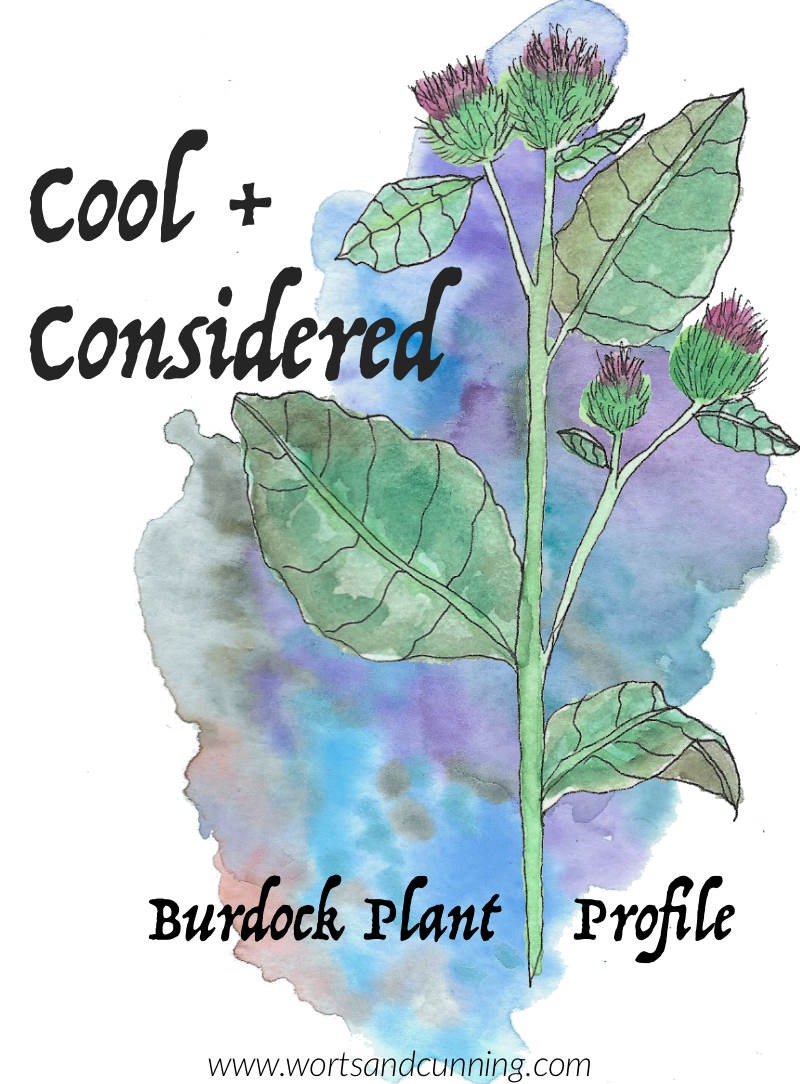
Cool + Considered : Burdock Plant Profile

June 18, 2019  /  Alexis J. Cunningfolk

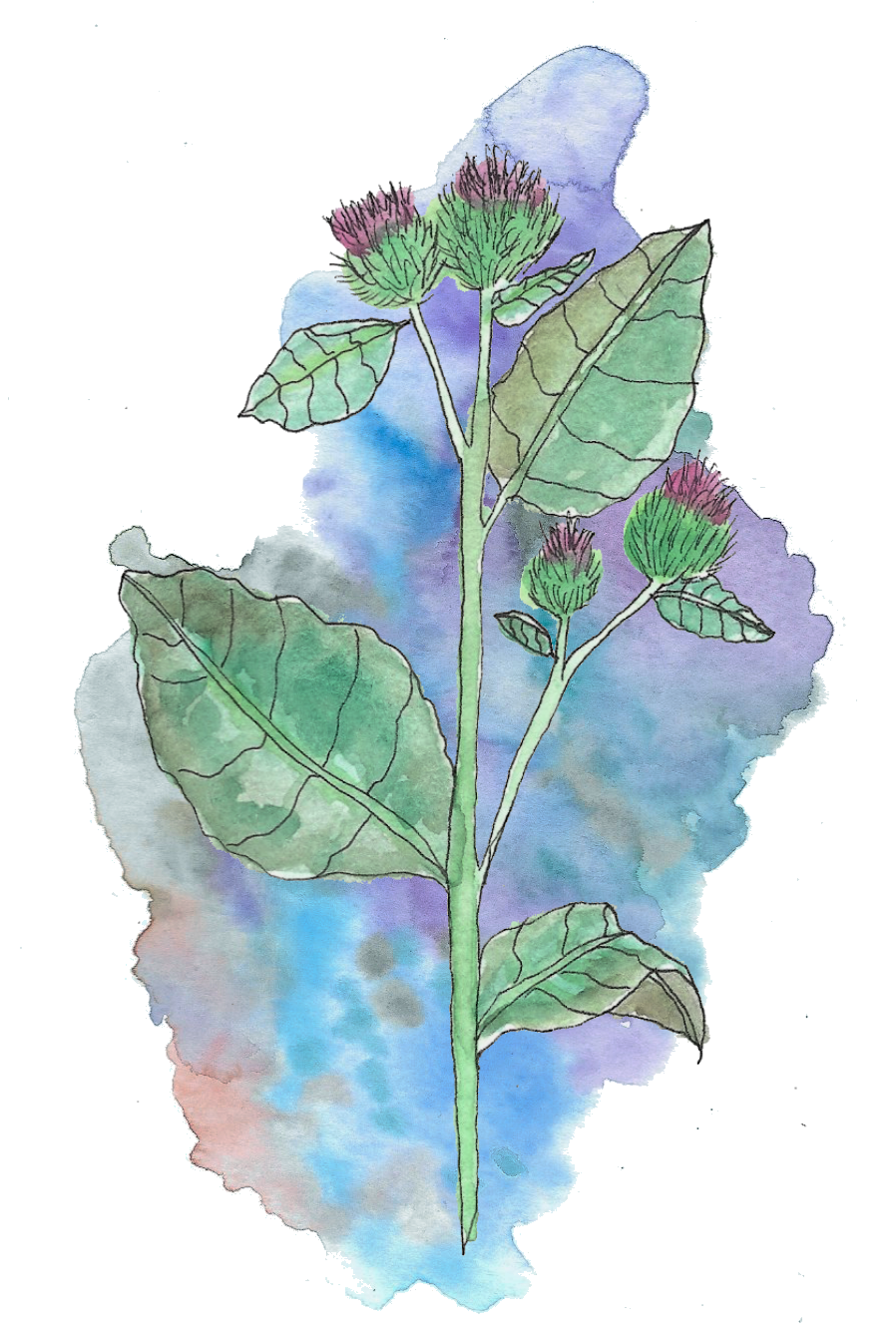
burdock plant profile

During these hot summer months, cooling herbs are key allies for our health and wellbeing. There are a number of cooling herbs we can befriend, including Lemon Balm (Melissa officinalis), Rose (Rosa damascena), and Aloe (Aloe vera). One of my favorites is Burdock because it has such a wonderful way of balancing heat in the body, is mild in taste, and is one of those herbs (like Oats) that act as much as food as it does medicine.

I created this profile for the students who attend The Plant Sabbat but thought it would be fun to share with you, too.

What are your favorite ways to use Burdock? Let me know in the comments below. If you're looking for all my plant profiles click here and you can learn how to connect with any plant with the Plant Ally Project. Enjoy!

Signature Summer 2019.png
burdock arctium lappa

Common + Folk Names : Bardane, happy major, hardock, hareburr, cockleburr, clotbur, love leaves, hurt burr, beggar’s buttons

Element : Water

Zodiac Signs : Taurus

Planets : Venus, Jupiter

Moon Phase : Waning Moon

Parts used : Root and seed.

Habitat : Native to Eurasia and grows throughout North America. Thrives in damp areas, disturbed soil, and roadsides.

Growing Conditions : Self-seeding and relatively easy to grow. Prefers full sun and moist, rich soil.

Collection : Collect the root of a in the summer or fall of the plant’s first year or the spring of the second.

Flavor : Bitter, sweet

Temperature : Cool

Moisture : Dry

Tissue State : Dry/Atrophy, Damp/Stagnation

Constituents : Vitamin C, calcium, iron, magnesium, potassium, zinc, polyacetylenes, chlorogenic acid, taraxosterol, arctigen, inulin, lactone, volatile oils, flavonoids, tannin, mucilage, resin, pectin.

Actions : Adaptogen, alterative, antibacterial, antifungal, anti-inflammatory, anti-candida, antitussive, aperient, aphrodisiac, cholagogue, demulcent, diaphoretic, diuretic, expectorant, febrifuge, galactagogue, mild laxative, nutritive. The seed is alternative, anti-inflammatory, depurative, diaphoretic, diuretic.

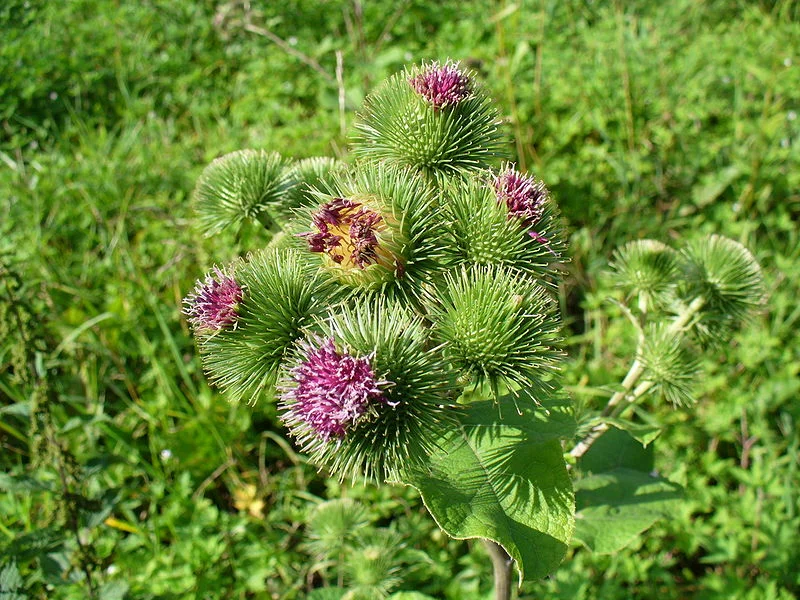
image source

image source

Main Uses : Burdock is a clearing herb. It draws toxins out of the body, especially from the gut, the tissues, and the liver. As a blood-purifier, the herb helps to support the work of eliminatory organs like the liver and kidneys. It is a traditional remedy for kidney stones. As a cooling and moistening herb, Burdock is especially useful for issues that arise from excess heat including inflammation (especially when inflammatory skin conditions are an issues), fevers, and illnesses such as tonsillitis or dry coughs. Acting on the liver, Burdock helps with the secretion of bile and stimulates the actions of the gall bladder. The herb is indicated for poor glandular function in general including the lymph system, pancreas, endocrine glands, prostate, and spleen. As for most liver herbs, Burdock can be helpful for those in recovery from alcohol addiction. It is good to use cleansing Burdock with diuretic herbs such as Dandelion (Taraxacum officinale) to make sure that you are pulling out toxins from the body effectively.

The heat and pain of arthritis and gout are alleviated by Burdock as the root breaks down excess uric acid in the joints. Some indicators for Burdock can seem contradictory - excess internal heat can result in a dry digestive tract (constipation and dry fecal matter are indicators) but it can lead also to weepy skin conditions. This is because hot and dry internal heat has pushed all moisture and oil in the body system to the extremities. Of course, to keep things interesting, Burdock can also be strongly indicated in the case of dry and scaly skin conditions. Remember, you are looking for excess heat and how it is manifesting the body when considering Burdock.

Traditionally, Burdock has been used since the Middle Ages for the treatment of cancer including by famed herbalist and mystic Hildegard of Bingen. Modern research continues to look at Burdock as a useful ally in the treatment of not only cancer but HIV, alerting us to Burdock’s immune-boosting qualities.

Burdock combines well with other nutritive herbs such as Milky Oat (Avena sativa) for creating a restorative tonic for undernourished body systems. Insulin rich, Burdock acts as a prebiotic in our gut, helping to cultivate healthy flora. It also helps with the digestion of fats and oils. Enjoy the tea 30 minutes before a meal for best results. Another indicator for Burdock is a sweet tooth and maybe even sugar addiction for those who rely on the quick fix of sugar for energy. There can be a deeper emotional tie to pleasure (or lack thereof) in life and the use of sugar as a quick but ultimately unsatisfying replacement. Approach all diet discussions with nuance and compassion, being sure to examine your own relationship to food and prejudices about size and appearance. Use the essences of Burdock, Crap Apple, and Pretty Face for help.

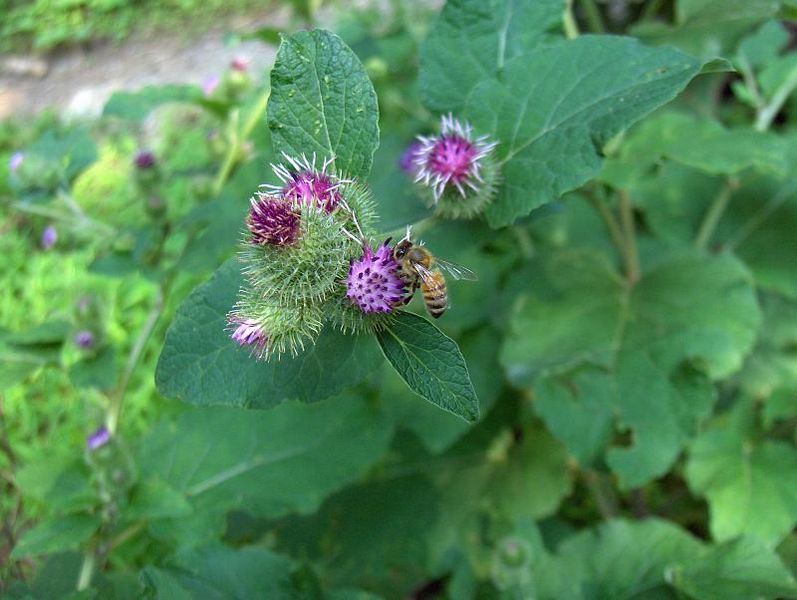
image source

image source

Brigitte Mars offers an interesting insight into how Burdock is especially useful for city dwellers: 

“During the Industrial Revolution, burdock was used as a medicine to help people cope with pollution or, as John Kelton said in 1870, ‘the constant deterioration of the blood from impure air and exhaustion by day, bad ventilation at night and want of attention to ordinary requirements of life.’” (The Desktop Guide to Herbal Medicine, 67)

Burdock has a low amount of estrogen content which means that it can be useful for folks experiencing menopause when combined with stronger estrogenic herbs such as Dong Quai (Angelica sinensis) and Wild Yam (Dioscorea villosa). Use with practitioner support for supporting transgender and gender variant transitions on the transfeminine spectrum.

External uses include using the oil and leaves as a poultice for skin inflammation and rashes including psoriasis, eczema, glandular boils, and ringworm. Make a hair rinse of the root for remedying dandruff and preventing hair loss. Use in after-sun care. Useful for case of hot and red acne that has not come to a head. Made into a facial toner, the root helps to regulate the excretion of sebaceous glands in the skin, making it especially useful for those with oily skin. Use as well for swellings, sprains, and tumors. Skin conditions are especially connected to deep seated emotional imbalances - use flower essences along herbal remedies. The tincture can internally to successfully treat external symptoms, too. “In the Native American healing tradition, the plant was used by the Malecite, Micmac, Ojibwa, and Menominee for skin health. Further, the roots were dried by the Iroquois over a fire and stored for food for the following year.” (1)

Burdock root is quite edible and pleasant in flavor. It’s a popular addition in Japanese, Hawaiian, and New Zealand cuisine.

Magickal Uses : Burdock is considered a protective herb and the root can be buried at the four corners of the home or powdered and traced around the home. The dried root can be cut and made into small button like beads as a protective amulet. The flowers are symbols of abundance. Use the burrs to help the magick stick to something. Use the plant to help you connect with Bear energy - Arctium comes from the Greek word for bear.

The Burdock Personality : The Burdock personality is very good as masking their emotional suffering, but eventually their physical suffering comes to the surface. They embody burnout - their internal heat has burned them up from the inside out. They tend to be anxious and worried about rocking the boat - until they find themselves so angry they can’t not express their anger. Irritability, crankiness, and explosive outbursts can follow and can feel especially overwhelming as this has not been their typical pattern. Burdock helps them to access the liberating powers of their anger. Anger on the surface goes after those we love and has a tendency to wreck relationships. Deep anger that is given space to come to the surface and allowed to breathe and burn off can be healing. The anger of a Burdock person is often from a much earlier period in their life when they weren’t able to safely express their anger then. Burdock helps them get the chance they never had to be angry - it clears the path for a clean, transformative burn.

Contraindications : Avoid use during first trimester of pregnancy - herbalist Anne McIntyre recommends avoiding throughout all trimesters and during breastfeeding. Avoid with insulin and other hypoglycemic medications. Needs careful monitoring of blood sugar levels with diabetic patients. Be aware that Burdock and Rhubarb leaves are similar looking but Rhubarb leaves are toxic.

Dosage : Standard dosage - 1 tsp per 8 oz water; Adults 30 - 60 drops tincture or 1 - 10 drops for drop dosage. 

image source

image source

Burdock + Dandelion Toffee

by Julie Bruton-Seal & Matthew Seal from Backyard Medicine

Dig several roots of burdock and dandelion, in spring or fall. Strip the root bark off, and clean and chop up the inner part. Weight out 3 to 4 ounces of each. Load into a saucepan and cover with a pint of water. Bring to a boil and simmer for 20 minutes. Allow to cool.

Simmer again until the roots are tasteless (i.e. have surrendered their content to the liquid). This reduces the mixture by about half. Strain and add 1 tablespoon butter and 12 tablespoons of sugar. Boil for 5 minutes then simmer for 20 minutes more. It will become toffee-like. Test the toffee by pouring a drip of it onto a cold plate, as you would in testing jam: when it crinkles into soft threads, it is ready. Pout it into a buttered shallow tin. Before it sets totally, mark out squares and save the toffee slab in greaseproof paper: or stretch it out by hand into taffy: this is ale and pliable, ideal for balls, plaits, etc.

(1) Quoted from https://www.mountainroseherbs.com/products/burdock-root/profile but the original source can be found here: Moerman, D.E. 1998. Native American Ethnobotany at http://herb.umd.umich.edu/.


magick mail

We respect your privacy no matter how cool or uncool.

Thank you for signing up for Magick Mail! The digital owls have been dispatched. Once you have confirmed your subscription to the list you will gain access to our member's only apothecary!

4 Likes
categories / plant allies
tags / burdock, arctium lappa, plant medicine

How to Make Your Life As An Herbalist Harder

May 31, 2019  /  Alexis J. Cunningfolk

herbalism mistakes

It’ll be nine years next month that I’ve been running this little business of mine. Nine years of making remedies, teaching classes, writing blog posts, finding my voice (currently singing in the key of soft dyke / salty hag), and making lots of mistakes along the way. I love the freedom of owning my own business but I’ve made it unnecessarily difficult for myself at times, too. I’m hoping that this post helps folk stop or avoid altogether these same mistakes. Or maybe this is just a big public post-it note to myself to continue to work on not making these mistakes, because I am certainly still making a few of the mistakes listed below.

While the following post does have someone who runs their own business as an herbalist in mind, it can apply to a wide array of those in self-employed in all sorts of businesses. To be clear for the folks who haven’t been paying attention in the far back, I am not in any way trained as a business coach but I do have a tea-stained certificate in Making Mistakes as a Solopreneur (it arrived three months late and torn in two!).

So here is what I’ve learned about making your life more difficult as an herbalist (or healer or friendly neighborhood witch).

Do unnecessarily (and often repetitive) work.

Whatever you can automate, do. I started my business during the whole “handmade gets itself online” movement and I loved all the purposeful details that went in to creating products. If you ordered from my shop when I was still selling tea and herbal remedies, for example, you would have received a tea-dyed receipt with your order hand written on it. I was particularly proud of this detail - something I didn’t see other folks doing in their packaging.

Precious as that was, it was an absurd thing to be doing when I was receiving as many orders as I did during the height of my remedy-making business. Because I was not only hand-writing receipts, I also hand-stamped and decorated all of the shipment boxes, handwrote addresses (again on that tea stained paper), and hand-wrapped all my remedies in colorful paper and washi tape. And that was just the effort spent after making the remedies in the first place (which were largely underpriced to begin with). But I was absolutely convinced that things like these hand-written receipts were what made folks like my business. And maybe that was true to a point - I got frequent feedback that receiving one of my packages was like getting a delivery from a store in a fantasy novel - but it burnt me out. I needed to choose to do one, maybe two of those things, and automate the rest.

Whatever I can automate these days, I do. And guess what? It’s not stripped the soul from my business but in fact given me more space to feel spiritually connected and renewed in my work. Ways to automate your work as a herbalist include:

  • If you have a newsletter, at a minimum set-up automated emails for when someone joins your list. This is a great way to warmly welcome someone into your community and can act like a map and compass to your work and what thing on your website someone might look at next.

  • Use the auto-generated receipts and shipping labels provided by whatever platform you sell your goods on.

  • Use canned responses in replying to customers when appropriate. Gmail allows you to save a series of canned responses that you can generate into an email - I do this a lot and then customize the email from there.

  • Create handouts for your clients and students that covers basic information that you find yourself sharing again and again. I have print-outs on making tea, taking herbal hand, foot, and body baths, using essences, and more.

Those are just a few broad suggestions - I’m sure you can find many more for your own particular practice. But, please, automate and let it open you up to the path of delegation, cooperation, and the psychic group witch mind dismantling the kyriarchy. Or whatever.

image source

image source

Commit to your relentless belief that you are an imposter.

I wish someone had told me about imposter syndrome before I started my business. I was still  running high on my own special morning blend of imposter syndrome when I started studying herbalism and it colored my early learning experiences. If you’ve heard about imposter syndrome but don’t quite know what it means or if it applies to you here are some resources:

  • Nine Ways to Fight Imposter Syndrome

  • Dealing With Impostor Syndrome When You’re Treated as an Impostor

  • 5 Different Types of Imposter Syndrome (and 5 Ways to Battle Each One)

Look, you’re not serving yourself or your community by feeding the imposter monster. It’s fed enough by society at large and overpowering systems that we can’t easily change as individuals. Want a magickal plant-centered suggestion? Give your feelings of being an imposter to a plant and see what they give you back.

Be overly complex in your communications - including client care instructions.

I mean, I love to extrapolate far beyond what is necessary (hi, have you read any of my blog posts?) but just because you can provide more doesn’t mean that it’s better. Folks are going to follow-through on your recommendations if you keep it simple and easy to incorporate into their lives.

Learn to edit down your emails, your newsletters, your product and class descriptions to a point where you’re still communicating the essentials and you and those you serve will be better for it. This goes for how you talk about your work face-to-face with folks. You want to hand folks the equivalent of a verbal business card and not a college length thesis.

It’s not to say that there is never time for lengthy communications, but overall, shorter is better. And remember when I mentioned those educational handouts in the first part of our journey down mistake lane? Make those concise, too. You want folks to actually read what you give them so that they’ll feel more empowered to follow-through with their care.  

Undercharge and still feel bad about what your rates.

I’ve written about money and accessibility already on this blog (part 1 | part 2), but struggling to charge what you and your services are worth are a big one. Then throw in the complexity of cultural identities and narratives around money and what you should and should not charge for (i.e. healing and magickal services) and it can feel even more complex. Since I’ll be continuing to write about money, worth, and feelings, here’s my short response to the voice in your head that’s constantly shaming you about your prices : The body that carries that voice needs to eat, needs a safe place to sleep, needs access to transportation, needs to be able to do the things which makes them feel pleasurable and whole. Honor that voice for trying to protect you and keep you safe, and then give it something shiny to look at while you get on with running a business and living a life beyond its fear.

image source

image source

Set boundaries - and watch yourself roll right over them.

Appointments are only an hour but here I am two hours in and just now starting to wrap up.

I don’t do discounts but I’m afraid of losing business with this person so I better give them a big discount.

I shouldn’t be answering emails on 3 AM on a Saturday, but if I don’t respond right away I’ll lose business.

There’s too much suffering in the world for me to take regular time off!

Treat your boundaries like the edges of your most sacred space. Imagine your boundaries as the grove, the temple, the mountain, the church or sanctuary where your spirit is remembered in all its wholeness. When you begin to treat your boundaries as sacred and powerful in their sacredness and that your boundaries make you better as a healer, I can guarantee that you’ll be able to run your business better. And then, when the time comes to change a boundary, you’ll be doing it from a place of feeling empowered instead of backed into a corner.

Hold yourself to ridiculous standards of creativity and making.

Hey don’t do this! Take time off! Value what you’ve created! Creating something and then presenting it to the world can be absolutely terrifying - don’t welcome in any more fear than necessary to the process.

Eat some lunch. Take a breath. All of this is absurd and necessary and in both situations fear is a lousy companion.

Don’t listen to your own advice.

Please do the opposite of this.

I could insert a whole flowy bit here about trusting your intuition and turning the knowledge you’ve gained from experience into wisdom, but here’s the short cut. Do what you advise other folks to do all the time. I know for many herbalists, myself included, it includes things like, drink water, get more sleep, go outside, allow yourself to zone out, seek pleasure, ask for help, so on and so forth… Imagine if you took your own advice as sincerely as you dealt it out.


Have some mistakes you want to share? Comment below and let us commiserate together. Let’s keep growing through and laughing at our mistakes - seeing them as the calling cards of the trickster gods that they are.

Signature Summer 2019.png
 
MagickMailAd 2019 exuberance.png

We respect your privacy and will not share your information because that’s a lot of extra work that none of us have time for.

Thank you for signing up for Magick Mail! The digital owls have been dispatched. Once you have confirmed your subscription to the list you will gain access to our member's only apothecary!

7 Likes
categories / path of the herbalist
tags / path of the community herbalist, herbalism

Psychic Development with Tarot (or how to make friends and save the planet)

April 26, 2019  /  Alexis J. Cunningfolk

Tarot Psychic Development.png

In middle school (ages 11 through 13), I often carried around a lunch tin that was stocked with my ESP studies set-up. The study of ESP, or extra-sensory perception, was my jam for many years (ok, admittedly, I still slather my metaphysical toast with it) and if you met me around that age I would’ve likely asked to test your psychic abilities. I would’ve taken note of the results in my little notebook, letting you know whether or not your results were of note and the different style of “extra” you might have in your perceptions.

(As I’m writing this story I’m realizing where the gap emerged with my regards to being able to do small talk. Here. In junior high when I started conversations with “Have you heard of Zener cards?”)

I’m older now and don’t carry around a lunch tin full of Zener cards, pendulums, vision-inducing oils and other metaphysical accoutrement. Now, I carry a deck of tarot cards with me everywhere.

It’s basically the same thing. 

So in a reclamation of the power of being the weird kid (and now the weird adult) which I know that many of you reading this were and are, I want to share with you some of my favorite tarot party tricks for developing your psychic abilities. Now, when I talk about psychic abilities, I’m referring to the broad expanse of our ability to perceive our inner and outer worlds in a way that helps us to gather information that is useful to our lives. Essential stuff for self-discovery, working magick, and being a decent humxn.

I think this development of and increasing awareness of extra-sensory perception is essential for our ability to survive and thrive as a species. It’s hard to ignore the fact that we know far less than we think we know as a species when you begin to engage in the world of the extra-sensory. And we need some of that humility in the face of mystery instead of continuing to make fear-based choices thinly veiled as arrogant confidence (hello thinking we’re just going to ride out climate change without radical change on our part).

We need to perceive more. Feel more. Experience more.

And - this is key and why I think psychic development is important - have the tools to return to our center when it feels overwhelming. 

Many Queens Tarot by Lettie Jane Rennekamp

While I encourage everyone to make their own Zener cards out of markers and construction paper (please be friends with my 11 year old self), a tarot deck will serve you well, too. All of these activities can be done on your own-some, but I think they are particularly fun to do with friends and covenmates. If you’re new to the world of psychic development, I hope that these activities serve as little gateways to get you curious about the practice. If you’re an older-timer nerd at this stuff but haven’t used tarot yet for psychic development, I hope you’ll be excited to find some new techniques.

One more thing… there’s debate as to the best way to approach psychic development activities. Does one ground and center, focusing on the breath, and removing distractions from their environment? Or should it be approached from a space of play, maybe with laughter and music happening at the same time? I’ve seen success with both and you should experiment (that’s basically the motto of any advice I give - Experiment! Thou shouldest do-eth you!). What’s fun about working with the tarot as opposed to another psychic development tool is that the tarot cards are rich with energy and symbolism giving our psychic reach a lot to hold onto and hopefully pull back into our consciousness. Remember that like with any new skill, it takes time and practice to show up. Your gifts will show up, too.

Find that Card

This is a super simple, no set-up required game. Either you or a friend chooses a card for you to find in the deck without looking at the cards. You can hold the deck in your hand, rifling through until it feels right. Or lay all the cards out in front of you until you feel like you’ve found the right one. If you don’t choose the right card, check out the cards surrounding it to see if its shown up there. I do this game during tarot classes I teach when I want to find and talk about a particular card.

Sorting the Suits

For this game you’ll only need the Minor Arcana. On a table before you indicate a spot for each of the four suits (you might want to write this down on scraps of paper so you don’t have to spend mental energy trying to remember where to place each card). Shuffle the cards and then sort them by suit into the corresponding piles. It’s typically recommended that you do this quickly and without thinking too much about what card you are putting where. At the end, find out how many cards you sorted correctly. Sorting 16 or more cards correctly shows that you are beginning to move out of randomness into something significant. 

Smith Waite Centennial Edition Tarot

Predicting the Order

Using the Minor Arcana, pull out 5 cards of each of suit and set them aside. On a piece of paper list out order you think the cards will fall in (i.e. Wands, Cups, Cups, Swords, Wands, Pentacles, etc.). If you receive even more specific information (i.e. instead of just a Wands card, the Three of Wands specifically) make a note of that, too, but that’s not the primary focus. Then shuffle the cards a few times and place them all in a single pile. Go through the pile in order to see how well they match up to your predictions. A score of 7 or higher shows that you’re predicting more than getting lucky guesses.

Ordering the Arcana

This next exercise leans on your connection with tarot. You will only need the Major Arcana from your deck. Shuffle the cards and with the backside of the cards up, start by finding the Fool and placing it in front of you. Then proceed through the rest of the Major Arcana with three lines of seven cards each. A score of 7 or higher is a good sign that you’re flexing your psychic muscle.

The Psychic Court

This is less a practice and more of a helpful way to affirm or help you discover your psychic gifts. Now, these correspondences are not based on tradition or a hard and fast way of determining what sort of extra sensory person you are. It’s meant to be a bit of fun and help you to start thinking about yourself and your skills, including areas that you might consider developing more. These correspondences are based on my work with the Colman Smith tarot which was the first deck I ever owned and the one that I developed most of these exercises with. I encourage you to create your own correspondences with your favorite deck.

Begin by separating the court cards from the rest of the deck and shuffling them. You can simply ask for insight on what is the strongest area of your psychic skillset and pull a single card as an answer. Or you can do a three card spread asking the following:

What is my psychic strength?
What is my weakest psychic muscle?
What psychic ability should I work on developing more?

Once your cards have been pulled, check out the list below:

  • Student or Page of Swords : Clairaudience

  • Traveler or Knight of Swords : Psionic manipulation (i.e. affecting electrical currents such as your computer crashing when you’re experiencing intense emotions)

  • Architect or King of Swords : Clairvoyance

  • Visionary or Queen of Swords : Astral projection + lucid dreaming

  • Student or Page of Cups - Clairvoyance

  • Traveler or Knight of Cups - Scrying

  • Architect or King of Cups - Remote Viewing

  • Visionary or Queen of Cups - Claircognizance

  • Student or Page of Pentacles - Clairgustance

  • Traveler or Knight of Pentacles - Dowsing

  • Architect or King of Pentacles - Clairalience

  • Visionary or Queen of Pentacles - Plant and animal communication

  • Student or Page of Wands - Psychometry 

  • Traveler or Knight of Wands - Channeling

  • Architect or King of Wands - Aura reading

  • Visionary or Queen of Wands - Energy Healing

Many Queens Tarot by Lettie Jane Rennekamp

Telepathic Telephone

Partner Exercise #1! Choose a card from the deck and, without showing your partner, sit across from them. Concentrate on sending the image of the card to your partner’s (the receiver) mind. The receiver should visualize receiving a message or having an image pop up on a phone screen or whatever feels most effective. When the receiver feels like they have received enough images to go on, have them draw what they felt they saw (this is especially helpful if the receiver doesn’t feel like they were able to see the whole card but only snippets). This is a great exercise for folks who practice magick together to strengthen their energetic bonds. 

Empathic Draw

Partner Exercise #2! I think this is a fun practice to practice for tarot readers in general. Its success is far more subjective than the other exercises, but I still think it works our intuitive and empathic abilities. Have one person concentrate on a particular emotional state that is easy for them to connect to (i.e. the anxiousness they experienced this morning after a bad dream). Have them hold on to that feeling without speaking it aloud while their partner looks through the deck to find a card that they feel illustrates the emotional state. Once a card is chosen the querent and reader compare notes about how close the card feels connected to the emotional state that the querent was holding. The reader might pull out the Nine of Swords for a particularly successful read of a situation, for example, but they also might end up pulling out a card that’s more about the dream that the querent was experiencing anxiety from. 

So there you have it - how to make friends, become more psychic and save the planet!

Or something like that.

Tell me about your psychic gifts (and shortcomings) in the comments below. And keep being the delightful weird kids. We going to need to get weird and kind and stubbornly connected to do better as we and all future generations deserve.

alexis j cunningfolk
 
magick mail

We respect your privacy and will not telepathically or otherwise share your information.

Thank you for signing up for Magick Mail! The digital owls have been dispatched. Once you have confirmed your subscription to the list you will gain access to our member's only apothecary!

2 Likes
categories / magickal arts, tarot + divination
tags / tarot, psychic development
Newer  /  Older

© 2010 - 2025 Worts & Cunning Apothecary | All Rights Reserved | Disclaimer | Land Acknowledgement
. live your magick .