
Chosen Family: A Tarot Spread for Finding One Another
I spend a lot of time in my work exploring belonging: how we recognize it, embrace it, and making more space in our lives for feeling it with one another.
One of the ways of experiencing belonging - of having our belonging recognized as whole, holy, and inherent - is through our encounters with chosen family. When we're seeking out new relationships and trying out new patterns of how we relate to others, being able to get a sense of how that new style of relationship might feel in our bodies can be a helpful. One of my favorite tools for finding certain sorts of feelings in the body is the tarot.
The tarot is a multifaceted tool with plenty of historical paths to follow, magickal elements to study, and somatic experiences to explore. Made up of 78 cards that seek to both embody universal experiences yet be open-ended enough to be endlessly customizable to individual lives, the tarot can be utilized in our quest for deeper connection with people we already know and those that we've yet to meet.
Chosen family refers to people in your life that you're not related to biologically but who you have a deep, healthy familial relationship with built on mutual respect, kindness, love, and care. Sharing resources, looking out for one another, and affirming each other's dignity are all hallmarks of chosen family and are typically in response to not receiving this kind of care and consideration in your family of origin. However your chosen family comes together, participating in the act of making and being part of a chosen family is one of the ways we let ourselves be seen and held while learning to listen and perceive more deeply. For many, queerness and chosen family are woven together and from my own experience as a queer kid chosen family was a matter of survival and now, as a queer adult, chosen family remains a sanctuary. But anyone can experience chosen family and I've found it amongst my Pagan and Witch friends as well as in a variety of other identity-affirming groups.
Chosen family shows up all throughout the keystone tarot developed by A.E. Waite and Pamela Colman Smith not least because of Pamela Colman Smith's experiences with queer chosen family and, perhaps, A.E. Waite's experiences with the hermetic orders he belonged to.¹ For me, tarot has always been a tool of learning about and seeking connection not just with our inner worlds, but the people, places, and creatures of the world around us.
So let’s cast some cards and explore what sort of chosen family we’re seeking, the healing we’re looking for, and the hope of community that we’re cultivating.
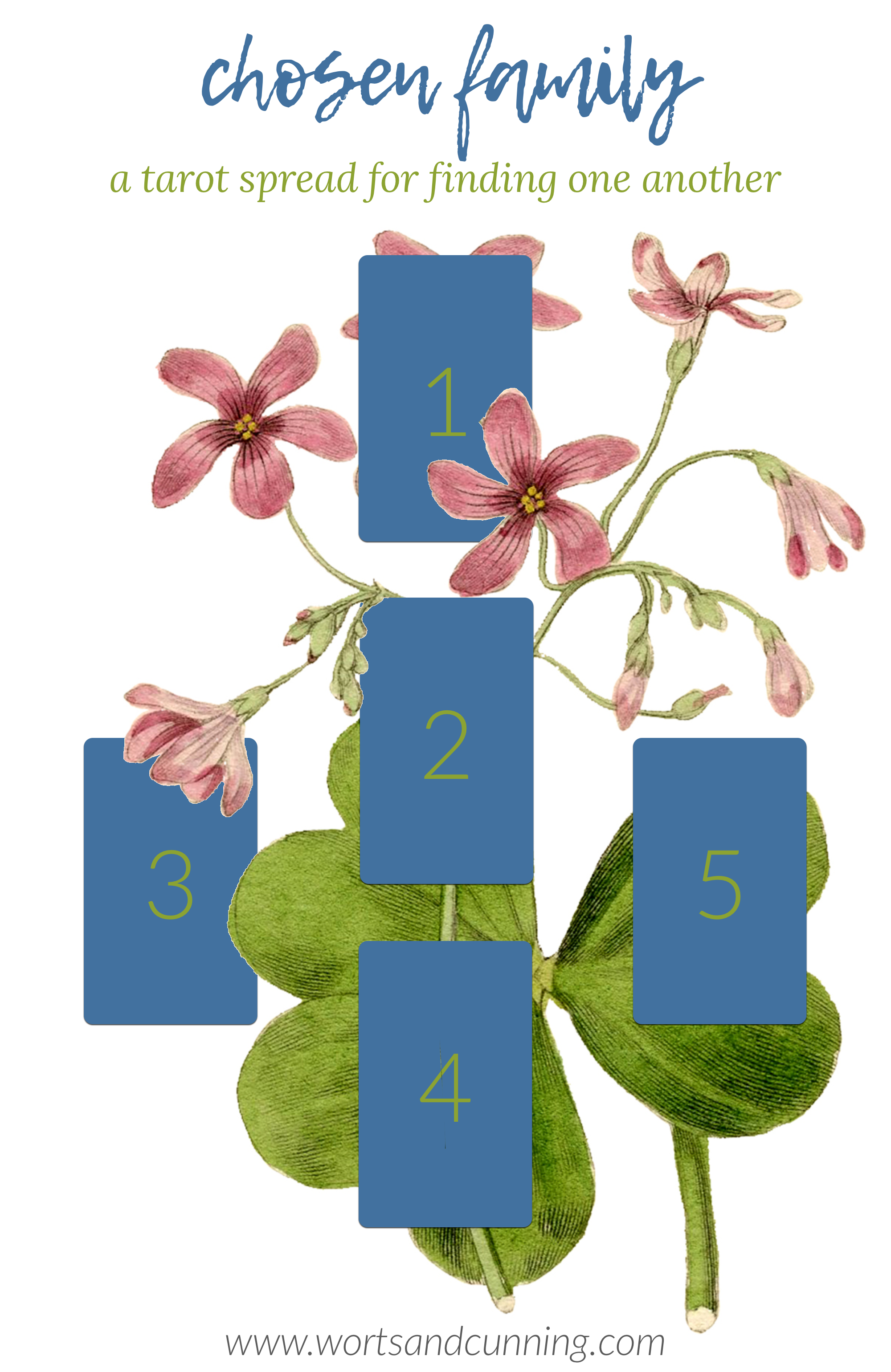
The Chosen Family Tarot Spread
The following tarot spread helps us to understand the feeling of chosen family we're seeking and the type of relationships that feel missing or underrepresented in our lives.
Just the act of identifying the types of relationships we're yearning for can be healing - we're letting ourselves hope for connections that we may not have experienced before or had little of. After identifying the chosen family we're seeking, this spread leads us through understanding why we're seeking that connection and then tapping into the collective energy of chosen family - that magickal web that helps us to find each other - to receive supportive guidance.
Doing this spread again and again through the years can help you develop a deck-within-a-deck of helpful figures that you can call upon when looking for specific insight on your healing journey - you’ll find more suggested practices like this below. I’ve also included three sample spreads to illustrate the ways that this spread can be approached.
Note: While I love a precocious beginner, I do think that this tarot spread works best for folks with a firm understanding of the tarot (or oracle deck you're using), it’s structure and meaning, and a strong working relationship with the cards. Because we are seeking a somatic experience, where we feel the kind of relationship we're looking for, having a connection with your deck of cards already, where you've previously had somatic experiences with them, will serve you well.
✨ Card 1. Choosing Our Family
Begin by choosing a card (or two) to represent the sort of chosen family you're seeking. A card for this position might come to mind easily, but if you're having a harder time choosing, here are two suggestions. First, you can look through every card in your deck, asking yourself "Who’s the family I'm seeking?" and choosing a card that feels right. Second, is to spend time journaling and/or meditating on the chosen family you're seeking and then choosing a card. There is no right or wrong card and there is a lot of room for play when it comes to your choice. Here are some examples of reasons folks might choose certain cards:
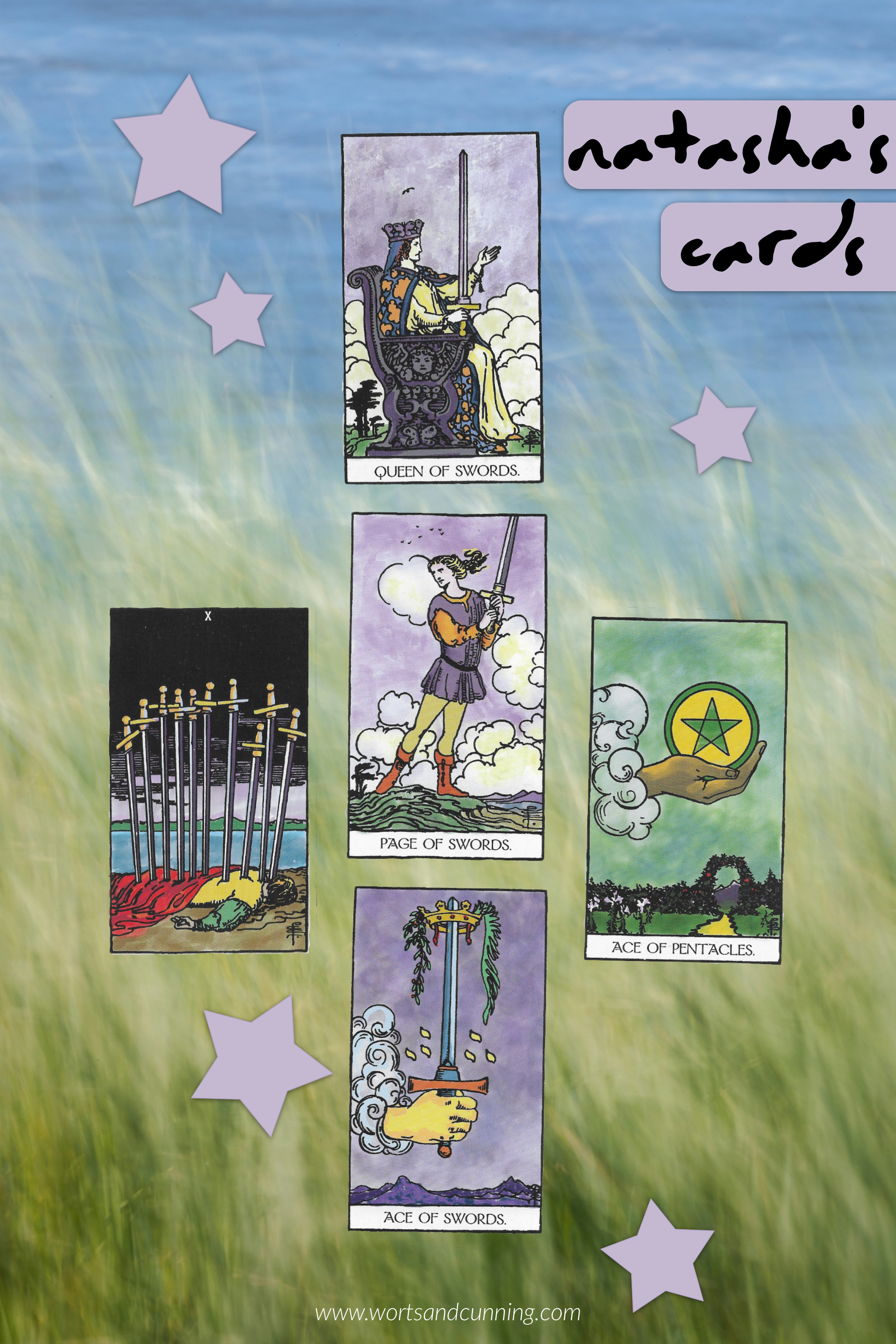
Natasha just wants someone to tell them how it is - gently but fiercely - and help them sort through the complicated dynamics with her biological family. She chooses the Queen of Swords as her first card.
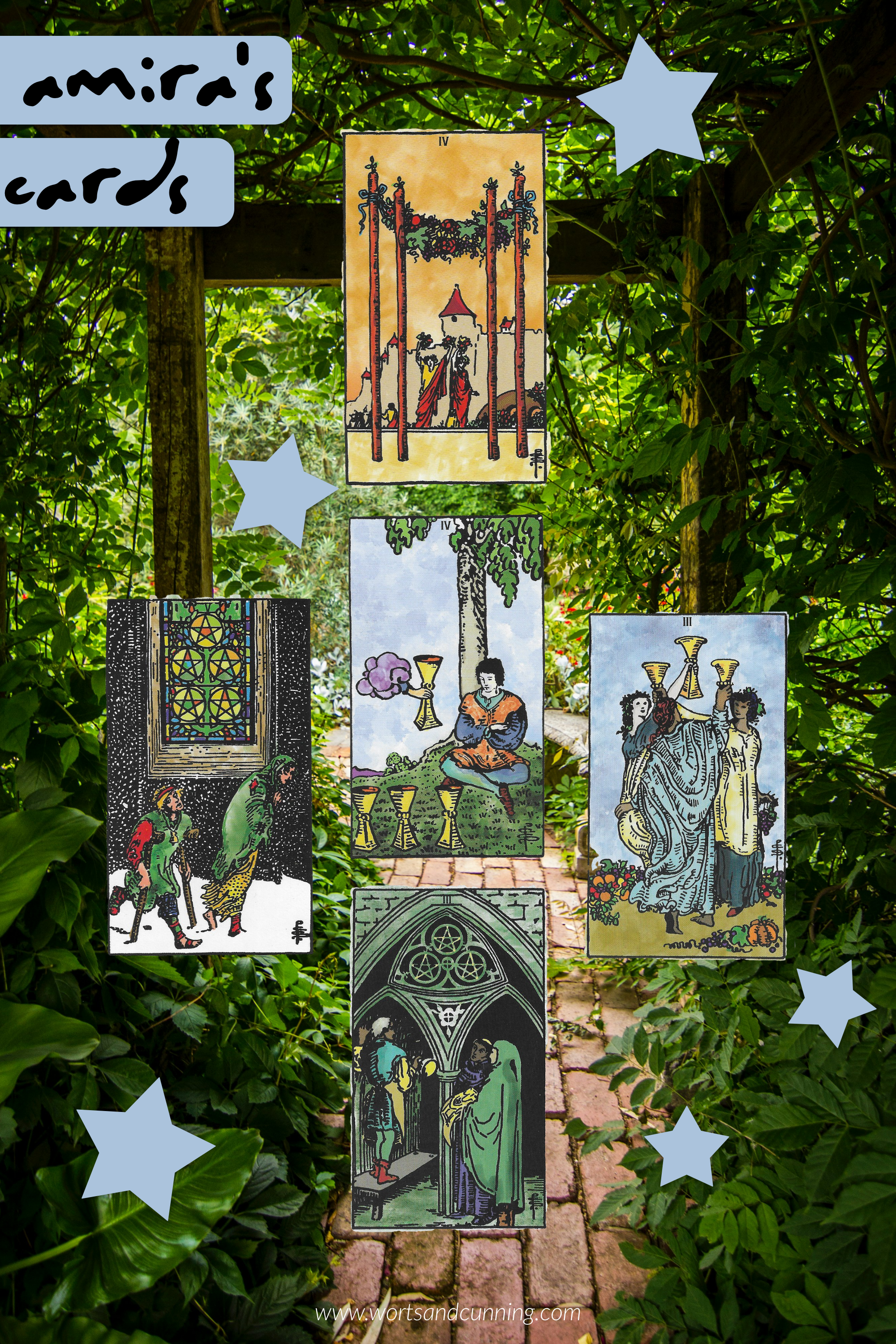
Amira wants to feel part of a friend group that values in-person get-togethers and supporting each other's creative pursuits. They choose the Four of Wands.
Leo really wants a friend who is as excited about going on hikes as they are for sitting around with tea talking about everything from a favorite band to their favorite megaliths. He chooses the Empress as his found family card.
background image @iamthedave | tarot deck shown is the Weiser Tarot
✨ Card 2. Finding Our Healing
The next cards will be chosen at random, using your preferred shuffling method. The second card represents the healing that we are seeking with the family we’ve chosen in card one. We seek our chosen family to get a need met that we're not experiencing with our family of origin - this card helps us to name that need more clearly. Continuing from our examples above:
Natasha pulls the Page of Swords which speaks to her younger self's confusion within her family of origin who relied on unspoken rules and sharp criticism in place of open communication. The Page of swords represents the part of Natasha that craves clear communication in relationships and wants to trust that people can be open and honest in their communication style.
Amira pulls the Four of Cups and recognizes the ways that they felt bored and out-of-step with her family whose older siblings and parents didn't show curiosity around any of Amira's interests that didn't align with their own. It led to a pattern of Amira believing that they aren’t interesting enough to be part of anyone's friend group.
Leo pulls the Five of Wands and laughs. His family was constantly in a state-of-disarray, especially when it came to doing anything outside of their normal routine. It made the idea of going out and doing things feel stressful not because of the stress of the unknown, but knowing that arguments and hurt feelings would be inevitable.
background image via @tcooper86 | tarot deck shown is the weiser tarot
✨ Cards 3 - 6. Embracing Our Connection
The last three cards, pulled at random using your preferred shuffling method, represents a message of clarity from your chosen family card to help you embrace your instinct and desire for connection with people out in the world. These cards might point to next steps to take, new ways of thinking to consider, and other healthy actions to take in your life to make finding and embracing chosen family that much easier. Here's a brief rundown on the cards our example readers have pulled:
Natasha pulls the 10 of Swords, the Ace of Swords, and the Ace of Pentacles. She interprets this as the Queen of Swords saying that her family's approach to communication was almost comically useless but led to a real deprivation of language which carries a deep wound in Natasha's heart. It also shows how Natasha struggles to explain this pain to others, feeling overwhelmed by the task, but the Queen of Swords points out that there is hope on the horizon with the sunrise and Natasha's quest to learn beyond the limitations of her family of origin. The Ace of Sword points Natasha to continuing to strengthen her communication skills, to speak clearly of what she wants. "Let them know what you want! Ask for what you need! Say no! Say yes! Embrace that voice of yours!," the Queen of Swords speaks. The Ace of Pentacle encourages Natasha to seek out that feeling of being held in a relationship, being cared for, and having communication not just be about talking but feeling heard.
Amira pulls the Five of Pentacles, the Three of Pentacles, and the Three of Cups. The Five of Pentacles points to that deep fear that Amira will always be on the outside, begging for social scraps. The interesting thing about the Five of Pentacles is that there are two folks in the card, reminding Amira that they're not alone in their fear and there are a lot more folks like them than not. The Three of Pentacles encourages Amira to show off their interests more, not less, and to embrace the perspective that there is enough interest to go around - that Amira doesn't have to live in a place of feeling like there is scarcity when it comes to connection. The final card is like a zoom-in on the Four of Pentacles and carries a lot of hope and encouragement - "We're here waiting for you, Amira! We can't wait to finally meet you!"
Leo pulls the Eight of Wands, the Queen of Pentacles, and the Ten of Cups. The Empress points to the Eight of Pentacles and Leo's constant vigilance to conflict in his relationships and his need to guard against them. "What if you practiced laying that wand down, sneaking through the gap in the fence, and letting yourself visualize peaceful encounters more than strained ones?," the Empress suggests. The Queen of Pentacles points to practices that Leo might consider adopting including restorative stillness and the joy of being in a place rather than worrying about getting there. Finally, the Ten of Pentacles points to not only the hope and real future of chosen family awaiting Leo, but that he should seek out examples of how a healthy family acts in order to be able to spot it more readily in his current and future relationships.
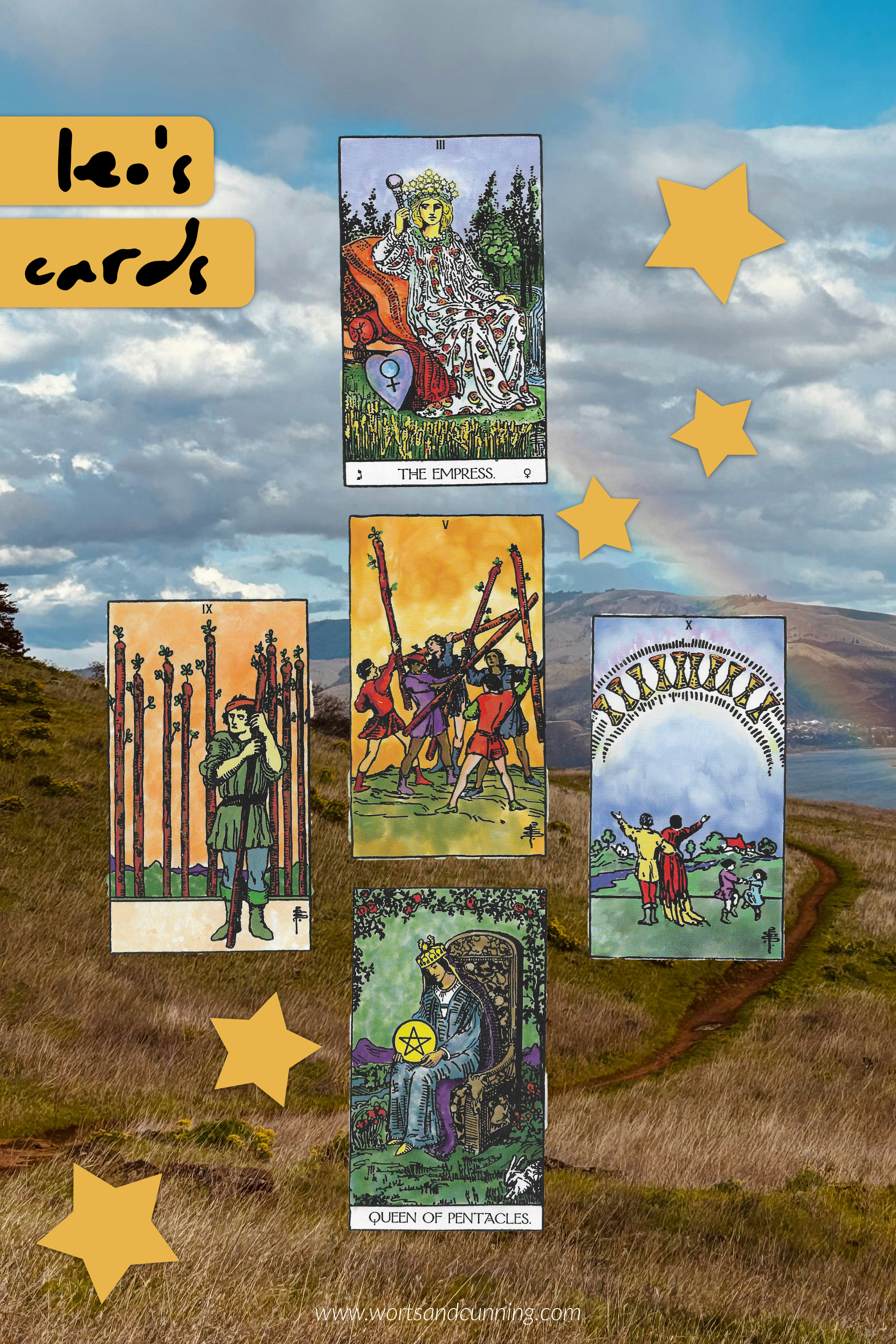
background image via @lkmatt | tarot deck shown is The Weiser Tarot
Future Practices
As mentioned at the top, working with a spread like this more than once helps us to develop our own deck-within-a-deck of useful allies - the spirits of our chosen family - to call upon when we need clarification. Natasha's Queen of Swords becomes a source of plain-speaking with things feel confused in her relationships. Amira's Four of Wands is a reminder of the vast possibility for community, illuminating all the pathways to get there. And Leo's Empress is a source of calm and reassurance, pointing out helpful ways for Leo to ground, center, and put everything going on around him into perspective. If you have a chosen family card that you want to work with you can always pull it out to do the Chosen Family spread again, but you can also pay close attention to whenever that particular card is showing up in another spread. You can also do a quick reading with any of your chosen family cards by looking for the card in your deck and reading the card before and after it as a message from them.
And if you're the altar-making type or love to cast a spell, cards from this spread easily lend themselves to an altar or spell calling in chosen family. It can be easier to follow up these type of self-reflective tarot spreads with actions when you have a sense of what these new types of relationships might feel like in your life, because feeling something can make it all the more real. So cast your cards, but also go to that game night that you've been planning on. Magick and real-world action go hand-in-hand!
✨
I hope you enjoyed the Chosen Family Tarot Spread and are feeling inspired by the ways we can approach tarot not only as a tool of self-reflective, but as impetus for connection.
If you’re looking for more tarot spreads, be sure to check out my tarot archive. There is over a decade of tarot spreads and tutorials for you to enjoy! And, if you interested in exploring the intersections between healing and belonging, come this way.
Finally, friends, I hope that your life is rich with people that love and support you and that you are able to be the chosen family to others in a big-hearted way. And if you’re feeling lonely right now, I hope that loneliness dissipates with the arrival of chosen family at the crossroads of wherever it is you are.

This post was made possible through patron support.
❤︎ Thanks, friends. ❤︎
📚
Footnotes
The tarot deck shown is the Weiser Tarot.
1. Though orders like the Hermetic Order of the Golden Dawn seemed more an intense interpersonal drama than a healthy chosen family. There were so many big personalities and feelings - intermixed with all the effort for costumes and rituals and arguing about secret texts - and including some truly incredible scam artists hanging out around the edges. But this also might just be a description of much of western esoteric tradition…
