
The Resting Body: Herbs for Sleep & Relaxation
Winter is winding down but the long enough nights of the season of Imbolc remain and I'll be indulging in as many of the quiet dreams of these still dark days as I can.
It's been a colder and grayer winter than recent years and I love this break from the rest of the year's endless sun. And while I'm trying to get just a little more time under the blanket of this gentle winter coming to an end and spring's raucous start, I also wrestle, like so many of us, with a restlessness that spits and hisses within me, pointing to a thousand (a million, a multitude) of reasons to sprint through the season, to try and dig a deeper well for the profound and thirsty needs among us.
It can be really easy to give into the fearful noise that I carry within me, trying to convince me that taking a break will actually break something. I can spend a lot of time on that tumultuous shoreline, battling between a protective instinct that can be too easily fed by anti-rest culture and the thunderous waves of all that needs feeling through. But, I ask myself, why have I worked so hard to create shelter in my practice and to extend that shelter to others, if I won't let myself go inside and rest?¹
I've learned (slowly, slowly) that refusing to rest is to willingly engage in its forgetting and risk losing the words for rest and all its stories.
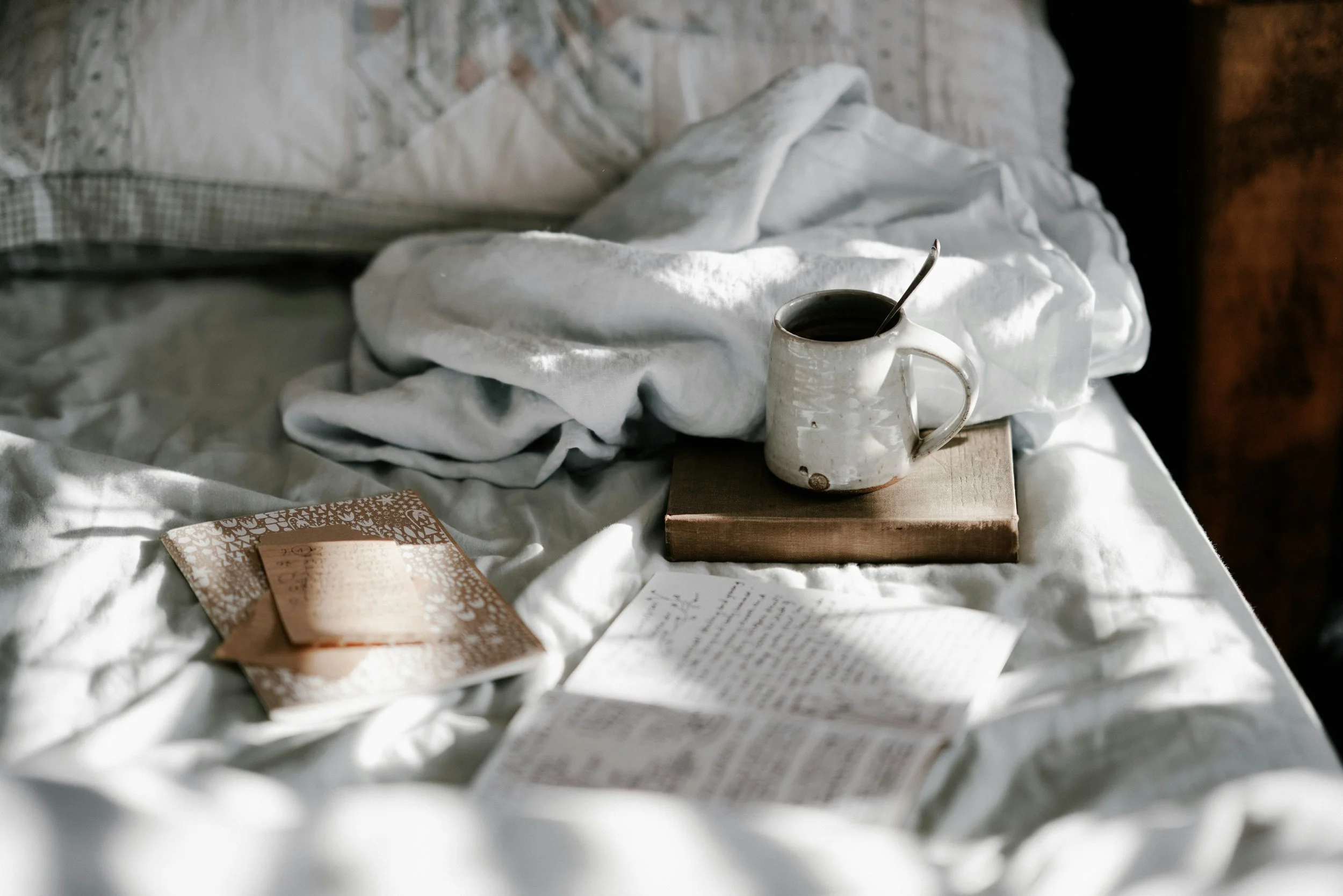
image via @anniespratt
These body-felt words of rest that helped me to slow down and illuminate what was possible on my own healing journey, are too generous a gift from peers and partners, elders and guides, to not nurture them within the shelter we're all building together. We hold each other's possibilities, carrying these gifts of what-can-be through the seasons of our lives, offering them to fellow travelers as the wheel turns, and remembering a future where these words are abundant in the stories we tell. If the season of winter (or any season of the year) offers rest to me now, I'm learning to welcome it, knowing that it serves as practice for offering deep rest for others in the seasons ahead. And I'll still find myself on a noisy shoreline some days, but that's part of the practice, too - rest often arrives with the ruckus of a storm, making the everyday work of shelter, of story making, and little rests that much more powerful.
Caring for the resting body is a central focus for many herbalists since it is through deep rest that so much of the healing work of our body occurs. Addressing disruptions to the cycles of rest and sleep in a person's life is an important part of supporting the ways that the healing gifts of plants move through our bodies. Our plant allies, like with most recommendations you'll receive from an herbalist, are only one part of supporting our cycles of rest, but they can make all the other restful practices we may be adopting that much more successful.
So with all that considered, please enjoy the following excerpt from The Apothecary of Belonging all about my favorite plant allies for rest and sleep.
The Resting Body:
Herbs for Sleep & Relaxation
Herbal Actions:
Sedatives, soporifics, nervines, and adaptogens²
Creating a practice of rest and deep sleep is foundational to well-being. The roots of restlessness, exhaustion, and insomnia can range from the relatively simple to the complex, as our sleep cycles can be disrupted by illness, stress, structural racism, lifestyle changes, family obligations, adventure, and more. Here are recommendations for classic sedating herbs as well as nervous system tonics for more complex needs. With sedating herbs like Valerian (Valeriana spp.), Passionflower (Passiflora incarnata), and California Poppy (Eschscholzia californica), I recommend starting with small doses (10 drops up to three times daily) before trying a standard dosage. As always, look up contraindications and consult with your health practitioners before adding herbs into your sleep routine.
🌿
California Poppy (Eschscholzia californica): If you’re looking for an herb to reset disruptive sleep patterns but others like Valeriana spp. or Passiflora incarnata leave you too drowsy, California Poppy might be good to work with. California Poppy is less sedating but still relaxing, helping to draw energy downward. Indications include insomnia, tension headaches, bed-wetting, attention-deficit hyperactivity disorder (ADHD), and a dysregulated nervous system.
Eleuthero (Eleutherococcus senticosus): A favorite relaxing nervine to help return the body back to a state of rest. Eleuthero reduces stress, regulates the endocrine system, and strengthens our inner vitality. Indications include hypersensitivity, nervous exhaustion, PTSD, ADHD, adrenal stress, and recovering from intense physical exertion.
Sacred Basil (Ocimum tenuiflorum): A preferred nervine to alleviate tension and anxiety contributing to restlessness and disrupting sleep cycles. Indications include excess stagnation, brain fog, weak circulation, and sore muscles.
Lemon Balm (Melissa officinalis): I love recommending Lemon Balm for finding that restful flow state during waking hours leading to easier periods of rest and sleep. Indications include tension, hypersensitivity, overextension of energy, stress, and postpartum.
Passionflower (Passiflora incarnata): A classic remedy for overworkers, the overworked, and those with difficulty taking a genuine break or rest without feeling anxiety or panic. Passionflower is excellent for insomnia, bringing in restful sleep, and helping you wake up refreshed. Indications include insomnia, muscle spasms, tremors, hiccups, pain, inflammation, and feeling easily overheated at night.
Skullcap (Scutellaria lateriflora): A great nervous system tonic and rest aid for those who start to fall asleep but get woken up by anxious thoughts. Indications include anxiety, overthinking, nervous exhaustion, and neuralgia.
Valerian (Valeriana spp.): When Valerian is effective, it’s great for calming the nervous system and bringing on sleep, especially when there are connected issues of anxiety. For a small percentage of folks, however, Valerian can bring agitation, so start slow and if Valerian isn’t a fit, try Eschscholzia californica. Indications include insomnia, tension headaches, muscle spasms, PTSD, and ADHD.
🌙
If you're looking for more resources on incorporating plant allies of rest and sleep into your practice, here is my favorite relaxing tea blend. I also love recommending herbal baths and shower rinses to support cycles of rest and relaxation. Our Moon sign can be an interesting well of stories about rest to draw from - if you're curious, you might start with this post on restorative healing with a lunar focus. If you enjoyed the style of this post and would like to support my work, purchasing a copy of my book goes a long way in doing just that - thank you so much!
Friends, thank you for the words you carry and the stories of rest you've created and shared - may the season of rest always be easy to access, an everglowing brightness in your heart.

This post was made possible through patron support.
❤︎ Thanks, friends. ❤︎
📚
Footnotes
The book shown in the photo is The Apothecary of Belonging: Seasonal Rituals & Practical Herbalism. The beautiful deck shown is My Friend Fire by mari in the sky.
1. Since I work with a lot of fellow herbalists, activists, and organizers there is always a point where I find myself asking them some variation of this same question. And the only reason I've become better at asking it of myself is I’m trying to set a good example because it is something I still struggle to remember, too!
2. Ah, the term adaptogen. I wrote this book about three years ago and by the time I got to final edits I was questioning whether or not to use the term adaptogen. I decided to ultimately include the term in my book because I was both admittedly very tired of edits and it didn't feel like a make-or-break sort of thing to have to rework in the book. I still don't think it is make-or-break, but if I were to rewrite the book now, I'd probably take out the term adaptogen. Mostly, this is because I think the term is increasingly misused by the "biohacking" and "wellness" influencer types who are trying to promote herbs we've categorized as adaptogens as some sort of super drug (and promoting some really questionable use). But more importantly, I don't think the term is that useful anymore and we can use other more accurate terminology in its place (such as stimulating nervines for many plants classified as adaptogens).
When I was coming up in herbalism, adaptogens were considered a newly discovered type of herbal action - with whole books dedicated to the subject assigned as recommended reading in my courses - but even I remember as an herbal student reading about the less than ethical Cold War trials for these plants and feeling a bit concerned. I don't think the term adaptogen is going anywhere, but I'm more cautious using it these days, even though it has been a favorite term to describe that dynamic nervine nature of some plants like Ocimum tenuiflorum (you'll find other terms like "amphoteric" used among herbalist to describe herbs like Ocimum tenuiflorum or Mentha piperita that are either relaxing or stimulating as needed). But it's good practice to continue to be mindful and more expansive about the terms we use for plants and their actions, hence a two-paragraph footnote on the term adaptogen…
