• Home
  • About
  • Offerings
    • My Book
    • Magick Mail (It's Free!)
    • The Lunar Apothecary
    • The Tarot Apothecary
    • The Plant Ally Library
    • Solace: Herbs for Sensitive People
    • Begin With the Breath
    • The Green Bottle Method
    • Gatherings
    • Patreon
  • Blog
    • most recent
    • plant allies
    • astroherbology
    • moon studies
    • recipes + tutorials
    • magickal arts
    • tarot + divination
    • sliding scale
    • archive
    • search
  • Contact
  • Search
  • More
    • FAQ
    • Support the Work
    • Calls to Action + Resources
    • Bookshop
  • Home
  • About
  • Offerings
    • My Book
    • Magick Mail (It's Free!)
    • The Lunar Apothecary
    • The Tarot Apothecary
    • The Plant Ally Library
    • Solace: Herbs for Sensitive People
    • Begin With the Breath
    • The Green Bottle Method
    • Gatherings
    • Patreon
  • Blog
    • most recent
    • plant allies
    • astroherbology
    • moon studies
    • recipes + tutorials
    • magickal arts
    • tarot + divination
    • sliding scale
    • archive
    • search
  • Contact
  • Search
  • More
    • FAQ
    • Support the Work
    • Calls to Action + Resources
    • Bookshop

Worts & Cunning Apothecary | Intersectional Herbalism + Magickal Arts

A Might-do List for the Spring Equinox

March 13, 2020  /  Alexis J. Cunningfolk

things to do for ostara

Ostara, known also as the Spring Equinox, the Vernal Equinox, and Alban Eilir, is the first official day of Spring. Just as there are three harvest festivals later in the year (Lughnasadh, Mabon, and Samhain), Ostara marks the second of three spring festivals landing in-between Imbolc and Beltane. The holiday is tied to the movement of the Sun, when the Sun enters 0° Aries and marks a point of equal night and equal day with the nights becoming shorter than days until the Autumn Equinox. It’s a time for celebrating the return of youth to the land and the retreat of winter back up into the mountains or deep below the earth. At Ostara we prepare ourselves, along with our homes and gardens, for the coming of warmer weather and the quickening of life across the land. Continuing a project started last Lughnasadh, here’s a list of nine things that you might-do (or not) for the greening festival of Ostara.

Spring cleaning in your home and community. Was this the most obvious suggestion? Yes, and it’s a good one. Following the cycles of nature and celebrating the wheel of the year is not just about filling up your calendar with celebrations (though this is a great thing), but connecting what is happening around us to what is happening within us. As we clean our homes, prepare our gardens, pick up trash in our neighborhoods or the parks and trails that we frequent, we are also participating in an inner cleansing and renewal where we’re preparing our spirits for spring. Make washing your floors and windows a ritual and include stewardship of the land into your ritual celebrations. In her book Earth Wisdom: A Heartwarming Mixture of the Spiritual, the Practical, and the Proactive, Glennie Kindred suggests going on a community walk to your ritual site or spring picnic, making sure to pick up trash along the way. She also suggests a lovely chant to tie your ritual work and community together:

Building bridges between our divisions,
I reach out to you as you reach out to me.
With all our voices and all of our visions,
Together we can make such a sweet harmony.

Get to a local market. Farmer’s markets are opening again but there are all sorts of warmer weather festivals and fares happening. Get out and support your local community, re-connect with what is happening in your local world, and eat some spring berries while you’re at it.
2020-02-25 04.40.38 3.jpg

Invoke the winds of change. In the part of the world that I live in as well as the one that many of the ancient beliefs of the modern wheel of the year comes from, March is a windy time of year. The winds of spring hold a certain sort of wildness that make them distinct from winter’s gales, summer’s sweet breezes or autumn’s gathering in storms. Connecting with these winds of change through spellwork like tying loose biodegradable threads to trees that carry your wishes to the Ancient Ones help us to bring our inner and outer worlds into balance. Invoke the winds of the season to blow through the land, bringing justice and kindness to all. 

Bring energy to new endeavors (and re-energize old ones). As Ostara marks the beginning of Aries season and the restart of the zodiac’s own turning, connect with the energetic and ambitious energies of the Ram by blessing new projects and endeavors. You can also re-invigorate old projects that still want doing, dancing with the newness of spring in order to guide you back to your inspiration. It can be a great time of year to build an altar to any endeavors you might have, feeding your vision with song, candles, incense, and other offerings relevant to your own tradition.

Bless young ones. As seeds bud up, baby animals emerge from winter burrows and new ones are being born, and trees begin to flower, Ostara is a celebration of youth and the young ones in our lives. Now is a lovely time to hold baby blessings as well as welcoming in littles ones into your spiritual community (i.e. a Wiccaning or similar such ritual). 

spring equinox herbs

Create an altar of flowers. Speaking of young ones and the young at heart, creating altars and sacred designs made of flowers is a beautiful and tactile way to celebrate the start of spring. Flower crowns are also a beautiful way to celebrate and they can be kept, dried, and offered to the fires of Beltane. Don’t want to pick flowers? Then enjoy the altar of flowers that the earth has already made by being in bloom. For some, this is the first time of the year to comfortably hold rituals outside after many a month spent mostly indoors - so get outside!

Hold rituals of re-emergence + identity. There are a number of myths associated with the re-emergence of spring in the land from the Greek story of Persephone and Demeter to the tale of Brighid and the Callieach or the trial of Innana and Ereshkigal. One of the underlying meanings of these stories is that of stepping into new identities and the process of loss, coming out, and joyful empowerment these times of transition can represent. Now is an auspicious time to hold rituals of re-emergence (such as stepping back into power in your life) as well as celebrating new identities, coming out, and transitioning. 

to do spring equinox

Choose movement. Part of the holiness of our bodies is the amazing state of movement we are always in. Whether the movement of our blood through our bodies, the flow of oxygen to our cells or the constant electrical impulses helping to power movements both big and small, the movement of our bodies is a sign of life worthy of care and recognition. You don’t have to do anything fancy, join any gyms or online programs promising to change your life with their in-depth regimen or force yourself to push your body to your limits. Rather, the spring is a time to move with the flow of nature - stretching our bodies, breathing deep, and just choosing to move as we are called to do. 

Plant a garden (or at least cast a seedbomb). Whether you have a yard to plant in or a selection of pots with kitchen herbs growing on a windowsill, reconnecting with our very ancient impulse to purposefully seed the land and grow along with it is a very effective way to connect with the season of Ostara. If you are feeling inspired, buy or make some seedbombs to spread wildflowers in your yard or vacant dirt lots that might be hanging out around your city. Planting is an opportune time for spellwork, as well, and you can plant and grow your dreams along with your greens.

heart emoji.png

If you’re the card-casting type, here’s a tarot spread for the season of Ostara and for those of you who enjoy creating your own herbal remedies check out my recipe for spring dreaming. If you’re looking for an overview of spring magick, come this way.

You can also check out the rest of my might-do lists for the sabbats and beyond.

  • Samhain

  • Winter Solstice (Yule)

  • Imbolc

  • Spring Equinox (Ostara)

  • Beltane

  • Summer Solstice (Midsummer)

  • Lughnasadh

  • Autumn Equinox (Mabon)

May the winds of change bring all the inspiration you need to grow a life big enough for all your dreams. May we nurture our common roots and grow strong in our dreaming. May your spring be a full and blessed one.

Signature Summer 2019.png
 
MagickMailAd 2019 hag.png

We respect your privacy.

Thank you for signing up for Magick Mail! The digital owls have been dispatched. Once you have confirmed your subscription to the list you will gain access to our member's only apothecary.

5 Likes
categories / enchanted life
tags / spring equinox, ostara, wheel of the year, might-do list

I've Started a Patreon!

March 04, 2020  /  Alexis J. Cunningfolk

herbalism patreon

It’s been about of year of I've going back and forth about whether or not I want to start a membership-based community like Patreon - and I'll be writing about that and microfunding in a new post in my sliding scale and financial access series. But I realized that having a steady income via Patreon could help me bring a lot more creative projects to life quicker than I am able to now. I've also gotten consistent feedback that you would be super excited if I started a Patreon and even the handful of folks that support my work currently through monthly payments has made a difference in the sustainability of my business and my own sense of wellbeing (support the work will remain an option or you can choose to join my Patreon. Also thank you for being a monthly supporter already. You have no idea how grateful I am for your support).

Patreon is an opportunity for me to create sustainability in the work that I do so that I can continue to create free and low-cost resources on herbalism and magick both online and in-person.

I want to utilize my Patreon as a place to experiment with new styles of resources that I create as well as posts that don’t really fit into my blog or newsletter. Sometimes I just want to write a mini profile on a plant or recommend just one type of flower or gem essence without having to write a whole post. Or a “One more thing…” style post where I add on more information to posts of mine from years back that I want to extrapolate on (including sharing new recipes featuring plants I’ve written about in years past or questioning why I put that card there in a tarot spread). Sometimes I just really want to tell you about the three books I’m currently reading and why you might want to read them too. I also thought it would be fun to share with you recipes from the days that I used to make and sell remedies. I can also see doing the occasional community tarot spread (with a magickal or healing focus), but I also thought it would be interesting to walk through a sample reading using one of the tarot spreads I’ve written. 

As you can see I have no shortage of ideas of what might happen on my Patreon. My biggest challenge at the moment is not to over-extend myself. But more on that in a moment.

Of course, because it’s me, I’ll also be sharing with you what I think is great and challenging about a patron-style system - just as I have with sliding scale. My approach to Patreon has been from the perspective of someone really invested in alternative forms of exchange and currency including sliding scale, micro-lending, socially responsible investments, time banks, as well as trading and bartering. For those who are contemplating creating their own Patreon account, Patreon has created a number of really great free resources for newcomers - so it's worth browsing around their site if you're trying to decide if it's a right platform for you.

2017-12-26 12.40.22 1.jpg

I’ve also spent time looking at the accounts of successful Patreon users. Amanda Palmer, who has been writing about the necessity of the vulnerable ask in making art for years, has a very successful Patreon demonstrating how powerful a motivated community can be. Ani Difranco wrote a great song about Patreon for her account and Issa Rae shows how supporting one creator leads to supporting a vast network of creators. Wicked Grounds has one of the best videos I’ve found explaining what Patreon is and why ongoing support matters. I am continuously inspired by the work of Autumn Brown and Adrienne Marie Brown and their Patreon shows how you can crowdfund an existing project without having to create exclusive content to be successful. There’s a lot more Patreon accounts I want to talk about but that’ll be featured on a longer post looking at the different ways of hosting a community that I’ve found especially amongst radical, queer, poc, and magickal communities.

But remembering that I’m not trying to overextend and overwork myself (hello doom twin companions of mine looking as intense as usual), the primary goal of my Patreon right now is to make the work that I currently do sustainable for the long term.

With greater financial stability also comes more space for creative expression. As my Patreon community moves towards being a steady and supporting source of income, I look forward to being able to expand what happens in our space together. But even better, with your support, I can’t wait to expand on the work that I’m doing and make free and low-cost resources and classes on herbalism and magickal arts available to more people who need it.

I talk more about specific projects that I want to accomplish with your support (as well as some hard-to-share but true realities of what it can be like to run your own business) on my Patreon page. If you're feeling inspired and excited by what I've shared so far show your support by becoming a patron.

worts and cunning patreon

Promotion of new projects is not always an easy rhythm to find and Patreon is a whole new territory of promoting and vulnerability which has evoked a voice in my head that is desperately trying to convince me to forget the whole thing. Of course, there is another voice that is valiantly cheerful about the whole endeavor and they were ready to launch the account last year. The compromise between these two nattering parts of my brain is to stumble into this whole invite you to this new thing I'm doing is to be a bit silly about it, which is how I arrived at the following list. 

 13 Reasons To Become A Patron 

  1. An apothecary that runs on chaotic good energy is your kinda style.

  2. You like knowing that for the cost of a cup of tea, you are helping teach the youths how to cast spells, save the planet, and thrive through eclipse season.

  3. You’re tired and this is an easy way to destabilize the kyriarchy.

  4. You’ll be supporting other creative folks, herbal campaigns, and social justice causes beyond the work of Worts + Cunning Apothecary.

  5. You support spring cleaning.

  6. MORE. TEA. RECIPES. 

  7. You like supporting hag-identified folks.

  8. You want to see me publish more free and low-cost classes online that cover some of your favorite subjects: Herbs! Magick! Intersectional everything!

  9. You wanted me to write a book, like, yesterday.

  10. You noticed that there are not enough podcasts in the world.

  11. To generate more random acts of magick. Like a super dramatic tea recipe and description set to the sounds of Sia’s Breathe Me.

  12. You'll meet other nerds who are nerdy like you.

  13. Because you believe in what I’m doing and want to make sure that I’m able to keep doing it. (that’s dust in my eye... leave me alone...)

heart emoji.png

Whether or not you become a patron now or in the future, I'm grateful for you and the support you've shown as a reader of my work. May we continue to grow in peace and wisdom with one another.

Signature Summer 2019.png
 
MagickMailAd 2019 hag.png

We respect your privacy.

Thank you for signing up for Magick Mail! The digital owls have been dispatched. Once you have confirmed your subscription to the list you will gain access to our member's only apothecary.

0 Likes
tags / patreon, alternative economy

Of Holiness + Intensity: Vervain Plant Profile

February 20, 2020  /  Alexis J. Cunningfolk

Vervain Profile.png

So here I am sitting with my planner and trying to figure out what it is that I’m going to write about about over the next few months. Things we might-do for the Sabbats? Check. Something about how Mercury is not out to get us? Sounds good. A profile on Vervain (Verbena officinalis)? No, I’ve already written that. Right? Surely I’ve written about Vervain!

Turns out, that no, I have not written about an herb that I spend a lot of time recommending to folks.

I think what happened is that I’ve mentioned Vervain in a number of other posts that led to the development of a Vervain-less void when it comes to an in-depth engagement with this most lovely of plants. So I’ve made up for that with the following deep dive into the world of tension alleviating, self-relating, holy altar blessing Vervain.

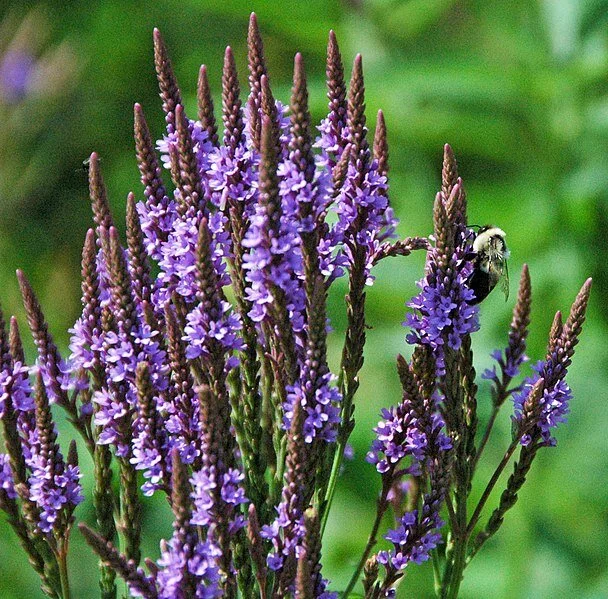
image source

image source

Vervain
(Verbena officinalis, hastata)

Common + Folk Names : Enchanter’s plant, herb of enchantment, ironherb, herb of grace, herb of the cross, holy herb, holy wort, Indian hyssop, Juno’s tears, pigeon grass, simpler’s joy, verbena, herb of Venus, ferfain, herba veneris, van van, Tears of Isis
Tarot Cards: The Suit of Swords, Justice, the Hierophant
Element :
Earth, Water
Zodiac Signs : Libra, Aquarius, Leo
Planets : Venus, Mercury, Jupiter
Moon Phase : Dark Moon
Parts used : Aerial Parts
Habitat : Found globally. The European variety most commonly used is Verbena officinalis while in North America the native Verbena hastata is more common.
Growing conditions : Prefers moist soil and full to partial sun.
Collection : Summer, just before flowering. Tradition dictates that Vervain should be gathered before dawn during the dog days of summer - roughly July 3 to August 11 - when the star Sirius would be brightest in the eastern sky. Read more about the magickal traditions of gathering Vervain in the “Magickal Uses” section below.
Flavor : Bitter
Temperature : Cold
Moisture : Dry
Tissue State : Tension/Constriction (primary), Heat/Excitation (learn more)
Constituents : Vitamin C, potassium, sulfur, zinc, glycosides, essential oils, mucilage, saponins, tannins, bitters, minerals, iridoids.

Actions : Alterative, antidepressant, anti-inflammatory, antispasmodic, astringent, antitumor, aphrodisiac, astringent, anxiolytic, bitter, cardiotonic, cholagogue, diaphoretic, digestive, diuretic, emetic, emmenagogue, expectorant, febrifuge, hepatic, galactagogue, nervine, parturient, rubefacient, sedative, stomachic, sudorific, tonic, vasoconstrictor, vermifuge, vulnerary.

Main Uses : In traditional western herbalism, Vervain is an herb with ancient use, considered like Sage (Salvia spp.) to be a panacea for all ills. One of the earliest recorded uses for the herb was as a remedy for swelling and inflammation related to a number of diseases from poisonous bites to ulcers and swelling in the mouth and throat. The Welsh Myddfai physicians recommended Vervain for the treatment of swollen glands and Hildegard recommended Vervain for ulcers and swelling, including swollen and sore throats. She specifically recommended topical use of the herb in the form of poultices wrapped around the neck. Sore throats accompanied by shoulder and neck tension as well as a headache can be indicators to use Vervain alongside other throat soothing herbs like Sage (Salvia officinalis) and Mullein (Verbascum thapsus).

Verbena officinalis - image source

Verbena officinalis - image source

The healing gift of Vervain to reduce swelling and inflammation - which are sometimes derived from states of excess Heat/Excitation - speak to the plant’s cooling abilities. When describing tissue states in traditional western herbalism, Heat doesn’t necessarily mean that something is hot in the temperature sense which is why Excitation is also used to describe the state. One of the indications for Vervain is someone who is often in a state of excitation and movement - these are folks who tend to overwork, rarely sit still, and are driven by an inner intensity. A certain level of tension is required to maintain this level of intensity and drive and instead of stepping back and relaxing after a strenuous push (whether after a work or school project, an athletic pursuit or any other type of project), they maintain a state of tension which can lead to health imbalances. One of the most common signs of this prolonged state of tension is the tension headache and Vervain can be a great remedy.

The ways that I most use Vervain in my practice and life is as a remedy for excess tension with the tension headache, shoulder and neck pain, and type A personality as key indicators. In general, Vervain can be helpful in cases of insomnia, stress, and agitated nervousness. Signs of irritability, oversensitivity, depression can all indicate that Vervain can be a useful ally. It can be a great herb for children who are finicky, irritable, and have trouble sitting still (sitting still in the context of needing to rest and relax, not the inappropriate expectation of sitting still for hours on end in educational settings). Vervain is a lovely and powerful nervine that pairs well with a number of other herbs - I don’t tend to use it solely on its own because I think that one of the lessons of Vervain is learning how to work with others and ask for help. With tension headaches with a lot of mental chatter, I like to combine Vervain with Skullcap (Scutellaria lateriflora). For recovery after a period of prolonged tension and/or illness including chronic fatigue and postpartum depression (Bartram recommends combining with Matricaria chamomilla), I use Milky Oat (Avena sativa) with Vervain. Where there is lack of pleasure because tension gets in the way, I like to use Vervain with Lemon Balm (Melissa officinalis) and Rose (Rosa spp.). 

One of the lessons I have learned working with Vervain is that if it is an herb that is useful for folks when it comes to excess tension in their lives, it is often an herb that indicates that a greater life change is required. As a holy herb, Vervain was and is used in rites of cleansing the temple space and as an offering, and I see it acting in people’s lives in much the same way. Something must change (and often it is patterns of overwork) in order for equilibrium to be re-membered. I recommend incorporating Vervain in both its fast and slow methods of preparations - a tincture can be very helpful for relieving acute pain, but also consider using the herb as a poultice or in a bath to invite yourself to slow down. For some folks that Vervain is useful for the idea of slowing down can evoke a lot of fear from within them - consider using the flower essence alongside the herb for extra emotional support.

Verbena hastata - image source

Verbena hastata - image source

The herb is useful as a digestive tonic helping to relax the digestive process if it is overly tight and tense and not allowing for the proper assimilation of nutrients. Other indications include stomach aches caused by stress. A traditional use for the herb was for expelling stones from the kidney and bladder. It is also clearing and nourishing for the liver. Another way that Vervain brings balance to the body is by acting on the thyroid gland, normalizing the amount of TSH released by the pituitary gland. Use the hot tea at the start of colds to sweat out toxins. Vervain helps to bring on menses and as a menopausal herb it brings it’s cooling qualities to hot flashes. There is also a long history of use of Vervain for convulsions, spasms, and seizures, especially when connected to menstruation. Use as a galactagogue to help bring milk postpartum (avoid if struggling with engorgement).

Vervain has a long history of being used externally as a poultice for reducing swelling, alleviating pain, and helping to open the lungs. Use for other topical complaints such as bruises, hemorrhoids, and eczema. For mouth complaints such as canker sores, sore throat, gum disease and cavities, use as a gargle. 

Magickal Uses : The magickal uses of Vervain is vast because it was (and is) seen as a deeply sacred herb. In ancient Rome, priests of Jupiter as the patron of good faith who were responsible for advising the senate on issues of war and peace as well as declaring both, would wear crowns of Vervain. Their envoys and messengers on matters of war and peace were called verbenarii, carrying sprigs of vervain to negotiate peace. Vervain was used similarly in this way in ancient Persia and by Germanic peoples. Vervain can be used today for diplomats and mediators, social workers and activists trying to negotiate peace and a kinder world.

The altar of Zeus was said to be cleaned by the herb. Within Egyptian myth, the plant was said to have sprung up from the tears of Isis when she wept over the loss of her lover Osiris. The presence of the herb at times of loss and grief shows up again in Christian mythos as an herb used to clean the wounds of Christ after he hung on the cross. The Druids honor Vervain as one of their most sacred herbs, using it to bless sacred space, in rituals of speaking prophecies, in anointing oils, and as an herb of offering. Throughout Europe, it was seen as auspicious to gather Vervain around Midsummer, sometimes specifically on St. John’s day on June 24. Pliny gave specific directions for the gathering of Vervain as dictated by the Magi:

 “... [The Magi] required vervain to be gathered at the rising of the constellation of Sirius the Dog Star, when neither Sun nor Moon was shining. A circle had first to be drawn around the plant with iron, and after gathering, some wax and honey was given back to the Earth in its place.” (1)

However you choose to harvest Vervain, as with all of our plant relations, it should be done in a sacred manner. As an herb of Venus, Vervain can be used in love spells of all varieties. It’s legacy as a Venusian herb lived on in the Victorian language of flowers as it meant “you tempt me.” In addition to love magick, Vervain can be used in protection spells and healing spells of all varieties. Use the herb for fertility of both people and fields - especially when used around the Summer Solstice. Use to help with psychic development.

Verbena hastata - image source

Verbena hastata - image source

The Vervain Personality : One of the most common ways a Vervain person will be described is having a “Type A” personality - intense, particular, usually very stressed, and prone to states of tension and excitation. Often they place their sense of self-worth outside of themselves. Usually this is found in their work but it can apply to all aspects of life whether child-rearing, homemaking or competitions of any kind. While Vervain folks do not lack motivation, they often lack the ability to slow down and take a break. When suggestions are made for them to slow down it would not be out of character for them to scoff at the idea and even believe that other folks just “don’t get it” - that they have to work this hard and there is no other choice. While Elm (Ulmus procera) is the essence of folks who place their worth within their work, Vervain does this to a degree but often their work is more about creating a sense of order and rightness in their lives. It has to be this way, otherwise what sort of chaos will ensue? The attempt at control can also be an attempt to make up for a lack of self-esteem, but can come off as taking up too much space in their relationships with others. Though is can be difficult to see from the outside, Vervain folks hold a lot of fear within them. One of the ways that Vervain helps us is to bring us back to what is sacred in our lives. It’s less about taking away fear as it is about bringing us home to something bigger than our fear - our hope. It can be helpful to remind Vervain folks that they will feel tired for a little while after taking a break from their break-neck speeds, but that their energy and vitality will return renewed.

Contraindications : Do not use during pregnancy.

Drug interactions : Do not take at the same time with mineral supplements. Avoid with anticoagulants and warfarin.

Dosage : Standard dosage.

herb emoji.png
Signature Summer 2019.png

This post was chosen by and made possible through patron support.
❤︎ Thanks, friends. ❤︎

📚

(1) Graeme Tobyn, Alison Dunham, Margaret Whitelegg, The Western Herbal Tradition: 2000 Years of Medicinal Plant Knowledge (Edinburgh: Churchill Livingstone Elsevier, 2011), 329.

 
MagickMailAd 2019 exuberance.png

We respect your privacy.

Thank you!
6 Likes
categories / plant allies
tags / vervain, blue vervain, verbena officinalis, verbena hastata

The Starry Web We Weave: Finding Clarity with the Constellation Tarot Spread

February 10, 2020  /  Alexis J. Cunningfolk

Constellations Tarot.png

My world is a web of constellations - it’s how my brain organizes information, how I absorb new input, and the type of patterning I am most drawn to. When I read tarot cards in a spread, I’m looking for the constellations and connections. All of it forms a story that resembles a 3D web full of glittering points of light and noise and intuition. Tarot helps me to highlight the parts of my world that need illumination and focus so that I can understand myself through past and present experiences in order to shape and prepare for what may come. 

The following spread is my attempt to capture the feeling of a constellational web that is ever present in my practice. Hopefully it’ll serve as a good tool to practice seeing patterns everywhere - something that both herbalists and magickal folk need to practice to be of service on their paths. For some, the following spread might feel like a complicated process, especially when compared to the more straightforward “every position is static and each card is separate and unto its own” style of reading. But what I’m proposing is really not complicated and just takes a few tries until it feels intuitive. Even better, if you find it useful, I hope that you’ll bring this style of reading (where the cards are in relationship with each other, with the querent and reader, and with the many worlds of perception) to any spread you cast.

The Constellation Spread

The Constellation Tarot spread was devised for those seeking clarity and insight on a particular issue especially if it is a new endeavor, new relationship, a business idea or change in direction, and other such big transitions and initiations we experience in our lives. While it can be used as a general spread for a reader who’s had a bit of practice, it is better suited for when you’re seeking clarity on a particular subject or area of your life.

The Self

The first three cards representing The Self are relatively standard in the world of tarot and help us to get a better idea of the inner workings of the querent. Having a card each for mind, body, and spirit is not to suggest that these parts of ourselves are separate, but rather illustrate that these are different ways we have of experiencing and perceiving information. Look for indications of excess or overstimulated versus lacking or under-stimulated input or activity in one or more of these perception areas.

1. Mind: This card speaks to the mental state of the querent including but not limited to mental health, the ways that they might experience input through their mental perceptions, and/or what they’ve been thinking a lot about lately.

2. Body: This card speaks to the physical state of the querent including but not limited to physical health, the ways that they currently experience input through their physical perceptions, and/or what they’ve been physically feeling lately.

3. Spirit: This card speaks to the spiritual and emotional state of the querent including but not limited to spiritual/emotional health, the ways that they currently experience input through the spiritual/emotional perceptions, and/or what they’ve been physically feeling lately.

The Constellations

The next six cards are called The Constellations and represent the energies, exchanges, and insights in this area of your life - whether that’s a new endeavor, new relationship or an important transition.  Imagine that these cards are not fixed points but floating orbs that weave in and out of who we are and what we are becoming. For some, this is fate and destiny and others this is revelation and the unfolding of life and memory.

4. The Recent Past: This card represents events that have occurred typically within the past three months and usually no more than a year before. Past events highlighted will relate to what you are currently going through. If you want to stretch the divinatory reach of the Past card, add another card or more for an extended timeline.

5. Near Future: This card represents events that may occur within the next three months to one year ahead. Future events highlighted are possibilities of what may come to be. If you want to stretch the divinatory reach of the Future card, add another card or more for an extended timeline. However, I caution trying to detect events that may happen too far in the future as our timelines are malleable changing things - there are better ways to get in touch with your far future self.

6. What You Hope to Achieve / What Are Afraid to Fail At: This card highlights what you hope to achieve and what you are afraid that you might stumble and fall in this pursuit of hope. A really beneficial card in this position can show a few things including that you have a strong vision of what you hope to accomplish and/or that your energy is well aligned for the goal. A challenging card in this position can show that your vision is still unclear (including that you’re not dreaming big enough) or that your energy is too tangled up to proceed - clarity is needed first. You should still read this card, whether obviously beneficial or challenging, as teaching you something about your hopes and fears. 

7. The Skill Which Steadies: This card highlights a particular skill, mindset, self-belief and/or gift that you have that will steady you on your path. Sometimes inverted beneficial cards in this position can highlight a skill you’re not even aware you possess. Challenging cards can teach us how we are denying or misusing a gift (we often misuse gifts not because we’re bad people but we have been forced to use it to survive by any means necessary).

8. The Allyship Card: This card shows you who your allies are and what you should be asking of them. Our dreams may exist at first only in our personal cosmos, but they are manifest in a galactic community. Learn how to ask for help, for insight and for feedback from those who love and support you.

9. Next Steps: This card suggests next steps to take. If you’re working specifically around an issue relating to a current or new business, consider bringing this card with you to seed a new spread like my Affirm + Manifest tarot spread for business.

The Numinous Tarot by Noel Arthur Heimpel

Putting It All Together

Create sacred space and cast your cards in the way that you normally do. Read the Self cards first. Spend time connecting with the messages received about yourself or for the querent to have time to understand their meanings. Then read the Constellation cards. Usually, if this was a typical spread, you would be done reading the cards. But we’re not done yet.

For example, let’s take card number 4 - The Recent Past - and read it paired with the Mind card. Then read it paired with the Body card. Finally, read it paired with the Spirit card. So let’s say that you pulled the Eight of Wands for the Recent Past, the Four of Swords for the Mind, the Page of Cups for the Body, and the Queen of Wands for the Spirit card. 

On its own the Eight of Wands represents a sudden surprise, energetic shift or similar out-of-nowhere style incident that has happened in the last few months. When read paired with the Four of Swords, it can tell us that this surprise event was mentally draining which is why the querent requires rest. The querent may or may not have realized that the event represented by the Eight of Wands had had such an effect on them. When paired with the Page of Cups there is an indication that the querent is in a learning phase of their life - they’ve become a student to the emotional responses in their body as related to the Eight of Wands. For the Spirit card, two Wands are meeting, representing fiery exchange between the past and the current spiritual and emotional state the querent finds themself in. The Queen of Wands is a powerfully creative spirit and makes me think that the event represented by the Eight of Wands holds potential for future creative endeavors. I get the feeling of a soul being forged by the fire of surprise and suddenness. 

As you pair the Constellation cards with the Self cards, it is similar to zooming in and focusing on the energetic landscape of each particular point in your life. Here is how the past still holds us or how our future beckons us. Here is where we are afraid to shine and desperate to be seen. Here is where we trust what we know and where we doubt what we’re doing. All of the stories of the cards are found within us - I hope this process of constellating and shifting shapes helps each of us to realize this and to begin to speak our own stories with greater surety. 

What are some of the ways that you read the cards that are different than those techniques you commonly see? Do you only read with jump cards? Or only read cards that you have purposefully chosen as opposed to randomly cast? Let me know in the comments.

moon emoji.png

Ready for more tarot? Check out all tarot spreads I’ve created.

However you read your cards I hope that your constellations shine brightly; that you befriend your very own north star; and that when you look up into your night sky it is filled with a million friendly lights of the world around you.

Signature Summer 2019.png
 
MagickMailAd 2019 full.png

We respect your privacy.

Thank you for signing up for Magick Mail! The digital owls have been dispatched. Once you have confirmed your subscription to the list you will gain access to our member's only apothecary.


1 Likes
categories / tarot + divination
tags / tarot, tarot spread

A Might-do List for Imbolc

January 31, 2020  /  Alexis J. Cunningfolk

Might Do Imbolc.png

Imbolc, known also as Imbolg, Candlemas, Oimelc, Lá Fhéile Bríde and Là Fhèill Brìghde, marks the beginning of spring in some parts of the world and the slow retreat of deepest winter in other areas. The holiday has ancient origins in the Gaelic world and for many modern Pagans it’s seen as one of four cross-quarter or fire festivals where the ancient custom of gathering around a source of warmth and light - be it a bonfire or candle - are central in celebrations. Imbolc is a time of lighting candles, making vows in the seedbed of dark and quickening light, and a time to gather back together after the busy-ness of the winter holiday season. Continuing a project started last Lughnasadh, here’s a list of nine things that you might-do (or not) for the candle festival of Imbolc.

Light and bless candles. As I’ve mentioned before, I spend the time between Yule and Imbolc making candles. I collect leftover wax from the candles I’ve burned all winter and combine that with soy wax to fill candles containers both large and small. While Imbolc is celebrated in a variety of ways, it is for me inseparable from the Goddess Brigid. As a Goddess of Fire I bless candles at this time of the year when She is walking the land with Her red-eared white cow. The story of Brigid’s flame is a powerful one and miraculously, witchedly, blessedly it is still burning today. At one point in our family’s Imbolc celebrations we turn off all the lights in the house and blow out all the candles except for one - Brigid’s flame lit from the flame of Brigid in Kildare - which we use to light up all of the candles in the house again. We then bless unburned candles that we’ll be using for the rest of the year by Her candlelight. 

Keen and holler. If you went to the same college as me at the same time that I was there you may have heard a cacophony of hollering and keening accompanied by the banging of pots and pans. That was me and my witchen kin helping to wake up the earth for the coming of spring. Friends, this is an abundantly fun thing to do and I highly recommend it. First, making noise and stomping on the earth is tradition. Second, the winter can be a time of stuckness and stagnation, including of our emotions. Keening is a very effective way to loosen up the feelings and let them fly out instead of burrowing deeper in. It’s good practice for protest season, too, as the weather continues to warm.

what to do for imbolc

Make offerings to earth, sky, and sea. Every Sabbat is a renewal of vows in our relationship to the holy world around and within us, but Imbolc feels especially renewal-ly to me (I hope you’re impressed by that linguistic triumph). I make some of my more purposeful and larger offerings at this time of year. In keeping with the traditions of some of my Celtic and British ancestors, I make offerings to earth, sky, and sea (though nowadays, my local rivers carry my offerings to sea). What you offer is up to you, but making offerings can be a beautiful way to open up the path ahead for whatever you hope to bring into your life. Auspicious timing for making the offering would be at sunset on the eve of Imbolc or right before you perform any act of divination (there are a number of ancient divination practices around Imbolc that survive, including divining for the weather).

Recite and write poetry and speak your vows. Brigid is the Goddess of poetry and smithcract so the recitation and writing of poetry is potent ritual work for the season of Imbolc. It is also a modern tradition amongst some witchfolk to consecrate magickal tools, perform initiations, and make vows at this time of year for what we hope to do in the next year (be that calendar year or until Samhain or next Imbolc). These can be vows ranging from following through on spiritual practice, earth-centering practices such as attending Fridays for Future or implementing plant-supporting change in your life or finishing a project. Call upon your Gods, Guides and/or Ancestors of inspiration to witness and support you. Plant your vows like seeds in the rich soil of the season of Imbolc.

imbolc ritual

Take a milk bath. Among mammals, milk is a source of life and as a species we’ve written more than one myth involving milk as a symbol of renewal and rebirth. After a long winter - and especially one that finds us indoors more than out - it can be a powerful ritual to immerse yourself in a bath of healing milk. I use plant-based milks in my life and practice and my favorite milk bath is one made with Oats. Oats are soothing and nourishing to the skin and Milky Oat (Avena sativa) is one of the most beloved of nervines (i.e. herbs that support and tend to the needs of the nervous system) within traditional western herbalism. Your bath could be as simple as adding Oat milk to your bath (also, it’s super cheap and easy to make if that’s your sort of thing) or you could combine it with other sacred Imbolc herbs. Dedicate your bath to something you wish to renew in your life and at the end, when the waters are draining away (or you’re collecting them to add to your garden), allow obstacles in your life to be washed away. There are so many milk bath recipes out there, so if you need some inspiration just do a quick search.

Create a Brigid’s Cross (or similar holy symbol). Traditional Brigid’s Crosses are made out of local varieties of rushes - I like to make mine out of whatever sturdy grasses are growing in my yard. The Cross is a symbol of protection and blessing from the Goddess Herself as she returns from the cold mountains back to the valleys below. If you don’t work with Brigid specifically, find other culturally and spiritually relevant symbols to craft at this time of year.

Invite the Goddess in. The wikipedia page for Imbolc is rather robust - there are a lot of songs and traditions that were recorded and survived into modern times making it a Sabbat rich with traditional lore. Included are the varied ways that the Goddess Brigid was inviting into the home. The season of Imbolc is a time of migration, so take time to invite home your beloved Gods, Guides, and Ancestors. Speak prayers to those in patterns of forced and chosen migration that they may be protected and find welcoming doors open for them (and follow it up with hope and action). If you love a bit of research, I’ve collected some of my favorite resources for British and Celtic herbalism and spirituality that can be accessed for free for all of my Magick Mail subscribers.

imbolc might do list

Bless your holy cloths. Since the Goddess is walking the land this time of year, waking up the earth, She is inclined to bless those things left out to catch Her attention. One tradition of Imbolc is to leave a strip of cloth out so that as the Goddess passes by She’ll bless it with Her healing gifts. This cloth can then be used throughout the year as a healing talisman. I leave out a silk cloth that I use to wrap my very first and most beloved tarot deck in because my tarot deck is a tool of healing for me and it means that I am handling this healing cloth regularly throughout the year. Blessed cloths can be used to make healing bundles, to wrap up parts of the body, and to keep on your altar or person.

Donate time, money, and resources to animal welfare organizations. One of the energies of Imbolc that can be forgotten through all the joyful noise of waking up the sleeping earth and inviting the Goddess in, is the incredible vulnerability present in so much of the traditional symbolism of season. Those who require nursing milk to survive are young and dependent upon the older ones in their lives. Brigid’s flame is tended for nineteen days by Her priestesses (and now Her nuns) and on the twentieth day the flame is tended by the Goddess alone. Or think about the little lambs, a common symbol of the holiday for many modern Pagans, being born this time of year. Life is small and tender and precious at Imbolc - that’s why it can be such a great time to donate your time, money, and resources to animal welfare organizations in thanks for the ways that animals have supported our species since the times of our most ancient ancestors. It’s another way to help remind ouselves that our Sabbat celebrations are not oriented solely around the affairs of humxns but all of our creature kin.

heart emoji.png

Check out all of my might-do lists for the wheel of the year. You can find further Imbolc magick with a tarot spread for the season and learn about herbs for the sabbat.

You can also check out the rest of my might-do lists for the sabbats and beyond.

  • Samhain

  • Winter Solstice (Yule)

  • Imbolc

  • Spring Equinox (Ostara)

  • Beltane

  • Summer Solstice (Midsummer)

  • Lughnasadh

  • Autumn Equinox (Mabon)

I wish you and yours a season of growing hope, sturdy seeds, and plenty of promise-filled magick.

Signature Summer 2019.png
 
MagickMailAd 2019 hag.png

We respect your privacy.

Thank you for signing up for Magick Mail! The digital owls have been dispatched. Once you have confirmed your subscription to the list you will gain access to our member's only apothecary.

8 Likes
categories / enchanted life
tags / imbolc, might-do list, wheel of the year, candlemas
Newer  /  Older

© 2010 - 2025 Worts & Cunning Apothecary | All Rights Reserved | Disclaimer | Land Acknowledgement
. live your magick .