• Home
  • About
  • Offerings
    • My Book
    • Magick Mail (It's Free!)
    • The Lunar Apothecary
    • The Tarot Apothecary
    • The Plant Ally Library
    • Solace: Herbs for Sensitive People
    • Begin With the Breath
    • The Green Bottle Method
    • Gatherings
    • Patreon
  • Blog
    • most recent
    • plant allies
    • astroherbology
    • moon studies
    • recipes + tutorials
    • magickal arts
    • tarot + divination
    • sliding scale
    • archive
    • search
  • Contact
  • Search
  • More
    • FAQ
    • Support the Work
    • Calls to Action + Resources
    • Bookshop
  • Home
  • About
  • Offerings
    • My Book
    • Magick Mail (It's Free!)
    • The Lunar Apothecary
    • The Tarot Apothecary
    • The Plant Ally Library
    • Solace: Herbs for Sensitive People
    • Begin With the Breath
    • The Green Bottle Method
    • Gatherings
    • Patreon
  • Blog
    • most recent
    • plant allies
    • astroherbology
    • moon studies
    • recipes + tutorials
    • magickal arts
    • tarot + divination
    • sliding scale
    • archive
    • search
  • Contact
  • Search
  • More
    • FAQ
    • Support the Work
    • Calls to Action + Resources
    • Bookshop

Worts & Cunning Apothecary | Intersectional Herbalism + Magickal Arts

Herbal Baths for Self-Care + Community Healing

September 09, 2016  /  Alexis J. Cunningfolk

2021 Update: Since writing this post I created a page dedicated to Herbal Calls to Action + Community Care Resources which is full of additional recommendations.

A few years back I was exposed to the work of Maurice Mességué via Rosalee de la Floret’s blog post on the famous French herbalist. I love reading biographies and autobiographies of herbalist - their stories of becoming herbalists and practicing their craft are always illuminating and inspiring. I especially appreciated Mességué’s approach to herbs which generally involved little to no alcohol-based remedies and a lot of hand and foot baths. As someone who doesn’t use a tremendous amount of alcohol-based remedies in my practice, I am always interested in learning about the herbalists who use alcohol-free alternatives as well. Herbal baths (whether full body or for the feet) are something that I personally love and I would make them as part of many a client consultation, usually with a ritual component attached to them (because magick). Reading Mességué’s work inspired me to work more with herbal bath concentrates and have them become a primary form of herbal remedy with some of my clients as opposed to an adjunct therapy. I haven’t been disappointed with the results and what I love about herbal baths is that they are so darn easy to create and use. If you can throw herbs together in a bowl and pour hot water over them you can make an herbal bath. You don’t even have to worry about what the blend will taste like as in the case when you’re making teas. 

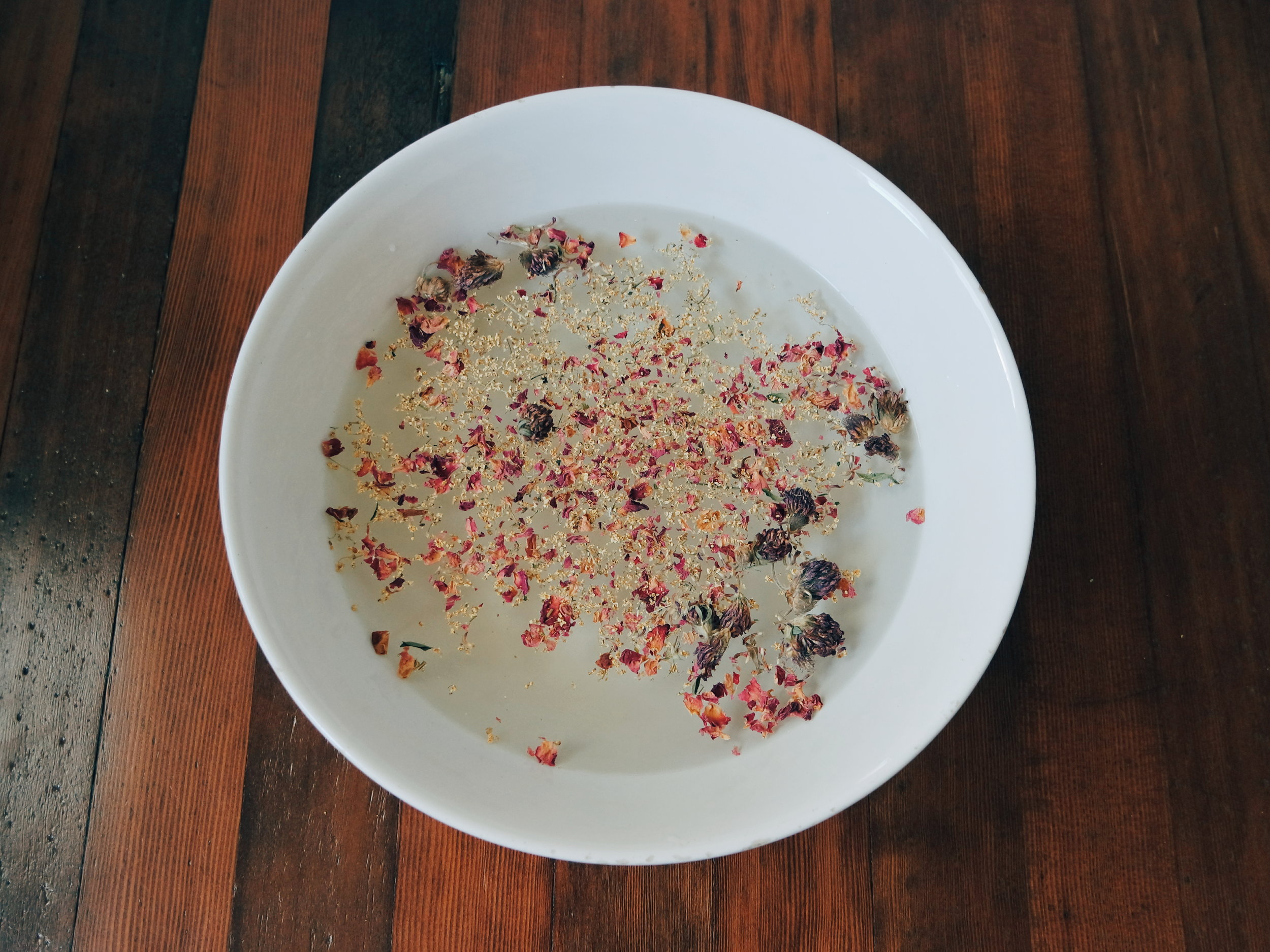
Herbal baths are an inexpensive luxury which is why they are such a great self-care tool. You don’t even need to have a bath tub to enjoy an herbal bath as you can use a big bowl for a foot or hand bath. I have a large white bowl that I thrifted a few years ago that I use exclusively for foot baths and it has become a magickal cauldron for tired feet to be soothed in and re-emerge happy and restored.

Foot baths have also become my remedy of choice to send to community clinics, political actions, and protests. Herbal foot baths don’t require that you like tea (which lots of folks are not interested in taking an herbal tea consistently) but it is rare that I meet someone who doesn’t enjoy a simple foot bath. I will be sharing two recipes that I created this summer for the Orlando Grief Care Project and the Standing Rock Camp political action.

The following tutorial will help you create a single herb or multi-herb blend for your own herbal bath. I have separated out herbs between those that are more warming versus those that are more cooling. Herbal baths are typically enjoyed hot, but the energetics of herbs can be cooling or warming to the body. You might want to use warming herbs for an autumnal blend that helps you release tension whereas cooling herbs might be better for a summertime sleep blend. I’ll also list out some additional herbal bath “boosts” that you can incorporate into your brew for a special addition of healing spark. 

Let’s get brewing!
Warming Herbs

Warming herbs are often more stimulating than cooling herbs. They help to move stagnant energy, improve circulation, and awaken a groggy mind.

Ginger (Zingiber officinalis) : A circulatory stimulant and a great aid during times of indigestion, travel sickness, as well as colds and flus. Elevates the body temperature to help break fevers. Warming to a cold disposition and heavy heart.

Rosemary (Rosmarinus officinalis) : Rosemary is great for when headaches are present whether brought on by stress, high blood pressure, indigestion or fatigue. The herb is a heart-strengthener and connects the mind and the heart in a healthy and loving way. Helps to re-establish a sense of sovereignty.

Thyme (Thymus vulgaris) : Wonderfully antibacterial, antiviral, anti-parasitic, antifungal, and pro-feeling good. Thyme is great for chest and head colds and infections of all sorts. It also has carminative effects. Thomas Bartram writes of Thyme’s ability “to break the alcohol habit” which might make Thyme an interesting addition to a herbal care protocol for those in the early stages of recovery.

Basil (Ocimum spp.) : Warming and gently detoxifying, Basil is uplifting to the spirits making it a great addition to a bath to help alleviate depression. It is also an antispasmodic herb which pairs well with its ability to calm high-strung nervous types.

Cinnamon (Cinnamomum spp.) : Improves weak digestion, alleviates colds, and it’s astringent qualities help to relieve diarrhea. Cinnamon is good for those who are exhausted in body and spirit. A little goes a long way.

Cayenne (Capsicum annuum) : An effective stimulant that opens up the body to increased warmth. Excellent at improving circulation and in cases of hypothermia. Cayenne increases vitality and courage. Like Cinnamon, a little goes a long way.

Mugwort (Artemisia vulgraris) : A great addition for menstruating folks as it helps to regulate the cycle and alleviate cramping and pain. It is stimulating to the appetite. Mugwort is calming and centering. Helps to alleviate night mares while promoting vivid dreams. The soft herb has been used as a shoe insole to cushion the foot and has a reputation for being very protective of travelers.

Cooling Herbs

Rose (Rosa spp.) : Rose is cooling, mildly sedating, and a classic heart-opening aphrodisiac. The herb has excellent anti-inflammatory qualities, making it a great choice for after-sun recovery as well as sore muscles and bruises. I call Rose a vessel herb since it is known in Traditional Western Herbalism to carry the medicine of other plants to wherever they need to go in the body - most of my herbal baths contain Rose in them for this reason.

Skullcap (Scutellaria lateriflora) : Skullcap is my go-to herb for high-strung nervous tension. It is great for folks with busy thoughts and who carry a lot of anxiety and worry. Skullcap is relaxing without being sedating which is a key characteristic to helping many anxiety-prone folks to relax. It’s also great for tension headaches, muscle spasms, and irritable stomachs.

Passionflower (Passiflora incarnata) : Exhaustion, insomnia, and nervousness are often relieved by Passionflower. It is a great herb for relieving neuralgic pain and tension headaches. Passionflower is more sedating than Skullcap. It is good for restlessness and relieving spasmodic conditions of all sorts.

Borage (Borago officinalis) : Borage restores and strengthens adrenal integrity. It is cooling to hot, agitated bodies, especially the stomach. It helps to alleviate anger but bolsters courage. Borage is helpful in relieving arthritic pain, menstrual cramps, and general tension.

Comfrey (Symphytum officinale) : An excellent choice for the healing of clean wounds as Comfrey accelerates the regrowth of healthy skin cells. It has a long use in TWH in helping to repair broken bones and its great for sprains, strains, and general muscular discomfort.

Neutral + Dual Energy Herbs

Milky Oat (Avena sativa) : A great remedy for overworked and tired feet, Milky Oat is a fantastic nervine that is neutral on the warm to cool scale. Great for eczema, psoriasis, itchiness, and irritated skin. Milky Oat is especially effective when used both internally and externally for the long haul.

Peppermint (Mentha piperita) : Peppermint is a useful herb embodying the mercurial qualities of its Guardian Planet of Mercury. It is able to relax when needed one day and to awaken and stimulate the next. To understand how a plant can be both relaxing and stimulating, try the following. Rub the top of your head with your finger for a quick moment. Feel how that is both relaxing and stimulating? Such is the powers of Peppermint. So, it is a popular herb in the summer for its cooling qualities and it is found again during the winter as part of warming teas and cold-care remedies.

Lemon Balm (Melissa officinalis) : Lemon Balm is rebalancing and neutral on the warm to cool scale. It relieves tension and indigestion caused by nervousness. Lemon Balm is also antiviral and it is a great herb to help bring on sleep.

Additional Boosts

Epsom Salts : A great addition to relief muscle tension and pain including cramps and tension headaches.

Apple Cider Vinegar : Apple Cider Vinegar has an alkalinizing effect on the skin, provides pain relief, and is a great antibacterial addition to a bath.

Flower + Gem Essences : Choose any variety of Flower and Gem Essences to add that amazing extra boost of magickal energy.

Making an Herbal Bath for the Body, Feet or Hands

Option 1: Add 1/2 - 1 cup of your herbal bath blend to your bath or bowl either directly in a tea bag or loose. Remember that adding it loose to your bath requires cleaning up the herbs afterwards.

Option 2: Brew your bath tea ahead of time! Add 1/2 - 1 cup of bath tea to a large bowl or jar and cover with hot water and let steep for at least 15 - 20 minutes. This is also great option for folks who want to use the herbal bath as a wash if they don't have a bath or if you're using the herbal bath loose leaf because you can strain the tea before adding it to your bath. This is my favorite way of preparing a bath tea.

A note on hand baths: While I recommend soaking both feet at once in the same bowl, I often soak one hand at a time. Mostly because it is an easier set-up to create and allow someone to sit comfortably for 15 - 20 minutes. I would soak one hand first and then prepare a second fresh bowl for the other hand. Of course, you can soak both hands at once and even both hands and feet if you are able to find a comfortable way to do it!

Making an Herbal Bath Concentrate

To make an herbal bath concentrate you are basically making a really strong infusion. For every 4 parts of water use 1 part of herbs. Let the infusion brew for at least 20 minutes - I typically let it infuse overnight. Strain and place in a clean, airtight container and place in the refrigerator. Your concentrate should last for about 3 - 4 days. I use about 1 ounce per foot or hand bath and about 4 ounces per bath.

So now for some recipe inspiration for you! The following two recipes are ones that I created this summer to send out to the Orlando Grief Care Project and the Standing Rock Camp political action.

Homecoming

For the Orlando Grief Care Project, I wanted to create something that relieved both physical and emotional pain - something that called frightened hearts back to the sanctuary of the body. 

  • 4 parts Rose (Rosa spp.)

  • 3 parts Borage (Borago officinalis)

  • 3 parts Catnip (Nepeta cataria)

Mountainfooted

For the Standing Rock Camp, I made a brew that served the practical purpose of being warming and restorative to sore bodies with the additional purpose of supporting the spirit in maintaining its connection to its inherent sovereignty of place.

  • 4 parts Rosemary (Rosmarinus officinalis)

  • 2 parts Comfrey (Symphytum officinale)

  • 1 part Ginger (Zingiber officinalis)

  • 1/2 part Cinnamon (Cinnamomum burmannii)

  • 1/2 part Rose (Rosa spp.)

What brews will you create for you and yours?

Share your recipes and your favorite herbs for soaking in the comments below. Make sure to check out the Orlando Grief Care Project and the Standing Rock Camp if you haven't already. And if you're craving some self-care comfort, clever one, I hope you make yourself an herbal bath to enjoy. You deserve it.


We respect your privacy and will not share your information with anyone no matter how nice their feet are.

Thank you for signing up for Magick Mail! The digital owls have been dispatched. Once you have confirmed your subscription to the list you will gain access to our member's only apothecary!

6 Likes
categories / revolution, recipes + tutorials, path of the herbalist
tags / bath tea, herbal baths, foot bath, hand bath, radical herbalism, orlando grief care project, standing rock camp, herbalism, astroherbalism, astroherbology, grief and healing, grief care, community herbalism, building community during times of crisis, herbal clinic

3 New Ways to Read Tarot

September 02, 2016  /  Alexis J. Cunningfolk

Tarot was born of experimentation.

A court card game became a divinatory tool become a path to the cosmos became a path to the self became a tool of revolutionary change. Such experimentation is what makes tarot so exciting and a living book of mysticism. 

Let's continue to write the story of tarot by finding new ways to read with these old cards. Have fun exploring the following three new ways to read your favorite deck (or two!) of cards.

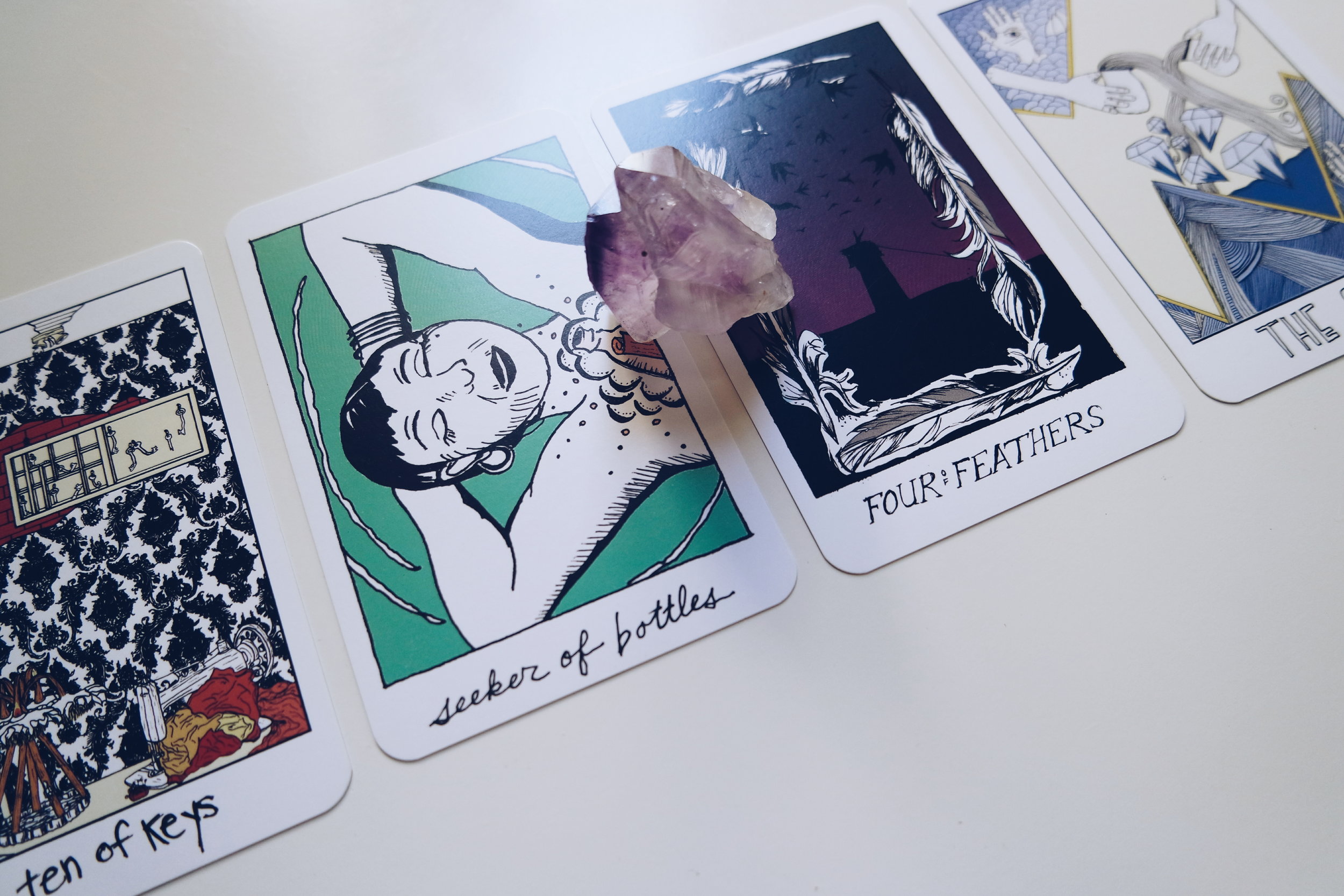
Collective Tarot + Amethyst

Collective Tarot + Amethyst

Face-Up

Let’s start with the most obvious and often opposite way of reading tarot cards - pulling cards face-up. Traditionally, tarot cards are chosen face-down and at random which allows for a great deal of mystery to reside in a card casting. When we choose our cards by casting them face-up we enter into a new relationship with ourselves and our decks. The reading becomes less about fate, the guidance of the spiritual beings or randomness (depending on your tarot philosophy) and more about you and your ability to know yourself clearly. 

Begin by choosing your question and shuffling your deck in your typical way. Let’s say you want to gain better insight into a recent conflict between you and your best friend. First, choose one card that represents you in general and one card that represents you within the conflict. Do the same for your friend. Place your cards side by side so that the cards that represent you are beside the cards that represent your friend. Be honest but kind in your choice of cards. Pulling cards face-up is a practice of integrity (a skill that is essential to insight). Choose another card that represents your relationship with your friend in general and beyond the moment of this conflict. Take time to reflect on the gifts of this card. Next, pull a card that represents your current conflict and place it between the cards that represent you and your friend during this moment. Notice the interplay of all cards on the table. What insights can be gleaned when you look at them from a bird's eye view? Pull one final card that represents your ability to move from the state of conflict to the place of contentment with your friend. What are the tools that you have to repair the situation?

Another way of working with the face-up method is as a meditative ritual practice to help you move from one state of being to another. Pull a card that represents you in the current moment and then choose a card that represents where you would like to be. Perhaps you want to find inner peace and sanctuary and so you choose the Star card. The card that you chose to represent you at the moment, however, is the 10 of Wands because you feel so overburdened by what seems like endless stress. What would be the path between these two cards? Choose one to three cards and line them up between the card that represents you now and the card that represents where you want to be. Perhaps you choose the Page of Cups to help you get in touch with your inner intuition and stillness and the Four of Swords to help you quiet your busy thoughts and find more time to rest. These cards can become magickal steps that you make to attain your Star-like state of being. The Page of Wands can be a simple everyday water ritual where you anoint your brow, heart, and belly with sacred water to remind you to remain connected to your intuitive wisdom. The Four of Swords might turn into you going to bed a little earlier every night. 

The face-up method is a lot of fun in addition to being a great way of learning tarot card meanings and offers us an opportunity to be more proactive in our tarot reading. 

Spirit Speak Tarot + Topanga Canyon quartz crystal

Spirit Speak Tarot + Topanga Canyon quartz crystal

By the Elements

Casting cards by the elements is a great way to do a quick weather report on your state of being or the energetics of a particular reading. To begin you need to sort your deck by the elements. Put aside the Major Arcana cards for the moment and sort the rest of your deck into the four suits of Swords, Wands, Cups, and Pentacles. Shuffle each suit individually and then pull a card from each stack. Your Sword card will give you insight into your current mental state as well as highlighting current messages and communicative focuses. The Wands cards looks at your passion and desire as well as your current levels of inner fire or burnout. The Cups card is a snapshot of your emotional temperament as well as a peak into dreams and visions bubbling to the surface. The Pentacles card looks at your physical state including not only the home of your body but your overall home environment.

Another variation involves the Major Arcana cards. You can either pull a Major Arcana card at random or choose one purposefully. Let’s say that you choose the Empress card because you’re starting a new business and want some elemental insight into next steps you should be taking. Lay the Empress card out and then pull one card from each one of the suits. Each card from each suit will offer elemental insight into your business path. The Swords card might speak to your need for a new way of communicating with your client base while the Cups card offers some clarity around certain feelings that you've been having about your business lately. The Pentacles card might suggest where you need to be putting your investment of time and effort at the moment, while the Wands card is a check in on your creative fire.

I love elemental spreads for their simplicity and ease of reading. Reading by the elements is a great technique if you are a beginner as it helps you to learn the basics of the Minor Arcana in a personal and insightful way.

Pamela Colman Smith Centennial Tarot + Jolanda Den Tredjes Tarot or Swedish Witch Tarot

Pamela Colman Smith Centennial Tarot + Jolanda Den Tredjes Tarot or Swedish Witch Tarot

Tarot Mapping

The subject of Tarot Mapping deserves a much longer post which is what I’m working on. In the meantime, I’ve written an introduction to the technique focusing one aspect of Tarot Mapping. Tarot Mapping requires at least two decks. The first is the mapping deck and the second is a reading deck. Pull out the Major Arcana of your mapping deck and place the Fool card at the top of your reading table. Then place the remaining cards in order in three rows of seven. 

This is your map. And now you get to play! Perhaps you have a question of what needs to change in order for you to find balance. Cast a card from your reading deck straddling Death and Temperance. Looking for advice on how to catch that lucky break you know you deserve to move your business forward? Cast a card on the four corners of the Empress, Emperor, Wheel of Fortune, and Justice cards. 

Maybe you’re interested in an epic snapshot of your Major Arcana journey. Pick out only the Minor Arcana cards from your reading deck and shuffle them so that some cards will come up inverted and others upright. Cast one card on each of the Major Arcana cards. If a card is inverted, remove it. You’re only focusing on upright cards which will help you to hone in on the current big issues of your life. Then read the upright Minor Arcana cards in context of the Major Arcana cards that they have been cast on. 

As you can imagine, there is a lot of possibility with Tarot Mapping! How will you use it?

Looking for more creative ways to read tarot?

Poetry Tarot Ad Square.png
triangulation tarot spread cards.png
FutureSelfSquare.png

Happy card casting!

 
0 Likes
categories / tarot + divination
tags / tarot, tarot reading, tarot apothecary, tarot cards, how to read tarot cards, tarot spread, collective tarot, swedish witch tarot, pamela colman smith, RWS, rider waite smith

The Magick of Thorns

August 21, 2016  /  Alexis J. Cunningfolk

I’ve been talking a lot about thorn magick this summer within the Lunar Apothecary, in my readings, and within community conversations. The summer of 2016 has been rough. In the United States we are wrestling with ourselves, searching for our center, and coming undone. The work of repairing the world is hard stuff and it takes more than a little bit of vulnerability and grit. There are those who are learning about privilege for the first time and grappling with that heavy knowledge. There are folks who are realizing that they have too long normalized or denied or hidden the pain of the violence they face on the daily. There is a lot of opening up and difficult realizations occurring and there are a million hearts breaking in the process.

To do this work of unraveling, we need to be able to feel vulnerable in ways that allow us to still feel supported. 

Thorn magick can play a powerful role during times like these when we are opening up, whether for the first time or all over again for the hundredth. So, what is thorn magick? It is herbal remedies that open us up while establishing a steady and protective boundary so that we can do the work that needs doing. Thorn magick allows for vulnerability and support to exist simultaneously instead of feeling vulnerable and too far exposed. I recommend thorn magick to those who are doing the hard work of creating change in their communities and in their lives; who are recovering from a difficult breakup and looking to be vulnerable in love again; to those who are experiencing difficult emotions that they have long denied but are now finally coming to the surface.

Working with herbs that possess strong thorn energy, such as Hawthorn (Crataegus monogyna) and Rose (Rosa spp.), can be as easy as preparing and ingesting a tea or tincture or the plant. Especially if that tea or tincture is made, in part, from the thorns of the plant. Adding a single thorn to your Rose tincture can powerfully shift the brew to being not only a heart-opener but a heart-protector. Sitting and communing with living thorny plants can be another way of working with thorn magick. If neither or those two options are available, even meditating on an image of a thorny plant (such as placing a picture of a sacred Hawthorn tree on your altar) can do a lot of good.

image by Oliver Pacas

image by Oliver Pacas

However, you work with the plant, I encourage you to visualize two things occurring at once. First, see a beautiful and protective shield of thorns encompassing your whole body. The thorns are turned outward from you allowing only that which of benefit to you to get to you. Second, within this protective space, visualize your heart blossoming open like a flower, knowing that it is supported and guarded within the sanctity of your thorn space. I encourage you to move slow with the second part of the meditation - don’t force movement, but allow the unfolding of your heart to occur at an easy and kind pace. It can take time for our hearts to feel safe enough to open up again. That’s ok. Give yourself time. The plants are patient and wise and will stick with you. 

While there are many thorny plants in the world, I have profiled Hawthorn (Crataegus monogyna) and Rose (Rosa spp.) below which are two common and well-loved plants within Traditional Western Herbalism. I’ve listed some of the more prominent medicinal uses of each plant, but have primarily focused on their emotional and magickal gifts. Other thorny plants you might consider working with include Agave (Agave americana), Blackthorn (Prunus spinosa), Raspberry (Rubus idaeus), Bougainvillea (Bougainvillea spp.), a great variety of cacti, and many other plants.

Hawthorn (Crataegus monogyna)

Hawthorn is one of the first herbs many Traditional Western Herbalists turn to for supporting cardiovascular health. The herb nourishes and feeds the heart working best as a long-term tonic (i.e. multiple months of use if not longer). In other words, Hawthorn is a cardiac tophorestorative which is a restorative tonic for the heart, bringing the hard working muscle back into balance whether from an illness, stress, or the affects of aging. Hawthorn is a powerful but gentle herb meaning that children, seniors, and all between can benefit from its use. Part of Hawthorn’s heart healing gifts is its possession of antioxidants which prevent and reverse damage caused by free radicals as well as reducing oxidative stress on the capillary walls and improving circulatory tone (whether by relaxing or strengthening). The herb should be considered when there is a case of congestive heart failure, angina, irregular heartbeat, hardening of the arteries, enlargement of the heart from excessive exercise or overwork, hypertension, both low and high blood pressure, and too much cholesterol.

Hawthorn shares a common characteristic found in many TWH heart herbs - it possesses beautiful flowers and protective thorns. Hawthorn helps the heart to open to new possibilities, especially after a period of heartbreak and distress such as after the loss of a loved one whether through death or a break-up. The herb protects our emotional vulnerability with its thorns. In fact, we are able to feel more vulnerable in a way that is healing and restorative when we feel protected by plant allies such as Hawthorn. Add a thorn from the plant to your tincture or glycerite preparations for extra protective energies. I have used Hawthorn many times in my practice for those recovering from heartbreak and have seen beautiful transformations occur with this plant’s amazing healing gifts. I love the language used by Judith Berger to describe Hawthorn: “As guardian of the hinge, hawthorn wisely discerns the right timing for the wounded heart to open” (Herbal Rituals, 134). Combine with Yarrow (Achillea millefolium) to help the Wounded Warrior, Wounded Healer type recover after a long period of giving and overwork where they has exhausted their mental, physical, and emotional resources. Hawthorn is also a good herb for those who feel wild and overstimulated in their grief and heartbreak. It calms, it soothes, and it protects, which is what we need more than ever when we feel raw. My favorite way to use Hawthorn as a daily tonic is as a glycerite that combines the leaf, flower, and berry.

Within an astroherbology context, Hawthorn is most often connected with the planet Mars due to its thorns. Other planetary correspondences include the Sun, because of Hawthorn's affect on the heart and overall vitality of the body, and Saturn since Hawthorn is hedgeherb and boundary-marker with strong connections to the otherworld.

image by Jana Illnerová

image by Jana Illnerová

The brokenhearted and grieving have a special place in the Hawthorn circle, for Hawthorn opens the heart after a period of despair. It is an ally for those who feel the grief of the world most readily, even if a personal tragedy is not currently present in their life. They recognize the tragedy of living on a planet that we pollute without regard to our shared sacredness and amongst endless wars and conflicts. Feeling wild in grief is a sign that Hawthorn may be needed and for some their journey with Hawthorn will be significant but relatively brief as they are able to move on with their lives with a newly opened heart. Those who need Hawthorn in the long-run tend towardsrestlessness and irritability, they are easily overstimulated and can sometimes lean (or fully reside) in the domain of the Type A personality. Often they are categorized as having attention disorders as children, whether or not this is warranted. They are children who appear to be more like changelings than a fully humyn child. Sometimes they are punished for the everyday acts of being an energetic child and disdained for their enthusiasm - they close up their heart to protect it from the hostility of a world that would prefer they sit quietly at a desk for hours following directions. Hawthorn re-opens the heart and helps folks connect with their resiliency, their capacity to forgive those who have harmed them, and to remain protected as they begin to express themselves and all their energy with pride and focus. The herb will bring calm to what has felt like a tumultuous existence, helping folks to find the tools they need to express themselves honestly and beautifully. 

Rose (Rosa spp.)

Rose is an ancient plant with fossils have been found across Europe, North America, and Asia dating back from as early as the Miocene period (7 - 26 million years ago). The flower has been used medicinally for thousand of years, with Dioscorides recording Rose as a cooling and contracting medicine. The three varieties of Rose most often used for medicine-making is Rosa gallica (also known as as Provins or Apothecaries rose), Rosa damascena (or Rosa x damascena to denote its hybridity, also known as damask rose), and Rosa centifolia (also known as Provence Rose). More modern uses within TWH includes Rosa canina and Rosa rugosa.

Roses strengthen the heart. 18th century herbalist J. Quincy wrote that Rose “raises the spirits and gives sudden strength and cheerfulness” and categorized Rose as primarily a cardiac and cephalic (relating to the head). The herb assists with memory and promotes clarity of mind, heart, and spirit by connecting all three. Rose nourishes the body and is sweet medicine which calms the nervous system. Within Ayurveda, Rose is considered a rasayana (rejuvenative tonic) and medhya (brain tonic and nervine) for all of the doshas or body types. 

image by Jeffrey Wegrzyn

image by Jeffrey Wegrzyn

As a plant of Venus, Rose is a classic aphrodisiac. Rose is an opener - it opens the heart and body to sensual experience. Like many aphrodisiacs, Rose has nervine and nourishing qualities which help to relax and soothe the body so that it may become ready and desirous of intimacy. Venusian magick, though, reveals desire on more than the physical level. It reveals the desire to engage mystery where there has only been the acknowledgement of the mundane.

Rose is especially useful for those who have lost their spark of desire. They might have trouble sleeping, restless and exhausted, but not enough energy to go out into the world. The desire to create and experience is low along with their vitality. What they think they should be doing dominates their thoughts more than what they want to be doing. Sometimes they are not even sure they know what they want to be doing. There can be a disconnect in relationships and not necessarily a feeling of isolation, but of distance. Rose folks often experience sudden overwhelming feelings of despair and being lost without a light in the murk. Sometimes, unresolved anger simmers deep below the surface - Rose teaches us how to use both our thorns and petals to set up boundaries and supportive spaces to express how we really feel. Rose reconnects to wildness, fierceness, and determined desire. To dream and want and feel and growl and move and connect with each other. One thing that I have seen again and again that is particularly powerful about Rose, is its ability connects us back to the secret excitement of mystery. So much of our unresolved and stagnant pain arises from a false notion that we know it all or at least know that our pain is permanent, what caused it is unchanging, and that this is all that will ever be. Rose reminds us that we, in fact, know very little, acceptance of which opens the path of possibility faster than a heart that has forgotten the importance of mystery will ever achieve.

Whether or not you use thorn magick and medicine in your practice, I hope that you have a space that you feel protected and held so that you are able to be vulnerable, soft, and open to the wisdom of your heart.

Do you use thorn magick in your practice? What is your favorite thorny plant to work with? Share your stories in the comments below!

Signature Summer 2019.png
 
MagickMailAd 2019 hag.png

We respect your privacy and will not share your information with anyone because we honor your thorns.

Thank you for signing up for Magick Mail! Once you have confirmed your subscription to the list you will gain access to our super secret member's only area!

7 Likes
categories / astroherbology, magickal arts, recipes + tutorials
tags / hawthorn, rose, thorn magick, thorns, herbal medicine, herbal recommendations, herbalism, herbology, astroherbalism, astroherbology, plants and planets, venus, mars, saturn, sun, grief and healing, grief care

My Top 3 Herb Books for Absolute Beginners

August 16, 2016  /  Alexis J. Cunningfolk

Edit: You can find an ever-growing list of resources on my list of Herbal Books for Beginners & Students.

📚

If I had to choose only three books to recommend to someone just beginning their Traditional Western Herbalism (TWH) studies I would first cry about having to choose only three books, then, after a period of tears and snorfeling, I would get on with it.

(Looking for my recommendations on astrology books for beginners - come this way!)

So why do I recommend the following three books to an absolute herbal beginner? First, they are easy to read and are broad in their scope. They are written with the beginner in mind with plenty of tools to help someone understand basic TWH terminology as well as simple instructions for making herbal remedies. Second, each book addresses common health complaints that can be addressed with simple herbal remedies like a cup of tea or basic herbal oil. And, finally, they are inspiring as any great herbal book should be. All of these books are easily a series of classes within themselves and are ones that I still reference. Of course there is a special magick and the benefits of oral tradition when you sit in-person with a teacher during a live class, but the first few years of my herbal studies were solely within the realm of books (youtube hadn't even been created yet, kiddos, and you would travel around the interwebs via things called webrings to find related sites). Books are brilliant gateways to start (and continue and develop) your herbal studies through. I hope you're feeling inspired!

My Top 3 Herb Books for Absolute Beginners

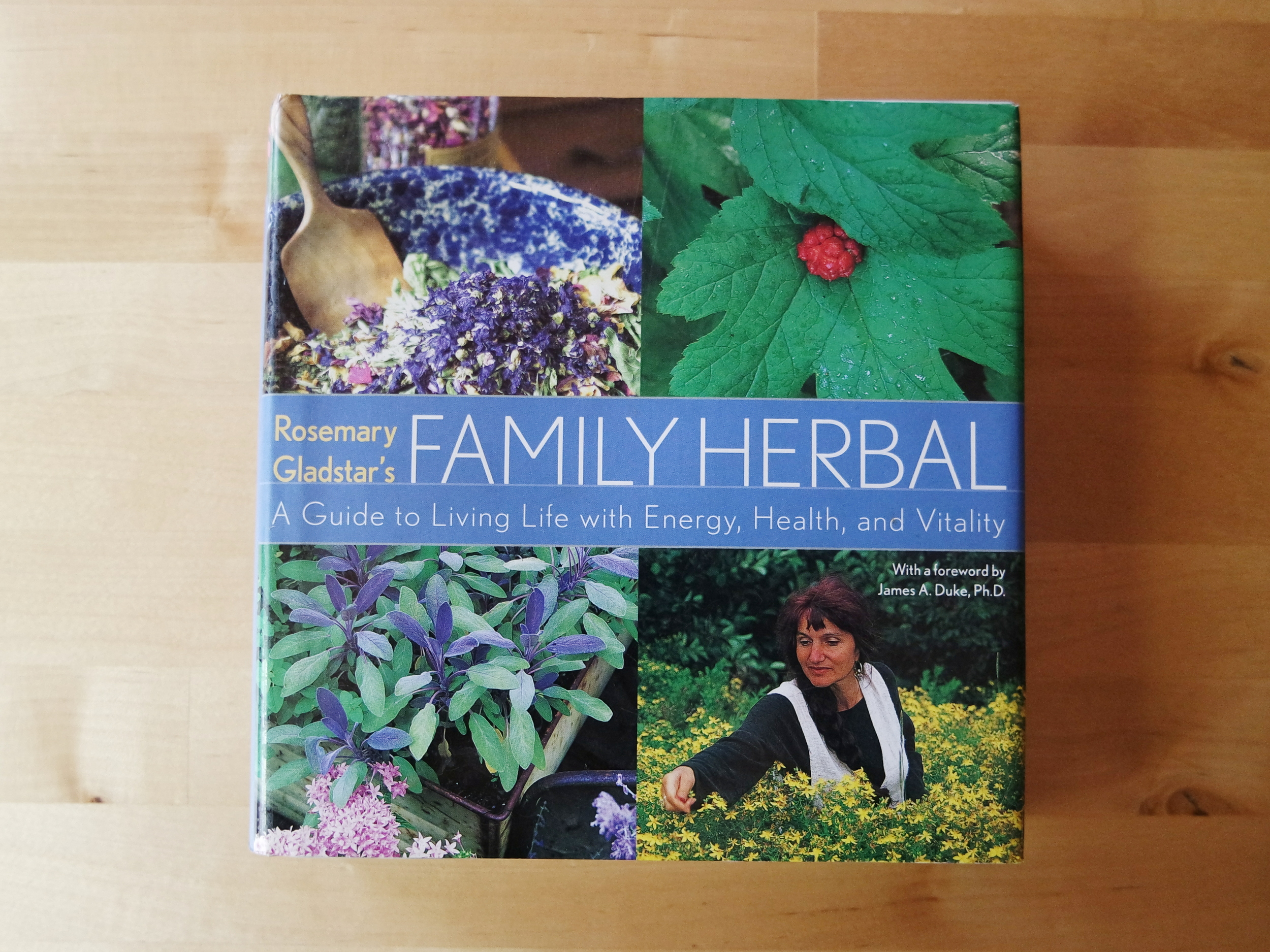
Rosemary Gladstar's Herbal Recipes for Vibrant Health: 175 Teas, Tonics, Oils, Salves, Tinctures, and Other Natural Remedies for the Entire Family by Rosemary Gladstar

Rosemary Gladstar is a legend within the TWH community and rightfully so. She revived modern TWH in the United States, creating California School of Herbal Studies, the International Herb Symposium, the New England Women's Herbal Conference, the Sage Mountain Herbal Retreat Center, and United Plant Savers. She did all that while writing (and continuing to write) some of the best herb books you could have the honor of gracing your bookshelves. Oh, and Traditional Medicinals tea that you see stocked in most holistic food stores - she co-founded that company, too. 

I could've recommended a number of Rosemary's books for this post (including a newer one geared specifically towards beginners called Rosemary Gladstar's Medicinal Herbs: A Beginner's Guide: 33 Healing Herbs to Know, Grow, and Use which is really great), but her Herbal Recipes for Vibrant Health is such an excellent compendium of knowledge. She covers everything from everyday complaints to creating your own beauty products to making remedies for all stages of life and the end of the book is a very user-friendly materia medica. The recipes are excellent and one of the appendixes is dedicated to remedy-making techniques including dosage information. My copy of her book (which was previously titled Rosemary Gladstar's Family Herbal: A Guide to Living Life with Energy, Health, and Vitality) is well-loved and I have been recommending it to my students for years.

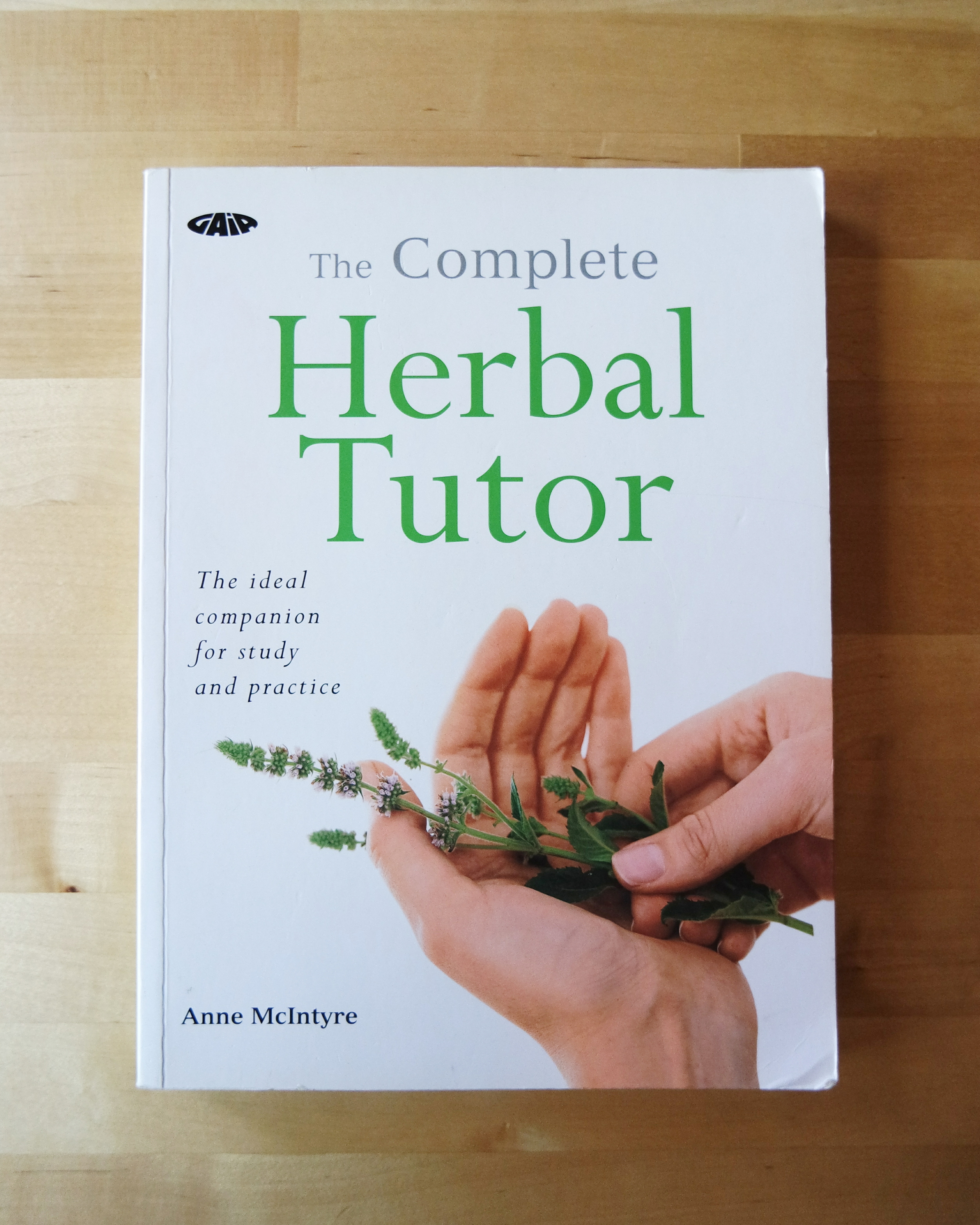
The Complete Herbal Tutor: The ideal companion for study and practice by Anne McIntyre

I am such a fan of Anne McIntyre. She has written more than one of my favorite books on herbalism. McIntyre also possesses deep knowledge within both TWH and Ayurveda helping both traditions to converse with one another (her book Dispensing with Tradition: A Practitioner’s Guide to using Indian and Western Herbs the Ayurvedic Way is a treasure!). What is great about McIntyre is that she possesses a very organized mind which lends itself well to print. Her Complete Herbal Tutor is concise, clear, abundantly useful, and is one of the books that I ask my apprentices to buy.

The book covers a brief world history of herbalism, herbal preparation techniques, and a healthy materia medica. What I really love about The Complete Herbal Tutor for beginners is that she organizes her study of herbs by body system so that you are given a coherent introduction to body systems along with looking at herbal remedies for common complaints all from a holistic, the-body-is-an-interconnected-intelligent-being (instead of a machine) point-of-view. The chapter on the respiratory system, for example, looks at general health of the respiratory system and then discusses herbal remedies for such complaints as the common cold, asthma, bronchitis, tonsillitis, and more. The book is also beautifully illustrated with easy to understand graphics as well as photos of the herbs featured in the book. 

Anne McIntyre is a practitioner who is both deeply comfortable with medical studies, terminology, and perspectives as well as being enamored with the more mystical sides of herbalism. If you're into herbal remedies with a floral focus, she has also written another one of my favorite herbals, Flower Power: Flower Remedies for Healing Body and Soul Through Herbalism, Homeopathy, Aromatherapy, and Flower Essences. 

Herbal Rituals by Judith Berger

I wanted to include at least one book that focused more on herbal stories than recipes. A book on herbal being rather than doing. I had heard about Judith Berger's book and how wonderful it was supposed to be long before I ever held a copy in my hands. It had been out of print for a long time and used copies were ridiculously expensive. I got lucky one day, though, and thrifted a cheap copy. It is truly as delightful as I had been told and I am so happy that it has been re-released as an ebook. Berger writes a chapter for each month of the year, weaving in reflections of her Brooklyn childhood, with stories of plants friends she has made of the years along with sweet and simple recipes. It is important to be told and read stories about herbs for that is the way that we have collected and passed on herbal knowledge for longer than our modern materia medicas. To re-member how to be plant stories and be materia medicas and be the possibilities of healing. 

It was hard choosing which herbal book that focused on story to put on this list, but in an agreement to myself (#selflove) I have promised to write about some of my favorite herbal stories and autobiographies in a later post. Berger's book is one of the friendliest which is why it made the list - it feels like a warm cup of tea and a chat with a good friend.

So those are my top three recommendations, my brave-hearted beginners!

If you can, support your local bookshop by purchasing these titles from there or from other indie online booksellers (Better World Books and Powell's* are lots of fun!). 

* LET'S ALL GO TO POWELL'S AND BE AMONGST THE BOOKS AND BUY TOO MANY AND THEN GO AND GET TEA TOGETHER. OK? OK!

 
MagickMailAd 2019 exuberance.png

We respect your privacy and will not share your information with anyone no matter how good their beginner's book library is.

Thank you for signing up for Magick Mail! The digital owls have been dispatched. Once you have confirmed your subscription the list you will gain access to our super secret member's only area!

4 Likes
categories / recipes + tutorials, path of the herbalist
tags / path of the community herbalist, intro to herbalism, herbalism, herbology, herbal, herbs, herb school, herbal study, studying herbalism, #herblibrary, herb library, herbal recommendations, rosemary gladstar, anne mcintyre, judith berger

Make Your Own Lovely Lughnasadh Brew

August 01, 2016  /  Alexis J. Cunningfolk

Lughnasadh, also known as Lammas, is the first harvest festival of the wheel of the year.

Traditionally, the day is a time of athletic competition and funeral games in honor of Lugh's foster-mother Tailtu, an ancient earth mother and incredibly powerful queen, who cleared the land in Ireland, died from her efforts, and became the life-sustaining grain that sprang forth from the fields. The intermingling celebrations of life and death is a common theme in both ancient and modern Pagan festivals. Lughnasadh is a reminder to celebrate our harvest and show off the skills we have developed over the previous season. It is also a period to remember the ancestors whose shoulders we stand upon - those who have given their lives in the struggle so that we may be sustained and grow. May we be able vessels of their memories, may we speak their names, and may we carry on their work for the betterment of our communities.

Modern celebrations of Lughnasadh is typically take place between July 31 and August 2. Astrologically speaking, Lughnasadh is marked by the Sun reaching the midpoint of the sign of Leo (or 15 degrees Leo). Which basically means that you can celebrate the First Harvest for a whole week if you like, which would be quite lovely. You can learn more about the significance of Leo within astroherbology over here.

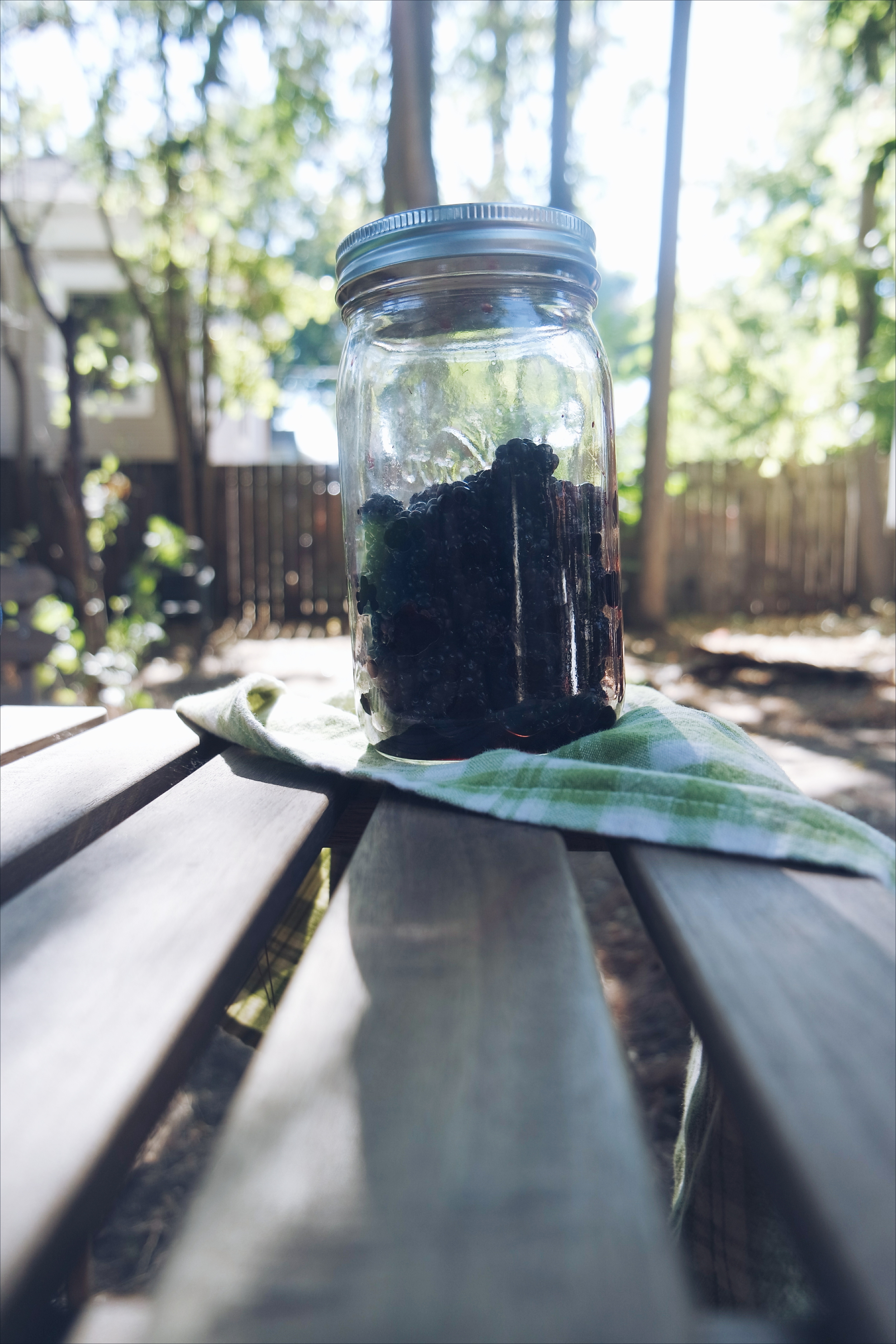
My tea of the season celebrates the slow burning end of summer with some spicy heat and beautiful berries. Make a big community pot to heal the hearts of your kindreds after a long, hot summer season. If you don't have blackberries available, use another local sweet berry in its place - especially if you've harvested them yourself!

The tea features Rooibos (Aspalathus linearis) which is an amazing African herb that is a rich source of antioxidants and it's a great daily tonic tea. The tea is a beautiful red color (it's name is Afrikaans for "red bush") and is rich in flavonoids which do all sorts of great things in our body from reducing inflammation and easing tension. Fennel (Foeniculum vulgare) is a great digestive herb helping to soothe angry intestines while Cinnamon (Cinnamomum spp.) is well known for its ability to manage blood sugar and is another digestive aid. Black Pepper (Piper nigra) harmonizes and sparks the blend, again, helping with digestion (specifically awakening a sluggish digestive system) and having an overall clearing affect in the body.

Lughnasadh Lammas Tea Herbs Recipe.jpg

Lovely Lughnasadh Brew

Blend together the following herbs:

  • 5 parts Rooibos (Aspalathus linearis)
  • 1/2 part Fennel Seeds (Foeniculum vulgare)
  • 1/2 part Cinnamon Chips (Cinnamomum spp.)
  • 1/4 - 1/8 part Freshly ground Black Pepper (Piper nigrum)

Add 1 teaspoon to 1 cup of hot water. Then add 2 - 3 Blackberries to each cup of tea and allow to steep for 5 - 7 minutes. You can adjust the level of spiciness by adding or reducing the amount of Black Pepper (Piper nigrum) or omitting it all together. Want it more sweet? Add more Fennel (Foeniculum vulgare). No fresh berries available? (That's a shame.) The tea is still good without them (but really find some berries if you can).  You'll be set for some Lughnasadh feasting with this cuppa in your hands! 

Looking for more recipes? Sure thing! Check out my recipes + tutorials section. You can also find out more about what is ripening in your life, what is changing, and what needs to be given with my First Harvest Tarot Spread.

I hope you have a blessed and magickal first harvest festival! Do you have a favorite Lughnasadh recipe? Share in the comments below!

 
3 Likes
categories / recipes + tutorials
tags / recipes, herbalism, herbology, lughnasadh, lammas, first harvest, blackberry, fennel, black pepper, rooibos, cinnamon, leo, astroherbalism, astroherbology, pagan, pagan herbalist
Newer  /  Older

© 2010 - 2025 Worts & Cunning Apothecary | All Rights Reserved | Disclaimer | Land Acknowledgement
. live your magick .